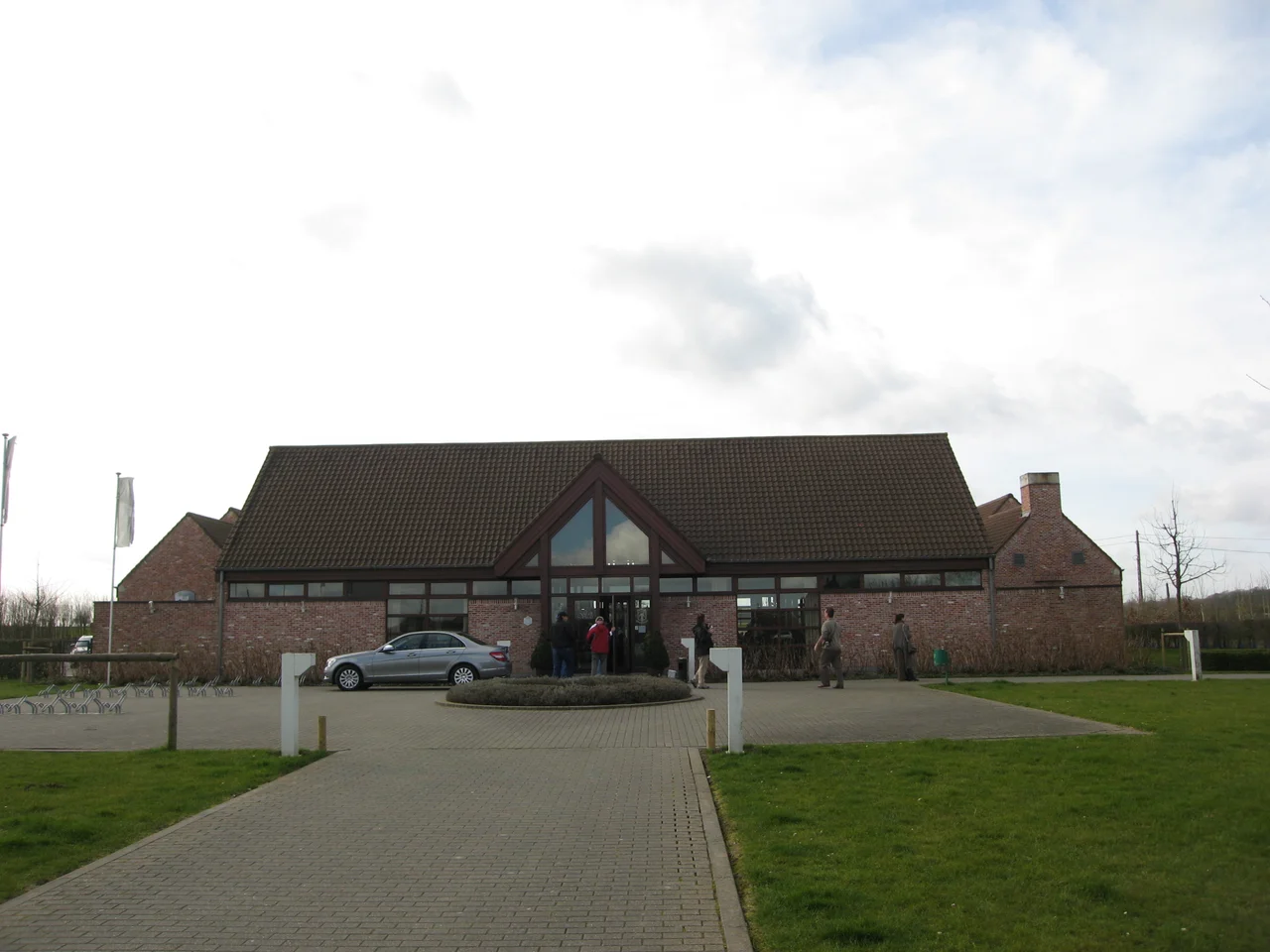

Westvleteren Brewery
To buy a case of Westvleteren 12, you must do this. Go to the abbey's website. Refresh until the order portal opens, which happens at random intervals. Reserve a slot, supplying your license plate number and your phone number. Wait several weeks. Drive yourself - personally, in the registered car - down a narrow road in West Flanders to the gates of Sint-Sixtus Abbey. Hand over a printed receipt. Receive your one case. Drive away. On the bottom of your receipt, in Dutch, the monks have printed three words: Niet verder verkopen. Do not resell.
This is the official distribution chain for what beer drinkers around the world keep voting the best beer ever made.
We Are Not Brewers
Sint-Sixtus is a working Trappist monastery. The community was founded in 1831 by monks from Mont des Cats, across what is now the French border. Records show beer being brewed here in 1838, and the king of Belgium issued a brewing license in 1839. The monks have been at it ever since - through two world wars, including a German occupation in 1940-44 that left the abbey's original copper brewing vessels intact because the Germans confiscated copper from everyone else first. The brewery exists for one reason: to pay for the monastery. When the new brewing hall opened in 1992, the abbot summarised the philosophy in a sentence that has since been quoted in every beer magazine in the world. "We are not brewers. We are monks. We brew beer to be able to afford being monks."
Three Beers, One Hand
The brewery makes three beers, and only three. The Blonde, with a green cap, is a 5.8% pale ale introduced in 1999 to replace the monks' old table beer. The 8, with a blue cap, is an 8% dubbel that used to be called the Extra. The 12, with a yellow cap, is a 10.2% quadrupel introduced in 1940 and originally called the Abt. Until August 2022 the bottles had no labels at all - you identified the beer by the colour of the cap, full stop. The bottles are unfiltered and bottle-conditioned, meaning the yeast keeps working inside them, and many enthusiasts insist the 12 needs five or even ten years of careful cellaring to reach its peak: figs, leather, plum, raisin, dark chocolate, a long warm finish. The ingredients list contains five items: yeast, hops, malt, candi sugar, water.
Best Beer in the World
In June 2005 the user-voted website Ratebeer.com ranked Westvleteren 12 the best beer in the world. The international press picked up the story, and the second part of the article - the part about the impossible buying process - made it irresistible. In 2014 Ratebeer voted it the world's best for the fourth year in a row. Beer Advocate has placed it in the top three almost every year since. The recognition embarrassed the monks. The abbey gave interviews reluctantly, declined visit requests, and turned away tourists at the gate. Monk Mark Bode, when finally cornered by a journalist, told him: "We make the beer to live but we do not live for beer." The line, like the abbot's, has been quoted so often it functions as a kind of liturgy.
The Beerphone
For decades, the only way to reserve beer was the beerphone - a single telephone line at the abbey that the monks answered for limited hours, in rotation. Anyone trying to buy beer dialed at the appointed minute on the appointed day, redialing through endless busy signals like a teenager trying to win concert tickets from a radio station. The system was charming and infuriating. It also worked exactly as designed: it kept resellers out by making the process miserable. In 2019 the abbey replaced the phone with an online reservation portal, license plates and phone numbers cross-checked to enforce one purchase per person every 30 days. Production has held steady at 475 kilolitres - about 60,000 cases - per year, the same volume the abbey has brewed since 1946. The monks have refused, repeatedly and publicly, every offer to expand.
In de Vrede
Across the road from the abbey gate sits a cafe called In de Vrede - In Peace - run as the abbey's only public-facing operation. Here, if you have not reserved beer for take-home, you can at least drink a Blonde, an 8, or a 12 at table, alongside abbey-made cheese on bread and a bowl of soup. The cafe is plain in a Flemish way - tile floors, wooden benches, the abbey visible through the windows across a meadow. There is often a line out the door in summer. The abbey itself, with the brewing hall behind its old walls, stays off-limits. Monks pass through the cloister with the work of monks: prayer, sleep, the labour that pays for both. The cult of the beer rolls past them like weather. They have decided to be unmoved by it, and they have been winning that argument for nearly two centuries.
From the Air
Abbey at 50.89°N, 2.72°E, in flat farmland 5 km north of Poperinge and 12 km west of Ypres. Visible from 2,000-3,000 feet as a self-contained complex of brick monastic buildings surrounded by hedgerows and small fields - the brewing hall is the larger industrial-looking building behind the cloister, and the In de Vrede cafe sits across the lane to the east. The site is unmistakably modest from the air, which is part of the point. Nearest airfields: Wevelgem (EBKT) 30 km east, Ostend-Bruges (EBOS) 50 km north, Lille-Lesquin (LFQQ) 55 km south. The drive in from Ypres along the N308 passes hop fields and First World War cemeteries.
Nearby Stories
- Le Paradis Massacre 3.4 km away
- Yser 6 km away
- Brugge Railway Station 6.3 km away
- Battle of Courtrai (1814) 9.5 km away
- Battle of Ardres 9.9 km away
- 2021 English Channel Disaster 18 km away
- Marcinelle Mining Disaster 94 km away
- Cléon 165 km away