
Wicklow Gold Rush
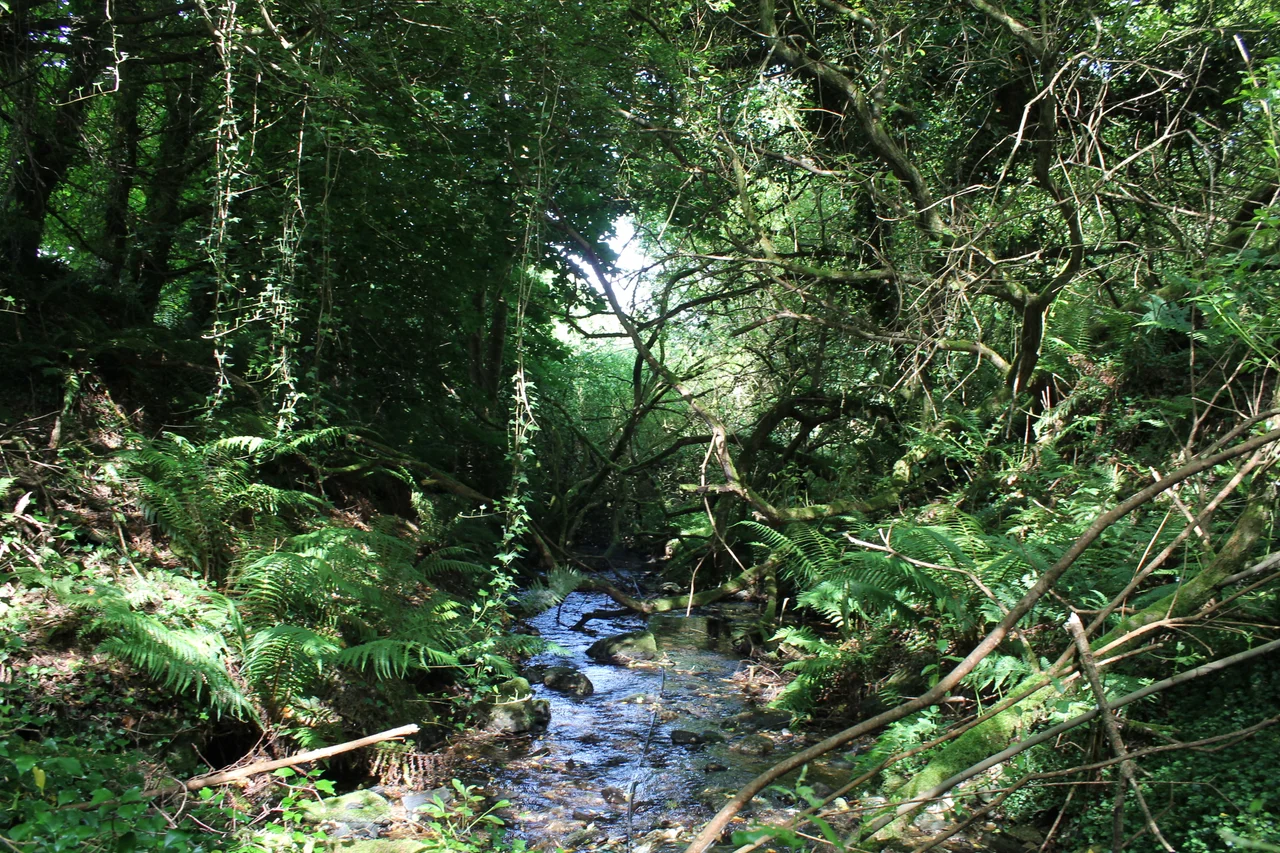
On 15 September 1795, workers felling timber on Lord Carysfort's estate near Woodenbridge noticed something glinting in the roots of an uprooted tree. It was no pinhead speck - it was a half-ounce piece of gold. They abandoned their employer's work immediately and began panning the stream that ran past it. Word spread by mouth, then by the Freeman's Journal and Finn's Leinster Journal. By 8 October over a thousand people had gathered on the banks of what they were already calling the Goldmines River. Two hundred and fifty of them were actively digging. The women were reworking the spent gravel in wooden bowls to catch the grains the men had missed. Exactly one month after the first nugget surfaced, on 15 October, sixty-eight soldiers of the Kildare militia marched up from the barracks at Arklow and took possession of the workings in the name of His Majesty King George III. It was, and remains, the only gold rush ever recorded on the island of Ireland.
Bronze Age Memory
The gold was not new. Ireland had been a major producer of gold ornaments in the Bronze Age, from about 2500 BC onward - the gold lunulae, torcs, gorgets and rings now in the National Museum in Dublin were almost certainly made from gold panned out of rivers in Wicklow and Tyrone, and from the so-called Gold Coast of Waterford. The 1795 rush sat on top of four millennia of local memory. The nearby Avoca copper mines had been working since 1720; by the 1770s they were among the richest in Europe. A local schoolmaster named Dunaghoo, the story goes, had been quietly panning the Aughatinavought river for some time before the rush, selling the gold sands to Dublin jewellers and living noticeably beyond his means. Whether he was the first or just the first to be caught, his discreet operation was about to be overwhelmed.
A Thousand on the River
Most of the prospectors came from within fifteen kilometres - residents of Arklow and Aughrim, some of them miners from Avoca slipping off shift to try the river. Dubliners came too, camping or lodging locally. Booths went up selling whiskey. "The Quantities now collected are very considerable," the Lord Lieutenant of Ireland wrote to Prime Minister the Duke of Portland on 8 October, "many lumps weighing several ounces. Booths are erected for the sale of whiskey, and a Spirit of animosity begins already to appear among the different parties employed in gathering the ore." At twenty-two karats fine, the gold sold at about £4 an ounce, and the most spectacular specimens fetched £5. One labourer reportedly earned ten guineas in two days - more than two and a half ounces of gold at prevailing prices. A 22-ounce nugget, three quarters of a kilogram, was eventually sent as a gift to King George III. As much as eighty kilograms of gold may have been recovered in the four weeks of the rush.
Why the Army Came
Britain in 1795 was at war with revolutionary France, and gold was the literal backbone of the British war effort - the British gold reserves bankrolled the campaigns against Napoleon. A new domestic source of the metal, on Irish soil, was enormously attractive to Westminster. It was also enormously alarming. Ireland was on the edge of what would become the 1798 Rebellion. Colonel Cradock visited the workings on Sunday 11 October and reported back that the thronging crowd was "only a small further step to open revolt." Five days later Dublin Castle moved. A constable read a proclamation. The crowd, to everyone's surprise, dispersed quietly without resistance. By Tuesday 20 October two hundred soldiers were on station, fifteen on guard at any moment, patrolling the river to keep the locals off. "As well to put an end to the mania of gold finding, and confusion and idleness among the people," the order read, "as to secure the wealth therein for his Majesty."
What Remains
Government operations on the river formally began on 12 August 1796, run by the engineers from the Avoca copper works. The output was disappointing. In 1840 a private company, Crockford and Company, was granted a 21-year lease but found no fortune. In 1845-47, at the height of the Great Famine, the British geologist Warington Wilkinson Smyth surveyed the valley and noted only "the confused heaps of stone, many of them overgrown with sod, which occur scattered along the banks of the streams." The vestiges of the gold-washers were already disappearing. The Geological Survey of Ireland reported in 2014 that the site "retained no obvious features linking it to the era of the gold rush" and recommended against developing it as a tourist attraction. The Goldmines River runs on through the Wicklow hills. The Irish dramatist John O'Keeffe wrote a comic opera about the rush that opened at Covent Garden in April 1796. Thomas Moore alluded to it in his poetry. Byron mentioned it. The largest nugget, given to George III, was eventually lost; the replica in the National Museum is what visitors see today.
From the Air
Located at 52.81°N, 6.29°W on the northern slopes of Croghan Kinsella mountain in southern County Wicklow, near the village of Woodenbridge. Best viewed at 2,500-5,000 ft AGL; the Goldmines River valley cuts down through the wooded slopes toward the Avoca valley. Nearest airports: Dublin (EIDW) 60 km north, Waterford (EIWF) 90 km south-west.
Nearby Stories
- Kilcullen 6.6 km away
- Powerscourt Waterfall 7.7 km away
- County Carlow 20 km away
- HMS Tyler 24 km away
- Thomastown, County Kilkenny 31 km away
- German Submarine U-1302 32 km away
- County Wexford 35 km away
- Minesto 60 km away