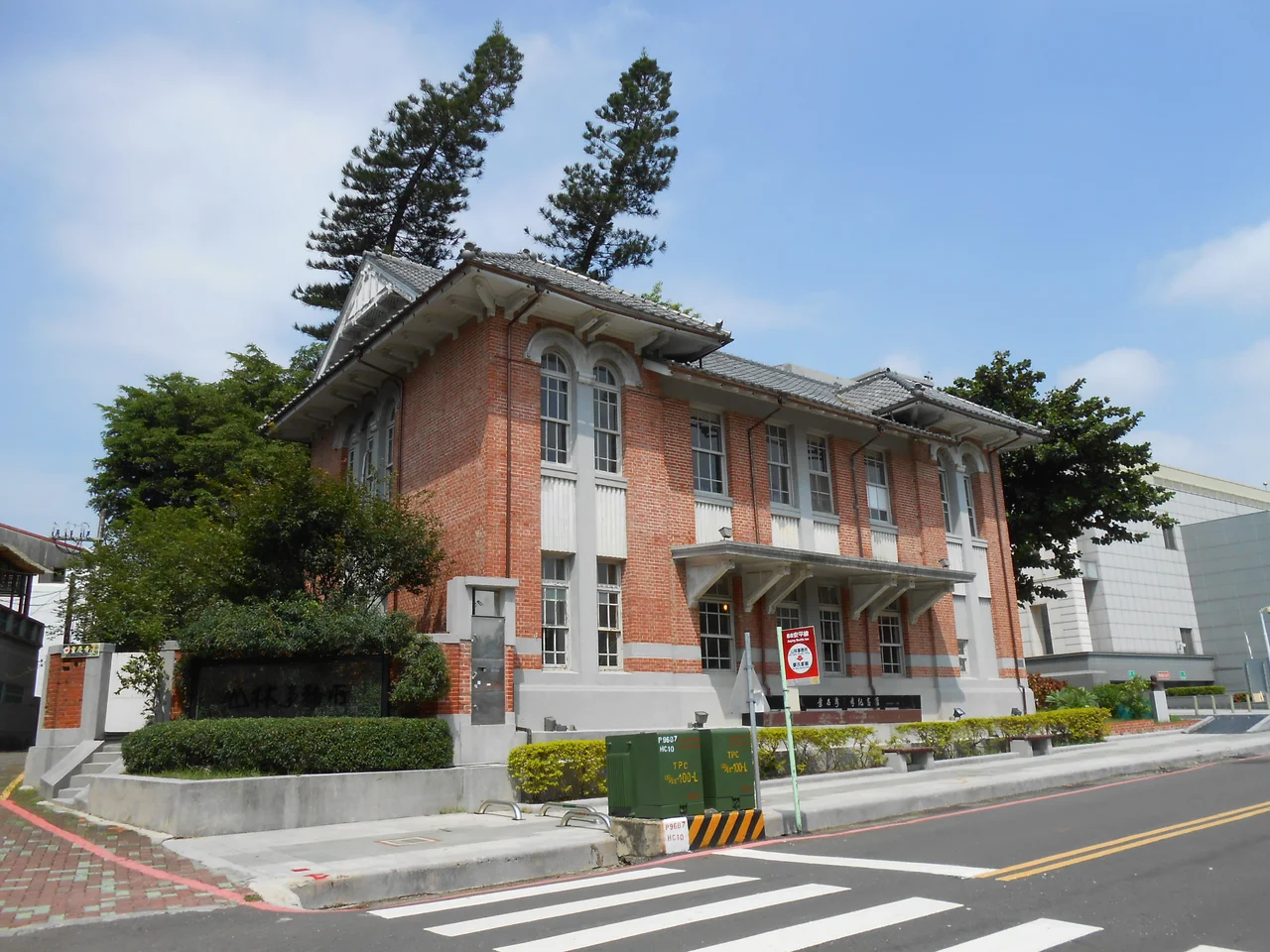

Yeh Shih-tao Literature Memorial Hall
In a city where temples outnumber museums and history accumulates in layers like shellac on old furniture, Tainan chose to honor a writer. Yeh Shih-tao was born here in 1925, grew up navigating the complicated identities of colonial Taiwan, and spent his career giving literary form to the lives of ordinary Taiwanese people in a language — Mandarin — that was not his mother tongue. The memorial hall dedicated to him opened on August 11, 2012, inside a building that was once the Tainan Forestry Affairs Office. That a forestry office became a literary museum is exactly the kind of transformation Tainan makes look effortless.
The Writer the City Claims
Yeh Shih-tao is considered one of the foundational figures of postwar Taiwanese literature. Born in Tainan in 1925, he came of age under Japanese colonial rule, was educated in Japanese, and then found himself, after 1945, living under a new government that insisted on Mandarin. Writing across that linguistic fault line — navigating between the Taiwan he knew and the Chinese literary culture that the postwar Kuomintang government promoted — Yeh built a body of work that documented Taiwanese everyday life with clarity and commitment. He became known not only for his fiction but for his scholarship: his academic writing on Taiwanese literary history helped establish the field itself. When Tainan decided to honor him with a dedicated space, the choice reflected more than local pride. It was an assertion that Taiwanese literature deserved the same institutional recognition as temples and fortresses.
A Building That Had Another Life
The Tainan Forestry Affairs Office was designated a historical building by the Tainan City Government in 2002, a decade before it became a literary museum. The building had lived a useful bureaucratic life, managing the forests and timber resources of a region that once depended on both. Conversion into the Yeh Shih-tao Literature Memorial Hall required care: the structure's historical integrity had to be preserved even as it was remade for a different kind of public. The result is a two-floor memorial space opened by the Bureau of Cultural Affairs, with the opening ceremony attended by then-Tainan Mayor William Lai. The pairing of building and subject is quietly apt — a place that once catalogued natural resources now catalogues a man who spent his career cataloguing human ones.
What Two Floors Contain
The first floor serves as the main exhibition space, displaying commemorative materials: photographs, manuscripts, editions of Yeh's books, and objects from his life. Walking through it, a visitor gets a sense of a literary career unfolding across decades of enormous historical upheaval — Japanese colonialism, the postwar transition, martial law, the gradual opening of Taiwanese society from the 1980s onward. Yeh lived through all of it and wrote about it. The second floor is more intimate. One room reconstructs his personal space — the desk, the shelves, the particular arrangement of objects that a writer accumulates over a long working life. A small theater screens an introduction to the man and his accomplishments. For visitors who arrive knowing little about him, the theater is a good place to start. For those who arrive knowing his work, the reconstructed room offers something closer to presence.
Walking Distance from the Station
The memorial hall sits in Tainan's West Central District, accessible on foot from Tainan Station, a few blocks to the southwest. This means it occupies the older, denser part of the city — the part where Japanese-era shophouse streets survive alongside Qing-dynasty temples and postwar apartment blocks. The neighborhood rewards wandering: the National Museum of Taiwan Literature is nearby, making a literary walking route through central Tainan genuinely possible. For a city better known internationally for its temples and street food, the cluster of literary institutions in this district is a reminder that Tainan has also been a center of education and culture since long before the tourist economy discovered it.
Approaching from the Air
The Yeh Shih-tao Literature Memorial Hall sits in the urban grid of central Tainan at approximately 22.991°N, 120.204°E. The building is modest in scale — two stories within a dense residential and commercial neighborhood — and best appreciated at street level rather than from altitude. Kaohsiung International Airport (RCKH) is the nearest major airport, roughly 28 kilometers south-southwest. Tainan Airport (RCNN) is closer, about 5 kilometers to the west. On approach to either airport, the flat Tainan basin spreads below: a dense urban core tapering into fish ponds and coastal wetlands toward the west. The Tainan Railway Station, the landmark nearest to the memorial hall, is visible from low altitude as a large, distinctive station building in the city's heart.
From the Air
Located at 22.991°N, 120.204°E in West Central District, Tainan. Nearest major airport: Kaohsiung International (RCKH), approximately 28 km south-southwest. Tainan Airport (RCNN) is roughly 5 km west. The memorial hall is in the urban core near Tainan Station; best identified from low altitude by the station building just northeast. The surrounding Tainan basin is flat, with the city center clearly defined against surrounding wetlands and agricultural land.
Nearby Stories
- Chung Li-ho Museum 0.7 km away
- Jingzaijiao Tile-paved Salt Fields 8 km away
- Wanchin Basilica of the Immaculate Conception 9.3 km away
- Namasia District 16 km away
- Battle of Penghu 21 km away
- Shoushan (Kaohsiung) 21 km away
- Penghu Air Raids 62 km away
- Daya Bay 512 km away