
The Month the World Didn't Know
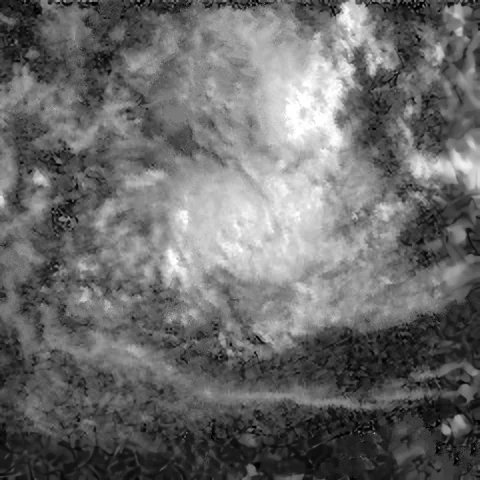
Paulo do Rosario survived by clinging to a piece of wood. Local fishermen pulled him from the water and carried him to a remote part of Flores, to a place called Bone Rata Island, where they cared for him. He was the only crew member of his vessel to live through what happened on 29 April 1973, when a cyclone born in the Banda Sea struck the north coast of Flores with storm surges that newspapers described as a 'tidal wave.' The cyclone killed more than 1,650 people. On the volcanic island of Palu'e alone, 1,500 fishermen died -- they had been out at sea when the storm made landfall, and the ocean became their grave. Yet for a full month afterward, the outside world knew nothing about it.
When the Sea Came Inland
The cyclone formed as a tropical low in the Banda Sea on 26 April 1973 and intensified as it moved toward Flores, one of the Lesser Sunda Islands strung across eastern Indonesia like stepping stones between Sulawesi and Timor. By 29 April it was a full cyclone, and it hit the north coast with winds that drove the sea tens of meters inland. For three days, heavy rain lashed the island, triggering landslides and flash floods that ripped through the mountainous interior. Rice fields vanished under mud. Livestock were swept away. Entire homes disappeared. Around 1,800 houses were leveled, with many more badly damaged. Boats in the cyclone's path were destroyed. The smaller islands ringing Flores were described simply as 'destroyed.' Ngada, in the island's interior, was reported as the worst-hit area, while Manggarai Regency lost at least 10 more lives. The storm's reach extended well beyond Flores itself, battering parts of the East Nusa Tenggara island chain including Sumba.
Silence Across the Archipelago
What made the 1973 Flores cyclone unlike almost any other modern disaster was the silence that followed. Indonesia's far-eastern islands had virtually no telecommunications infrastructure. There were no phone lines connecting Flores to the outside world, no radio stations capable of reaching Jakarta, no reliable way to signal that catastrophe had struck. The Australian Associated Press would later write that 'belated reports of disaster in Indonesia are not unusual, as communications are virtually non-existent with some of the far-flung islands.' A provincial governor who had been in Kupang, on nearby Timor, at the time of the cyclone only learned about it during a visit to Jakarta a month later. Indonesia's Minister of Information acknowledged the failure bluntly after a cabinet meeting: 'This proves the poor communications among the islands in the province.' In an archipelago of more than 17,000 islands, Flores was close enough to be sovereign territory but far enough to be invisible.
The Fishermen of Palu'e
The deadliest toll fell on Palu'e, a small volcanic island roughly 14 kilometers off the north coast of Flores. Palu'e's economy was subsistence fishing. When the cyclone arrived, 1,500 of the island's fishermen were at sea, working the waters they had worked for generations. They had no warning system, no meteorological forecasts, no way of knowing what was bearing down on them. The cyclone took them all. Fifteen hundred people -- not a statistic from a distant century but from 1973, the year the Sydney Opera House opened and the Sears Tower became the world's tallest building. The contrast between the modern world's achievements and the utter vulnerability of Palu'e's fishing communities was not lost on the journalists who eventually covered the story. These were people whose lives depended entirely on the sea, and the sea turned on them without warning.
Relief That Came Too Late
When news finally reached Jakarta in late May, the government dispatched a relief team accompanied by the Red Cross. They arrived on Flores on 5 June -- more than five weeks after the cyclone struck -- and found an island described simply as 'battered.' The government donated 30 million Indonesian rupiah to seven regencies across the East Nusa Tenggara islands. But the damage assessment revealed needs that money alone could not address. The Kompas newspaper reported that food and rice supplies sent to Flores were insufficient, and the population was facing genuine shortage. In the town of Lela, the cyclone had dragged water pipes into the sea, leaving the only hospital without running water. Medical care, such as it was, had to be delivered without the most basic utility.
Building Against the Next Storm
The Indonesian government's most lasting response came not in the form of aid but infrastructure. In the aftermath of the flooding, engineers began construction of the Sutami Weir, completed in 1975, which controlled water flow on the island and helped irrigate 6,500 hectares of rice paddy fields. It was a practical acknowledgment that Flores would face storms again and that the island's agriculture -- and by extension its people -- needed protection that nature alone would not provide. The 1973 cyclone remains the deadliest known tropical cyclone in the Southern Hemisphere's recorded history, a distinction that underscores both the storm's ferocity and the vulnerability of the communities it struck. Nearly five decades later, in 2021, Cyclone Seroja hit similar areas of eastern Indonesia, prompting journalists and scientists to recall the 1973 tragedy. The echoes were unmistakable. The question was whether enough had changed.
From the Air
Coordinates: 8.0S, 121.5E, on the island of Flores in East Nusa Tenggara, Indonesia. Flores is a long, narrow island stretching roughly 360 km east-west, with a mountainous volcanic spine. The island of Palu'e lies approximately 14 km off the north coast. Frans Seda Airport (WATC) at Maumere and Komodo Airport (WATO) at Labuan Bajo serve the island. From altitude, the island chain of the Lesser Sundas is clearly visible stretching east from Bali toward Timor. The Flores Sea lies to the north, the Savu Sea to the south. Expect tropical weather with seasonal cyclone risk.
Nearby Stories
- Rokatenda: The Volcano That Is the Island 28 km away
- Liang Bua: The Cave That Rewrote Human History 61 km away
- Wae Rebo: Seven Houses Above the Clouds 79 km away
- The Bluff That Worked and the Storm That Didn't Care 83 km away
- The Husband Who Will Not Be Quiet 90 km away
- Solor: The Island That Empires Fought Over and Forgot 121 km away
- Four Sails in the Selayar Strait 245 km away
- The Ferry That Tipped When Everyone Reached for a Signal 254 km away