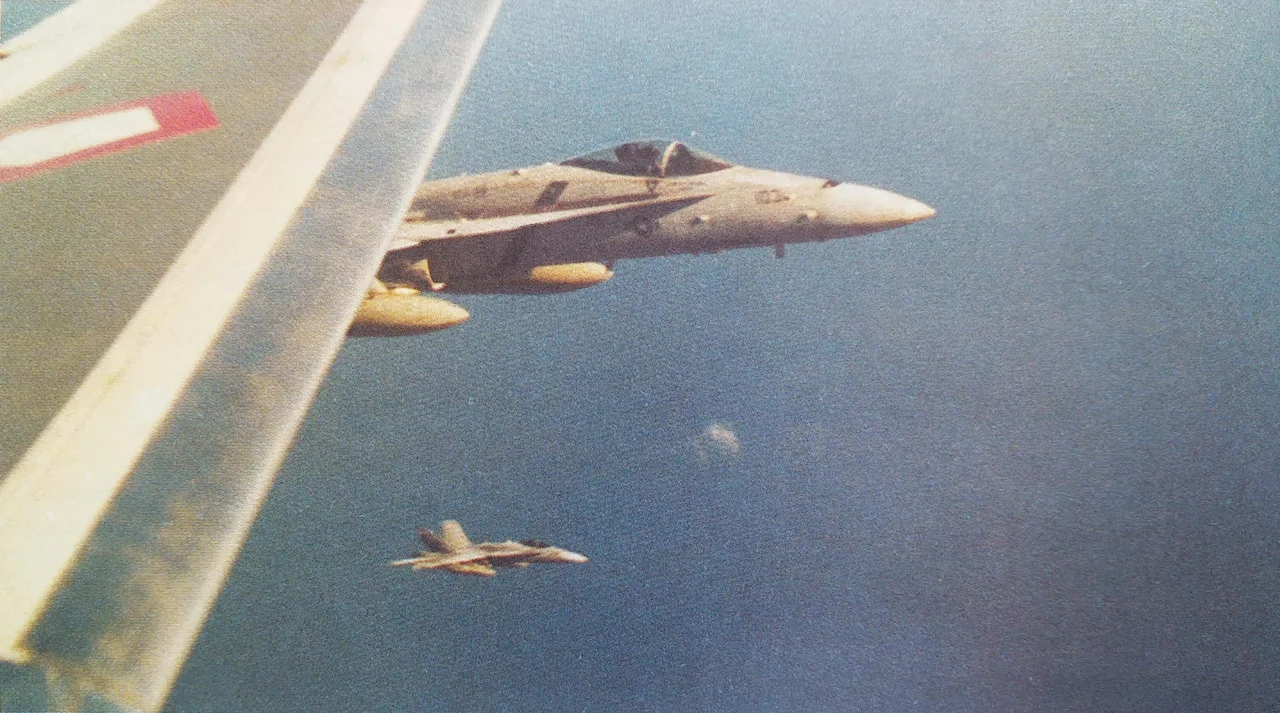

Eighteen Minutes Over Bawean
The radar blip appeared at 11:38 on the morning of July 3, 2003, picked up by the military-civilian system at Ngurah Rai International Airport in Bali. Several unidentified aircraft were maneuvering northwest of Bawean Island at altitudes between 15,000 and 35,000 feet, moving at 450 knots. A nearby Bouraq Airlines Boeing 737 reported the same contacts. Then the blips vanished from the screen. The Sector II National Air Defense Command noted it and moved on. Three hours later, the aircraft returned -- this time threading through the Green 63 civil flight route, just 66 nautical miles from Surabaya. They were not talking to anyone on the radio. For Indonesian air defense, silence from unidentified aircraft on a commercial corridor meant only one thing: scramble fighters.
Dragons from Madiun
At 17:02 local time, two F-16B Fighting Falcons of the 3rd Air Squadron -- callsign Sarang Naga, the Dragon's Nest -- roared off the runway at Iswahjudi Air Force Base near Madiun in East Java. The base sits on the western side of the province, well positioned to cover the Java Sea approaches. Surabaya's ground radar guided the pair toward the intercept point, where they detected five unidentified aircraft at a range of 35 nautical miles. At 17:22, both sides began jamming each other's electronics. Moments later, Falcon 1 found itself radar-locked by the targets. What followed was an eighteen-minute aerial engagement -- dogfighting, electronic warfare, and mutual missile locks between two Indonesian F-16s and five aircraft that turned out to be U.S. Navy F/A-18 Hornets. Below them, an aircraft carrier, two frigates, and a tanker were steaming east through waters Indonesia considered its own.
The Carrier No One Cleared
The warships belonged to the USS Carl Vinson carrier strike group, in the middle of a 2003 Western Pacific deployment. The Hornets were operating from the Vinson's flight deck, likely from VFA-22, according to the Indonesian aviation magazine Angkasa. The United States Embassy later stated that the naval convoy had requested permission to transit Indonesian waters. Indonesia denied receiving any such notification. Rear Air Marshal Wresnowiro offered a diplomatic explanation that cut to the heart of the matter: the U.S. Navy had requested permission, he said, "but our bureaucracy is too slow to pass the security clearance." Whether the fault lay in American assumption or Indonesian procedure, the result was the same -- armed fighters from two allied nations locked weapons on each other over a small volcanic island in the Java Sea.
Rocking the Wings
The engagement ended not with missiles but with a gesture as old as military aviation. Falcon 2 rocked its wings -- the universal signal for peaceful intent -- and Falcon 1 managed to establish radio contact with the American pilots. The Hornets broke off and returned to the Carl Vinson. The F-16s turned south for Iswahjudi. Only after the Indonesian fighters landed did Bali Air Traffic Control relay the information that the Hornets were part of a U.S. Naval fleet and had just contacted Bali ATC to report their activity. The next morning, the Indonesian Air Force dispatched a Boeing 737-200 Surveiller -- a maritime patrol aircraft equipped with SLAMMR radar -- to shadow the American carrier group. The Carl Vinson continued east, visited Perth on July 14, and returned through the Java Sea on a similar path in early August en route to Hong Kong. This time, presumably, the paperwork was in order.
Sovereignty at Thirty Thousand Feet
Indonesia's House of Representatives demanded the government issue a formal diplomatic protest. The incident became a point of national pride in Indonesia -- proof that the air force could and would challenge even the world's most powerful navy when sovereignty was at stake. The F-16 with tail number TS-1603, one of the two fighters involved, became something of a celebrity in Indonesian military circles. The confrontation also exposed the friction inherent in the world's largest archipelagic state, where thousands of islands spread across sea lanes critical to global commerce and naval power projection. Indonesia claims sovereignty over its archipelagic waters; the United States insists on freedom of navigation. Bawean Island, a quiet volcanic island of fishermen and deer, happened to sit at the intersection of those competing claims. For eighteen minutes on a July afternoon, two pilots from Madiun held that line.
From the Air
Bawean Island is located at 5.52S, 112.57E in the Java Sea, roughly 66 nautical miles north of Surabaya. The island is volcanic and visible from altitude. Nearest major airport is Juanda International Airport (WARR) in Surabaya. Iswahjudi Air Force Base (WARI), home of the 3rd Air Squadron, is near Madiun in East Java. The Green 63 civil flight route passes near Bawean. The Java Sea in this area is busy commercial and military airspace.
Nearby Stories
- The Submarine That Hunted a U-Boat in the Java Sea 42 km away
- HNLMS Kortenaer: A Destroyer's Last Two Minutes 76 km away
- The Submarine That Refused to Stay Down 112 km away
- Forty Hours in the Masalembo Sea 120 km away
- U-168: The U-Boat Betrayed by Its Own Allies 121 km away
- Battle of the Java Sea 131 km away
- Madura: Salt, Bulls, and the Island That Emptied Itself 139 km away
- The River That Connects Borneo to Madagascar 242 km away