
2006 Chapel Hill Vehicle Ramming Attack
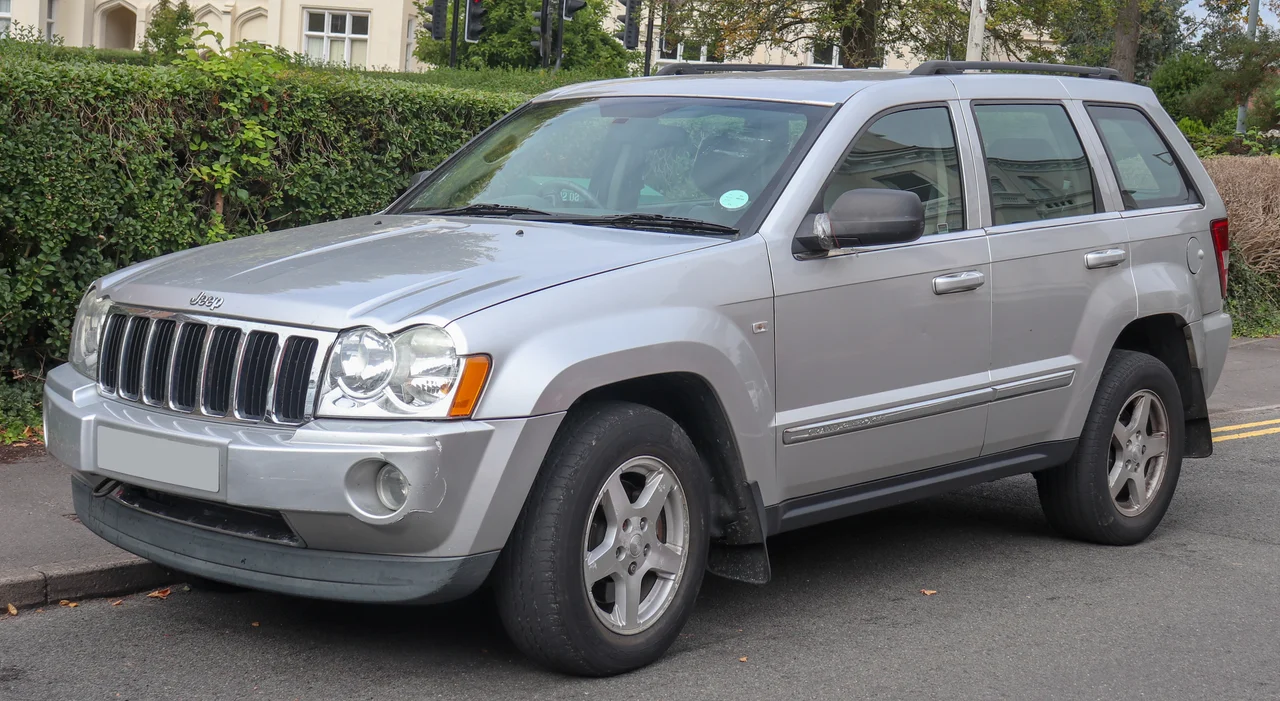
The Pit at the University of North Carolina at Chapel Hill is a sunken brick courtyard at the center of the older part of campus, bracketed by the student bookstore, the student union, the dining hall, and the libraries - a high-traffic crossroads where students gather between classes, where activists set up tables, and where afternoon sunlight collects in the spring. On the afternoon of March 3, 2006, the metal barricades that normally kept vehicles out were not in place. At about 11:50 a.m. a silver 2006 Jeep Grand Cherokee, rented two days earlier, came down the narrow service road and accelerated into the Pit. It struck nine pedestrians before reaching the other side.
The Nine
No one was killed. Six of the nine struck pedestrians were taken to UNC Hospitals, treated for injuries that ranged from contusions to a fractured leg, and released the same day or the next. The other three declined transport at the scene. Witnesses estimated the SUV's top speed across the Pit at between 40 and 45 miles per hour - fast enough on bricks to do real damage to bodies, slow enough that some of the people struck were able to roll or stagger clear instead of being trapped underneath. The students who escaped that day, and the ones who did not, were a cross-section of an ordinary Friday at UNC. Most were undergraduates between classes. The community had four minutes of chaos before the driver was already gone, on his way to Plant Road to call 911 on himself.
The 911 Call
Mohammed Reza Taheri-azar drove to a nearby city street, called 911, and calmly confessed to police that he had just attacked students with his vehicle. He told the dispatcher his location and asked to be arrested. He told the dispatcher that the reasons were in a letter on his bed in his Carrboro apartment. Officers arrived, and he surrendered without incident. That afternoon investigators evacuated the apartment complex while media helicopters circled and stormed his unit. They found the letter. They also found his UNC diploma folded in his closet and the Carolina blue graduation gown he had worn just three months earlier. He had graduated from UNC in December 2005 with a degree in psychology and philosophy.
An Unfamiliar Profile
Taheri-azar was born in Tehran in May 1983 and moved to the United States at age two. He grew up in Charlotte with his mother and sisters, attended South Mecklenburg High School - where he was a socially awkward honor student and the yearbook nicknamed him "South's Speedster" - and enrolled at UNC in 2001. He was a serious student. Classmates described him as shy but friendly, kind rather than aggressive. He volunteered at local hospitals. He served briefly as president of the campus psychology club. Fellow Muslims on campus described his religious practice as unorthodox - he would not pray toward Mecca and refused to use Arabic, including the standard Arabic greeting; one student remembered him as anti-Arabic. He had told no one at UNC what he was planning. In the letter on his bed, he wrote that he was aiming to follow in the footsteps of Mohamed Atta, one of the 9/11 hijackers, and that he wanted to "avenge the deaths of Muslims worldwide."
Charges, Plea, and the Reclaimed Pit
Taheri-azar was charged with nine counts of attempted first-degree murder. He insisted on representing himself in early hearings, telling an Orange County judge he looked forward to "sharing the will of Allah." The FBI joined the investigation. UNC Chancellor James Moeser, in an email to the campus, described the attack as violence but stopped short of calling it terrorism, a choice that sparked its own argument across the campus and the country. On March 20, 2006, students returned to the Pit for an official "Reclaim the Pit" event - a moment of silence at the place that had been the center of their day-to-day life before it became, briefly, a national news image. Local Muslim leaders publicly condemned the attack and rejected the attacker's attempt to drape it in religious justification. On August 26, 2008, Taheri-azar was sentenced by Orange County Superior Court to between 26 years and two months and 33 years in prison on two counts of attempted murder. He remained, as the Daily Tar Heel reported a decade later, in state custody.
Flight Context
The Pit sits at the heart of the UNC campus at roughly 35.9101N, 79.0486W, in the older brick quadrangle just south of Franklin Street in Chapel Hill. From cruise, UNC's campus reads as a dense rectangle of brick buildings, athletic facilities, and the long oval of Kenan Stadium just south. Horace Williams Airport (KIGX) is the small university field about 1.5 nm north of the Pit; Raleigh-Durham International (KRDU) is about 16 nm ENE.
From the Air
Coordinates 35.9101N, 79.0486W; recommended viewing altitude 2,500-4,500 feet AGL. Visual landmarks include the UNC campus quadrangle, Kenan Stadium to the south, the long Franklin Street commercial spine to the north, and the Carolina-blue water tower if visible. Nearest airports: Horace Williams (KIGX) ~1.5 nm N (university field, prior permission required); Raleigh-Durham International (KRDU) ~16 nm ENE; Burlington-Alamance Regional (KBUY) ~24 nm WNW. This is a thoughtful flyover of a place where ordinary students were attacked - lower altitude is fine, theatrics are not.
Nearby Stories
- Orange County Speedway 3.7 km away
- Tobacco Road 8.7 km away
- Haw River 15 km away
- Johnston County, North Carolina 18 km away
- Soul City, North Carolina 25 km away
- Chinqua Penn Plantation 29 km away
- North Carolina Aviation Museum 40 km away
- Cherry Hill Plantation 45 km away