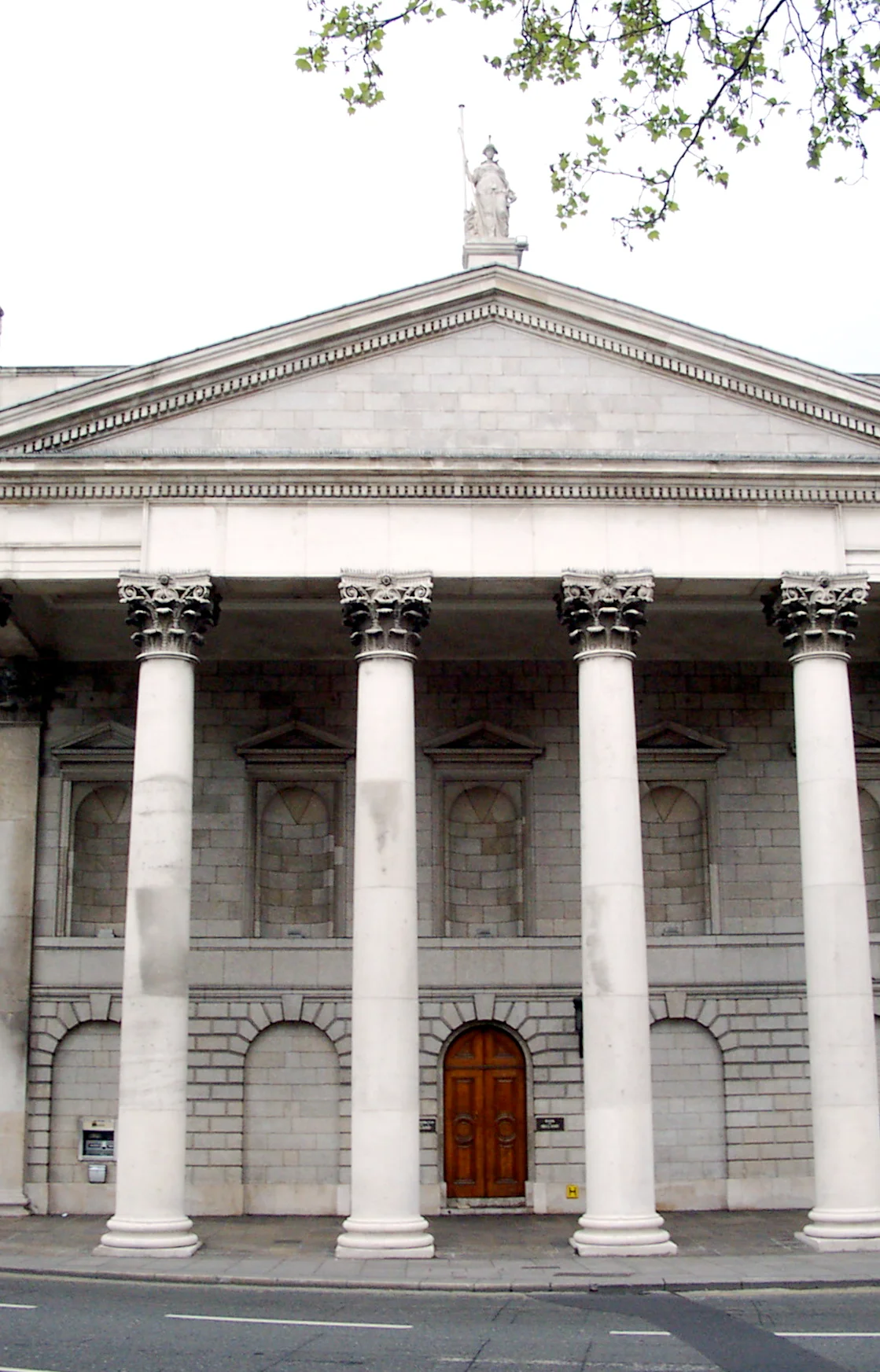

2009 Bank of Ireland Robbery
On the evening of 26 February 2009, gunmen broke into the home of a 24-year-old junior employee of the Bank of Ireland called Shane Travers, in west Dublin. They took Travers's girlfriend and two other people captive, gave him a phone, and told him exactly what would happen next. The following morning, Travers walked into the College Green cash centre - the central distribution hub for the Bank of Ireland's Dublin cash operations, opposite Trinity College in the heart of the city - and removed 7.6 million euro. He drove out, met the gang at a prearranged spot, surrendered the cash and his sports car, and only then was anyone alerted that anything had happened. It was the largest bank robbery in the history of the Irish state, and the most extreme tiger kidnapping the country had ever seen.
What a Tiger Kidnapping Is
The name comes from the patience involved. Tiger kidnappers stalk their target for days or weeks beforehand, learning routines and family members, the way a tiger stalks prey. They strike at home, take hostages, and use the threat against the hostages to force a bank or post office or cash centre employee to commit a robbery on their behalf. The employee opens the safe and walks the money out under no obvious coercion. It is the perfect crime against an institution that has invested heavily in protecting itself against direct armed robbery but not against the slower psychological violence of someone you love being held with a gun to their head. By 2009, tiger kidnappings were happening in Ireland, in the words of Teachta Dála Charlie Flanagan, 'at a rate of almost one per week.' What set the College Green job apart was the sheer scale: most tiger raids took hundreds of thousands of euro; this one took millions.
The Morning of 27 February
Travers reported to work as normal. The gang had drilled him on what to do. He accessed cash holdings at the College Green centre and removed the money. The bank's own internal procedures had not been followed - the Garda Síochána, Ireland's police force, were not informed at any point until after the cash had left the building. The minister for justice at the time, Dermot Ahern, was publicly furious afterwards, describing the failure to alert Garda as a breakdown in 'established protocols' and questioning how a single junior employee could have access to such a vast sum. The bank's chief executive Richie Boucher, who had been appointed only two days earlier, wrote to all staff the following day to remind them of the procedures and to make clear that staff safety came first. The system, in other words, had worked exactly as the gang intended: a young man, terrified for the people he loved, did precisely the thing the rules existed to prevent.
The Recovery and the Inside Job
By the next day, 28 February, the Garda had recovered 1.8 million euro of the stolen cash, found scattered across various Dublin locations. Seven people - six men and one woman, all believed to be members of a north inner-city Dublin gang with connections to a major Dublin gangland figure - were arrested in raids that sealed off a house in Phibsboro and searched ten others. Five cars and a van were seized. On 2 March the arrested appeared before the High Court to challenge their detention as unlawful; two were released that day. Nearly a year later, in January 2010, an unidentified bank employee was arrested on suspicion that the robbery had been an inside job, a tip-off from within the bank itself. One man eventually received a five-year sentence for handling the stolen cash. The bulk of the money - close to six million euro - was never recovered. Where it went, and who ultimately ordered the job, remained unanswered in the open record.
The Country in 2009
Context matters. February 2009 was the absolute pit of Ireland's economic collapse. The property bubble had burst eighteen months earlier; the country was about to enter a deep recession that would lead to an IMF bailout the following year; unemployment was rising sharply; banking confidence was already shredded. The Bank of Ireland itself, alongside Anglo Irish Bank and AIB, had been bailed out by the state weeks earlier. A 7.6 million euro robbery, in any other year, would have been a financial outrage. In February 2009 it landed in the middle of a national mood already convinced that the banks were institutions where vast sums of money could disappear into private pockets without consequence. The robbers had stolen money that, in the strange logic of the moment, the public was already convinced the banks had been losing for years.
From the Air
The College Green cash centre of Bank of Ireland sits at approximately 53.3448 degrees N, 6.2602 degrees W, directly opposite the front gates of Trinity College Dublin and at the heart of the old city centre. From altitude the College Green area is the unmistakable junction where the south quays of the Liffey, Dame Street, Westmoreland Street, and Grafton Street converge - one of the most recognisable points in Dublin. Dublin Airport (EIDW/DUB) lies 9 km north. Best viewing altitude for the city centre is 2,500-4,000 ft. Maritime climate, low cloud common.
Nearby Stories
- Wicklow Mountains 12 km away
- Mornington 14 km away
- German submarine U-1051 16 km away
- Abbey of Kells 18 km away
- Irish Military Intelligence Service 20 km away
- HMS Manners (K568) 37 km away
- Templemore 42 km away
- Irish Sea Bridge 43 km away