.jpg)
2012 Buenos Aires Rail Disaster
It was the first ordinary morning after a holiday weekend, and the train was packed the way commuter trains always are when everyone returns to work at once. About a thousand people rode the eight crowded carriages of the Sarmiento Line service from the suburb of Moreno toward downtown Buenos Aires. As the train neared its final stop at Once Station, passengers did what tired commuters everywhere do - they pressed toward the front, crowding the lead carriages to be first out the doors. At 8:33 on the morning of 22 February 2012, the train failed to stop. It struck the buffers at the end of the track, and the second carriage telescoped seven meters into the first, exactly where the crowd was thickest. Fifty-one people were killed. More than 700 were injured. None of them had done anything but board a train to go to work.
Fifty-One People
The numbers in a disaster can blur into abstraction, so it is worth holding onto what they meant. The fifty-one were students and laborers, clerks and parents, people with shifts to make and families expecting them home. They had crowded toward the front not out of carelessness but out of the small daily calculus of a long commute - a few seconds saved at the exit. That instinct placed them where the crushing force concentrated. In the weeks and years that followed, Argentines gave this loss a symbol that needed no translation: "51" - often written as the victims' families styled it - appeared on banners, walls, and placards across the city. It was not a slogan about politics. It was a refusal to let fifty-one human beings be rounded down into a line in an accident report.
A Failure That Was Foreseen
This was not a freak event. The Sarmiento Line was operated by Trenes de Buenos Aires, the company controlled by the Cirigliano brothers, and it had killed before - a fatal crash at Flores just six months earlier, in September 2011. Investigators found that the train's working brakes had not been properly activated, and the catastrophe at Once would prove to rest on years of neglect: aging equipment, lax maintenance, and a system of state subsidies meant to keep trains safe that had instead enriched the people running them. The disaster ranks among the worst in Argentine rail history, behind only the Benavídez crash of 1970, which killed 236, and the Sa Pereira crash of 1978. But unlike a sudden mechanical fluke, this tragedy had been written in advance, in skipped repairs and ignored complaints.
Mourning and Anger
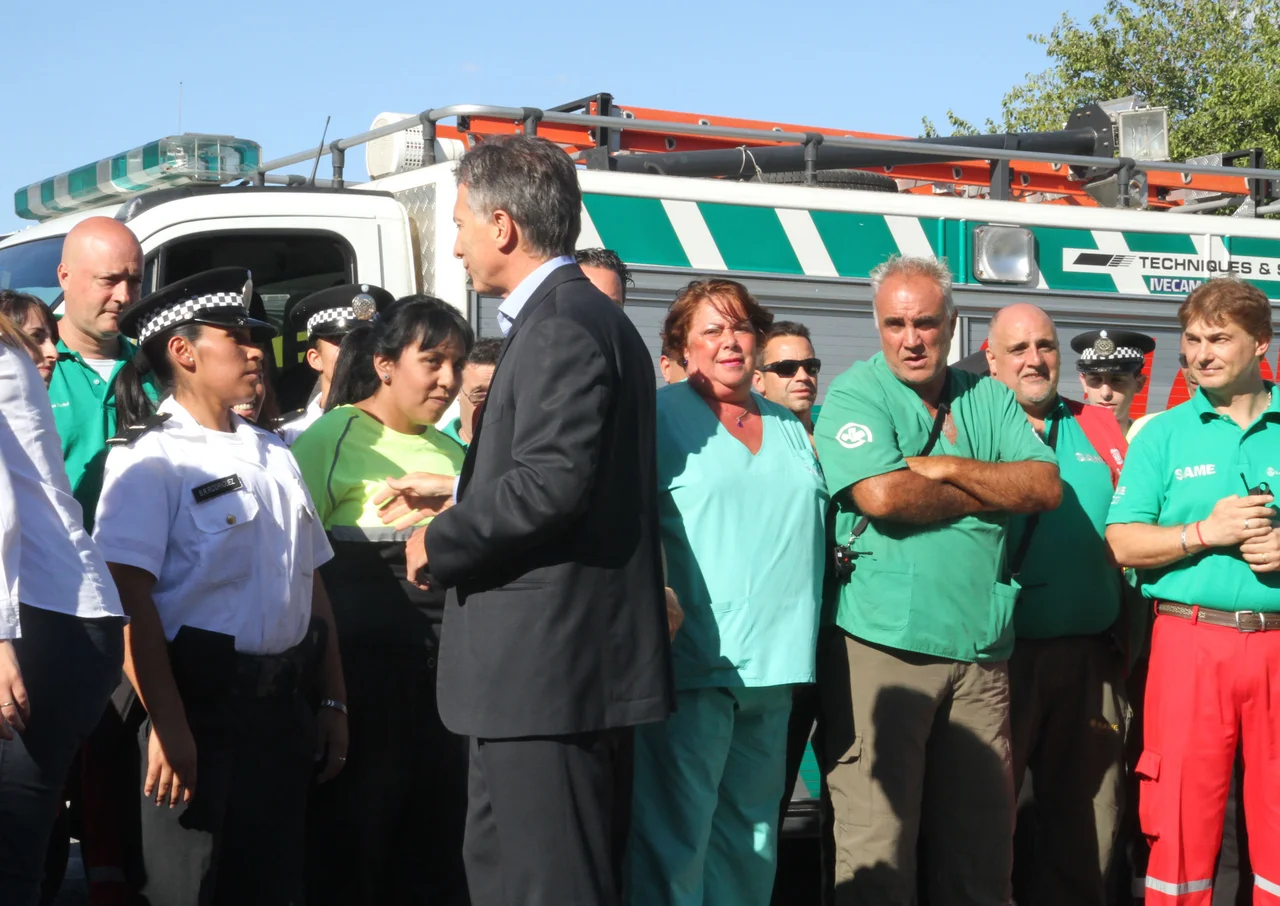
President Cristina Fernández de Kirchner declared two days of national mourning and suspended the Carnival festivities; the city's chief of government, Mauricio Macri, and the provincial governor did the same. Pope Benedict XVI sent his condolences. By chance, several ambulances were already idling nearby - staged for an unrelated emergency at the port - and were redirected to carry the wounded to hospitals. But grief curdled quickly into fury. Crowds demanding answers clashed with police at the station, and across the political spectrum came calls for accountability: complaints about the ruined state of the railways, demands for the impeachment of the transport secretary, and insistence that responsibility ran far beyond a single driver in a single cab. Argentines understood, almost at once, that this was a disaster of governance as much as of machinery.
The Reckoning at Court
Justice came slowly. A trial opened in March 2014 before a federal criminal court and ran for nearly two years, weighing both the crash itself and whether the railway and its overseers had committed fraud with public money. On 29 December 2015, the verdict came down: twenty-one people convicted. Sergio Cirigliano, one of the owners of the railway company, received nine years. Juan Pablo Schiavi, the former secretary of transport, was sentenced to eight years and barred from public office for life; his predecessor Ricardo Jaime got six. Marcos Córdoba, the driver, was sentenced to three years and six months. The convictions could not undo what happened at the buffers of Once. But they affirmed what the families had insisted from the first morning - that fifty-one deaths were not an accident of fate, but the consequence of choices made by people who could be named and held responsible.
From the Air
Once Station and the Balvanera neighbourhood sit in the dense heart of Buenos Aires at roughly 34.609°S, 58.408°W, just southwest of the city center and the Plaza del Once (officially Plaza Miserere). From the air the site reads as a tight grid of low rooftops threaded by the broad diagonal of Avenida Rivadavia and the Sarmiento rail corridor running west toward the suburbs of Flores and Moreno. A viewing altitude of 4,000-6,000 ft over central Buenos Aires keeps the rail lines and the station throat in clear view. Aeroparque Jorge Newbery (SABE) lies about 5 km northeast on the river shore; Ministro Pistarini International (SAEZ, Ezeiza) is roughly 20 km southwest. Visibility is generally best on dry autumn and winter mornings (April-August), the same season and hour of day in which the city remembers its dead.
Nearby Stories
- Ezeiza Massacre 1.9 km away
- Luján, Buenos Aires 5.1 km away
- Curutchet House 13 km away
- Colonia del Sacramento 17 km away
- Martín García Island 28 km away
- Atucha Nuclear Power Plant 37 km away
- Lobos 43 km away
- Cry of Asencio 87 km away