.jpg)
2023 Baltimore Shooting
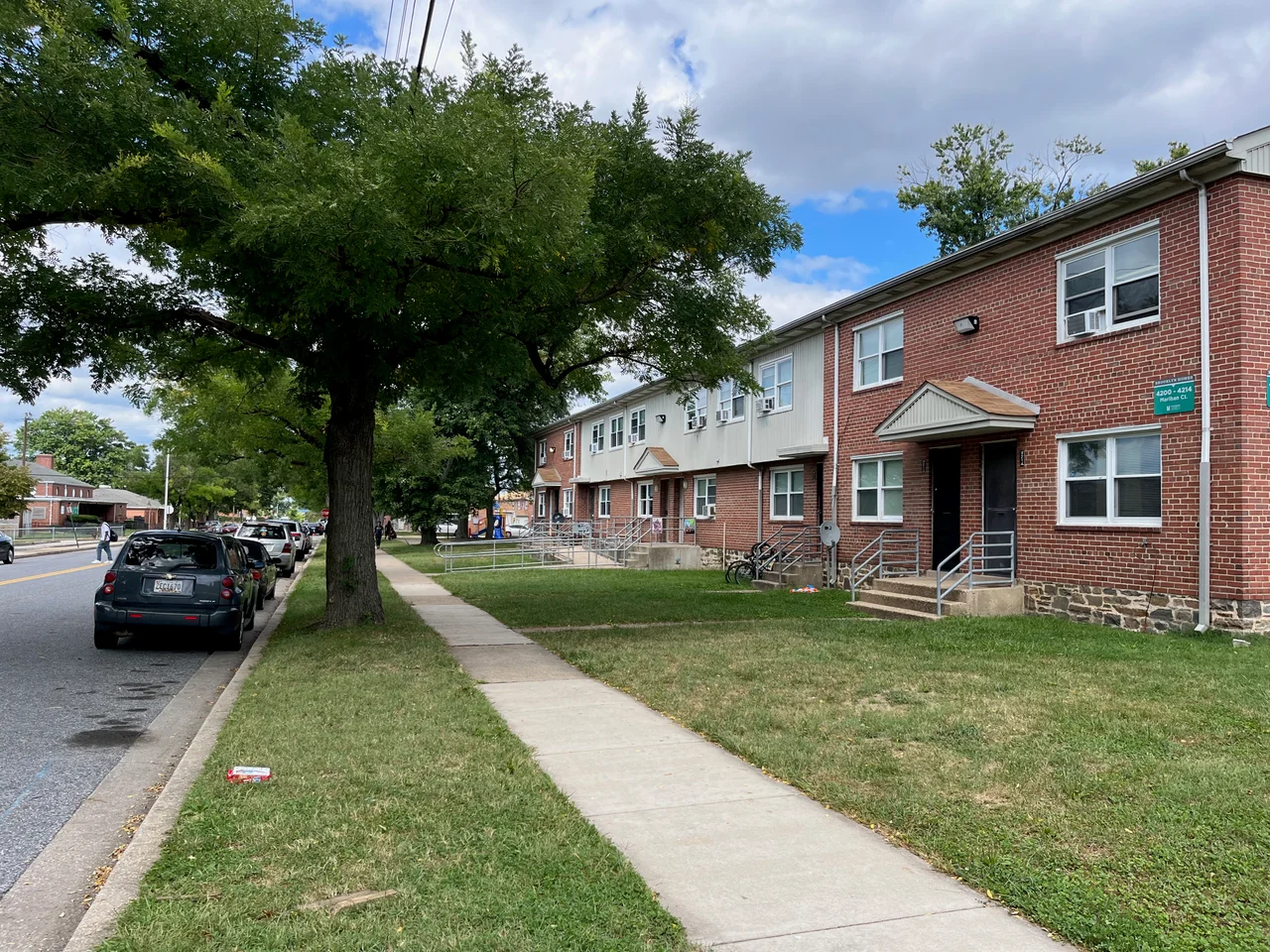
Brooklyn Day was an annual celebration in the South Baltimore neighborhood of Brooklyn - a block party held in the open spaces of the Brooklyn Homes housing development. In previous years, organizers had given the city three days' notice. In 2023, they did not. There were no police officers stationed at the event. Around 12:30 a.m. on July 2, in the 800 block of Gretna Court, at least ten people pulled out firearms and started shooting. Twenty to thirty rounds were fired in the span of minutes. Aaliyah Gonzalez, eighteen years old, was shot in the head and died at the scene. Kylis Fagbemi, twenty, died at the hospital. Twenty-eight more people were wounded. Fifteen of them were under eighteen. It was the worst mass shooting in Baltimore's history.
The Victims
The victims ranged in age from 13 to 32. Of the 28 wounded, fifteen were minors. Nine people were transported to the hospital by ambulance, while twenty drove themselves or were driven by friends and family - a measure of how thin emergency response was for a mass casualty event of this scale. The University of Maryland Medical Center's Shock Trauma Center treated twelve patients; its pediatric emergency department treated four more. MedStar Harbor Hospital treated nineteen patients. Aaliyah Gonzalez had just graduated from high school. Her mother Krystal would later speak at a Baltimore City Council hearing about her daughter's life, criticizing the police response in testimony so emotional that the hearing was postponed mid-session. The families of Fagbemi and Gonzalez filed suit against the city and state in November 2023, seeking $150 million in damages, represented by civil rights attorney Billy Murphy Jr.
Where Were the Police?
Residents told reporters that there had been no visible police presence at the party for hours. The Baltimore Police Department began receiving 911 calls about armed people and noise complaints at 5:30 p.m., more than seven hours before the shooting. Officers from the Safe Streets violence interruption program were deployed at 9 p.m. and had de-escalated five fights before the shooting started, none of which had involved weapons. Acting Police Commissioner Richard Worley said the decision not to staff the event was tied to organizers not filing a permit notice three days in advance. There were only seven officers patrolling the entire area at the time of the shooting. After a year-long internal investigation, the Baltimore Police Department in June 2024 terminated two employees - a sworn officer and a civilian - and disciplined several others on charges including making false statements, neglect of duty, and body-worn camera violations. The police department's own 173-page after-action report, released August 30, 2023, faulted supervisors for taking a hands-off approach and officers for showing little to no concern for public safety.
An Investigation Tangled by Mistakes
The investigation collected casings from more than a dozen guns at the scene, including six fired from a rifle-caliber pistol. Police estimated at least ten different shooters had been involved. The investigation was hampered by decisions made in the first hours. The Baltimore Police Department seized personal belongings from shooting victims while they were in surgery, despite a longstanding departmental pledge to minimize the confiscation of crime victims' property. Police threw out substantial amounts of trash from the scene, which forensic experts said could have destroyed DNA evidence. The Baltimore Banner reported that a 45-foot elm tree blocked the view of the only static camera overlooking the shooting site - footage that could have helped identify suspects. The tree was removed the day after the shooting, too late. Five arrests were made. Three separate trials were ordered. Aaron Brown pleaded guilty to conspiracy to commit first-degree murder in May 2024 and was sentenced to 60 years in prison with 48 suspended. Tristan Jackson took a plea deal in March 2025 for five to twelve years. A 15-year-old was charged with 44 counts including attempted first-degree murder. As of April 2025, the investigation into the remaining shooters remained open.
The Year That Followed
The Brooklyn Homes neighborhood is on the southern edge of Baltimore, separated from the rest of the city by the Patapsco River. It is historically working-class, mostly Black, and has long been one of the poorest census tracts in Maryland. After the shooting, the city's Mayor's Office of Neighborhood Safety and Engagement documented 2,000 interactions with neighborhood residents over the following year. MONSE provided relocation assistance to 23 Brooklyn Homes residents and referred 19 others to the Baltimore State's Attorney's Office. Multiple residents, including Kylis Fagbemi's mother, moved away. The Housing Authority hired private security. The Baltimore Police Department increased patrols. Whether due to these interventions or to community-led changes, Brooklyn saw the largest year-over-year decrease in violent crime of any Baltimore neighborhood. In November 2024 - sixteen months after the shooting - city officials held a press conference to mark a full year without a homicide in Brooklyn. It was, for that community, an unfamiliar milestone.
The ENOUGH Act
Maryland Governor Wes Moore announced the ENOUGH Act in Brooklyn during the 2024 legislative session - a $15 million grant program directed at underserved communities. The bill's name was an acronym: Engaging Neighborhoods, Organizations, Unions, Governments, and Help. Moore described Brooklyn as a community that had been, in his words, unseen, unheard, and underestimated. The bill passed the General Assembly and Moore signed it into law on May 9, 2024. Whether the kind of structural neglect that produced the conditions for the shooting can be reversed by a $15 million grant program is the open question Baltimore is still trying to answer. The legacy of Brooklyn Day will not be the trials or even the arrests. It will be measured in whether the city's institutional habits, the ones that failed to put officers near a block party where more than 700 people had gathered, change in any durable way. That work, on July 2026, was still in progress.
From the Air
The 2023 Baltimore shooting occurred at the Brooklyn Homes housing development in the Brooklyn neighborhood of South Baltimore, at approximately 39.2303 N, 76.6006 W. The location is on the southern bank of the Patapsco River, immediately south of the I-95 Fort McHenry Tunnel. BWI Marshall (KBWI) is 9 miles southwest; the site sits within the Class B airspace around the airport. From altitude, the Brooklyn Homes development is identifiable as a cluster of brick low-rise apartment buildings on the residential grid south of the river, with the curving Patapsco shoreline and the rail yards of CSX Curtis Bay Branch to the south and west.
Nearby Stories
- Takoma Park, Maryland 5.2 km away
- Annapolis 5.5 km away
- Adkins Arboretum 7.8 km away
- Murders of Katherine and Sheila Lyon 28 km away
- Fort Delaware: The Island Prison Where 33,000 Confederates Waited Out the War 32 km away
- Battle of Gettysburg 35 km away
- Memorial Hall (Delaware State) 36 km away
- Three Mile Island: The Accident That Stopped Nuclear America 71 km away