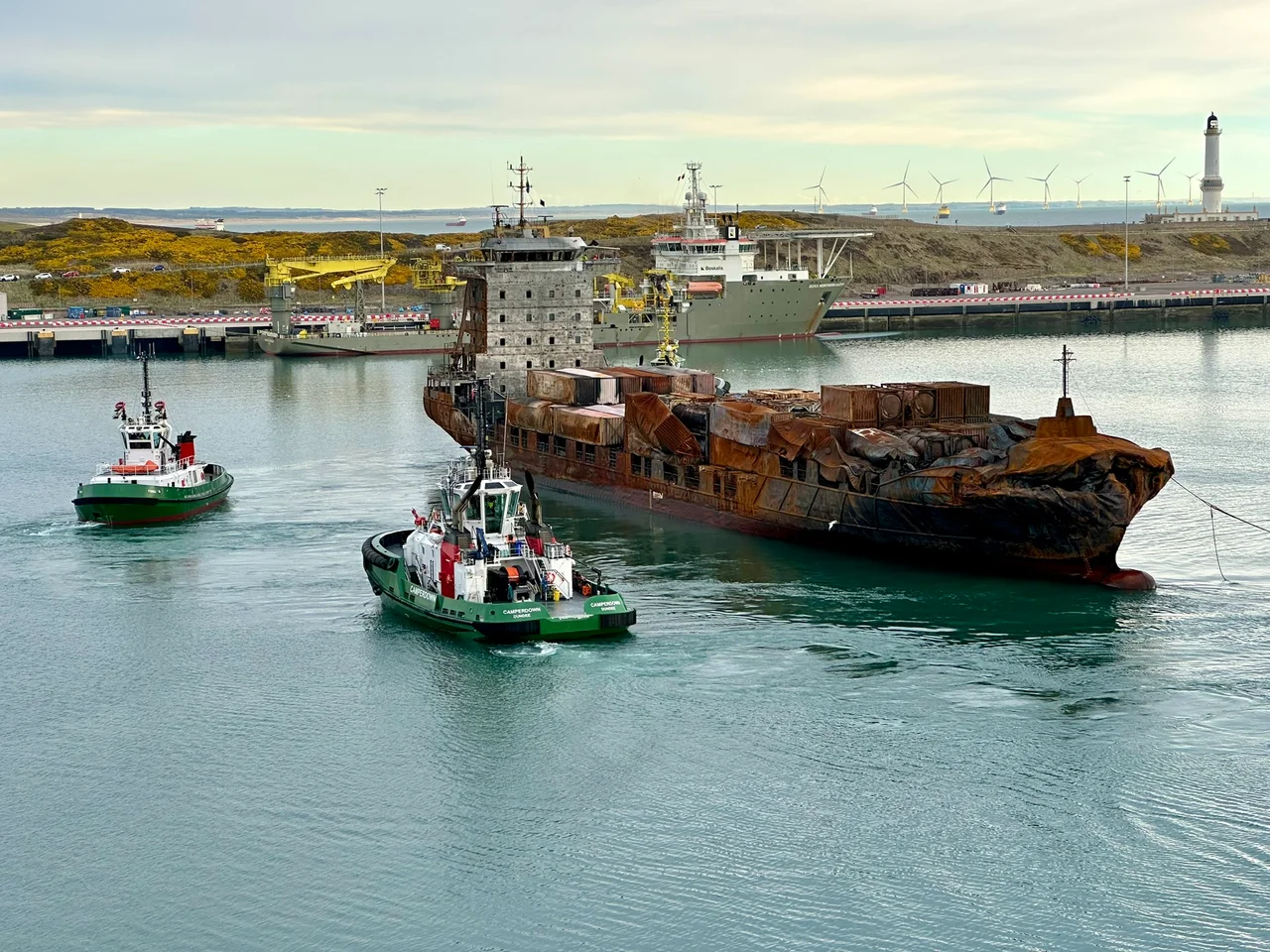

2025 North Sea Ship Collision
A Filipino crewmember was missing. By the end of the day on 10 March 2025 he was presumed dead. His name was Mark Angelo Pernia, and he had a family in the Philippines waiting for him to come home from the North Sea. He never did. The container ship he was working aboard - the Solong, a 140-metre feeder flagged out of Madeira - had struck the US-flagged oil tanker Stena Immaculate at anchor off the East Yorkshire coast at 09:47 GMT, at a cruising speed of around 16.4 knots, into morning fog the Met Office had already warned about. Multiple explosions followed. Both ships caught fire and were abandoned. Thirty-six other people were pulled from the water. One man was not.
The Anchorage Off the Humber
The Stena Immaculate, US-flagged and crewed entirely by twenty-three American nationals, was sitting at anchor waiting to enter the Port of Killingholme in Lincolnshire. In her sixteen secure cargo tanks: 220,000 barrels of Jet A-1 aviation fuel, loaded under a short-term charter to the US government for the United States Air Force. She was one of nine ships at this informal but uncharted anchorage that morning - five other tankers and three bulk carriers also riding their cables, waiting their turn. Solong, owned by Stena AB and operated by Crowley Maritime of Florida, was running north-to-south. At 01:30 GMT she had passed Longstone Lighthouse off the Northumberland coast and settled onto a heading of 150 degrees. She held that heading for over eight hours. The Met Office fog warning was active across the Humber area. The ships' automatic identification systems were transmitting their positions normally. None of that mattered.
The Collision
At 09:47 GMT, Solong drove into Stena Immaculate at speed. Witnesses described a massive fireball. RNLI lifeboats launched from Bridlington, Mablethorpe, Skegness and Cleethorpes. A crew transfer vessel that happened to be in the area joined the rescue. Only one of the tanker's cargo tank compartments ruptured. The two ships locked together and burned through the day, eventually drifting apart of their own accord overnight. By nightfall the count was clear: all twenty aboard Stena Immaculate accounted for, all but one aboard Solong rescued. The missing man was Filipino. He had entered the water and had not been found. The Coastguard called off the search the next morning. By the afternoon of 11 March, both burning vessels were considered likely to remain afloat. A 3-nautical-mile, 2,000-foot no-fly zone was thrown over the wreck while salvors and firefighting tugs assessed what was left.
The Captain, the Old Bailey, the Verdict
On 11 March, Humberside Police opened a criminal investigation. They arrested Solong's 59-year-old Russian captain on suspicion of gross negligence manslaughter. The Solong's safety record was already unflattering: in July 2024, Irish inspectors had logged ten outstanding deficiencies, including an emergency steering compass that could not be read, inadequate alarms, poorly maintained survival craft and fire-door problems. Solong's operators Ernst Russ said all the issues had been rectified. On 14 March 2025 the captain was charged with gross negligence manslaughter of the missing crewmember and remanded in custody. He pleaded not guilty at the Old Bailey on 30 May. A trial was set for January 2026. On 2 February 2026, following that trial, he was found guilty. A retired Royal Navy rear admiral, Chris Parry, had said early on what the jury eventually decided: a ship moving at 16 knots through a known anchorage in fog was a ship being navigated negligently.
Whose Sea, Whose Fuel, Whose Birds
The aftermath ran in three currents at once. The legal one ended at the Old Bailey. The diplomatic one began on 11 March, with the United States, Portugal and the UK opening joint investigations through the Marine Accident Investigation Branch. The environmental one was the slowest and the most uncertain. Aviation fuel is less viscous than crude - it does not clog feathers the way bunker oil does - but it is poisonous, and both ships carried heavy fuel oil for their own engines that could smother seabirds if it leaked. The Stena Immaculate was finally towed into Great Yarmouth on 11 April 2025, a month after the collision. By that point Solong had drifted miles south down the Lincolnshire coast and burned itself out. Of the thirty-seven people on the two ships, thirty-six made it home. One did not.
From the Air
The collision site is at roughly 53.74 degrees north, 0.39 degrees east, about 13 nautical miles north-east of the Spurn Head peninsula and 20 nautical miles east of Withernsea. Nearest ICAO: EGNJ (Humberside), 35 km west across the Humber estuary. A 3-nautical-mile, 2,000-foot temporary no-fly zone was imposed over the site in the days after the collision. The North Sea off the Humber holds dense ship traffic - anchorages, wind farms (Westermost Rough lies 8 km off Withernsea) and gas-field platforms - and fog can close in within minutes.
Nearby Stories
- HMS Cobra 3 km away
- West Sole Gas Field 6.3 km away
- SM UC-47 13 km away
- Skipsea Castle 15 km away
- Burton Constable Hall 18 km away
- Battle of Winceby 26 km away
- 2004 Ingoldmells Bus Crash 30 km away
- SMS Blucher 306 km away