
3. Liga
In November 2012, Alemannia Aachen filed for insolvency, and a club that had played in the top flight of German football just six years earlier was effectively erased from the 3. Liga before the final whistle blew. It was, by then, a familiar story in Germany's strange third division - a league where a fallen Bundesliga giant might draw 27,500 spectators to a midweek match, then dissolve into nothing by spring. The 3. Liga is football's purgatory, and football's proving ground, and one of the most-watched third-tier leagues on Earth.
A League Born in Compromise
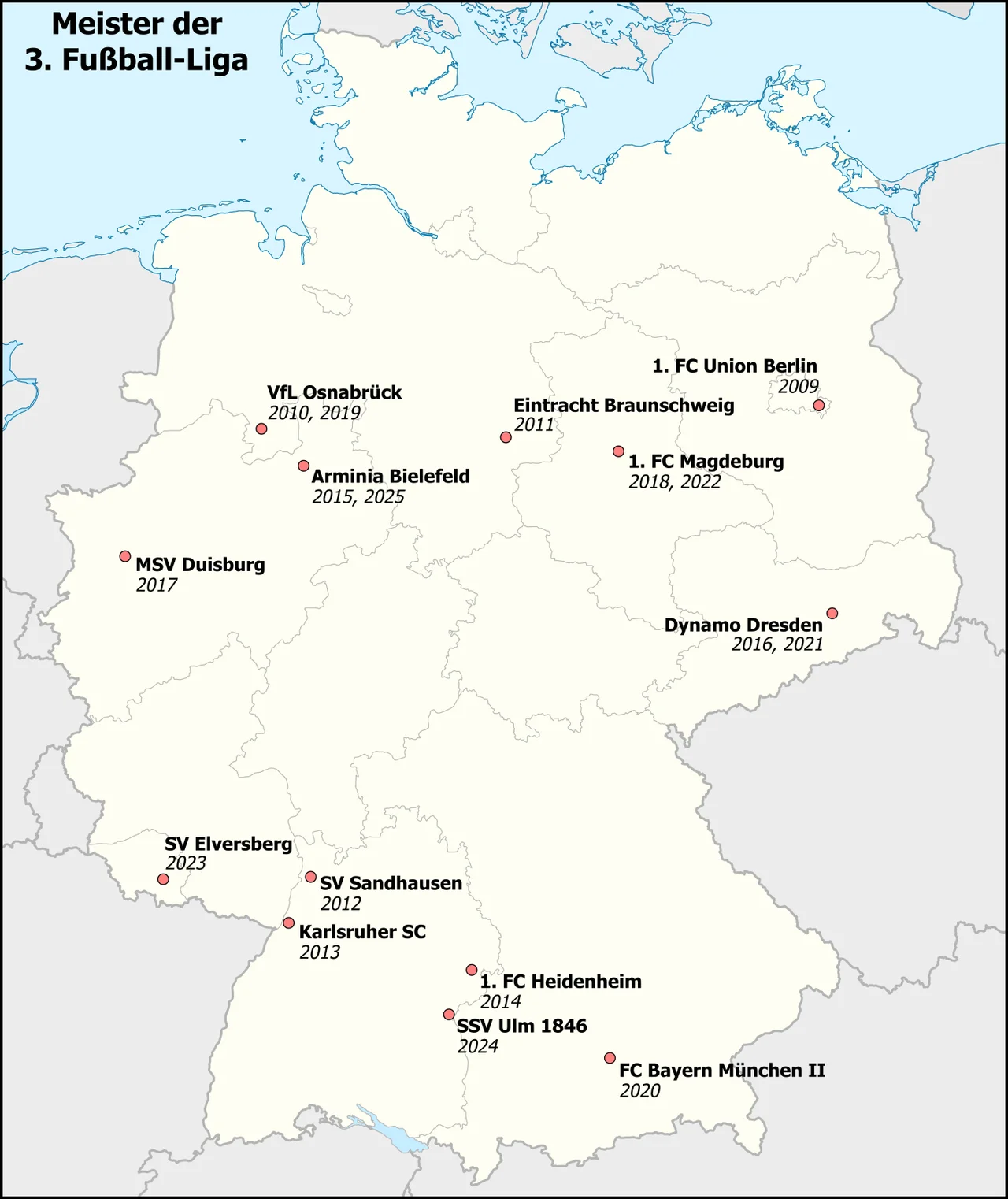
The DFB created the modern 3. Liga in 2008 to fix what nobody could quite agree was broken. The old Regionalliga had served as the third tier, but Bundesliga clubs wanted a cleaner pipeline for their young players, and smaller cities wanted a stage worth fighting for. When the DFB-Bundestag voted in September 2006, the dispute over reserve teams nearly broke the deal - bigger clubs demanded unrestricted access for their U23 squads, while everyone else worried about distorted competition and half-empty stands. The compromise capped reserve teams at four in the inaugural season. The first match kicked off on 25 July 2008 at the Steigerwaldstadion in Erfurt, where Halil Savran scored the league's first-ever goal, sending Dynamo Dresden past Rot-Weiß Erfurt one-nil before halftime.
Fallen Giants and Sleeping Cities
Look at the table on any given weekend and you find names that once filled European stadiums. 1. FC Kaiserslautern, German champions four times. Dynamo Dresden, the pride of East German football. Hansa Rostock. Arminia Bielefeld. Alemannia Aachen, who in 2004-05 played UEFA Cup matches against the likes of AZ Alkmaar and Zenit St. Petersburg. These clubs draw crowds that shame entire leagues in other countries - Dynamo Dresden averaged 27,500 fans during the 2015-16 third-division season. By 2018-19, the 3. Liga as a whole crossed three million spectators, an average over 8,000 per match, with six clubs regularly drawing five-figure crowds. The Italian Serie B, France's Ligue 2, Spain's Segunda - these second divisions barely match what Germany's third pulls in week after week.
The Anatomy of a Collapse
The 3. Liga is also where dreams die in spreadsheets. Stuttgarter Kickers went down in 2009 after a three-point penalty for an unpaid loan. Kickers Emden withdrew before the season even started. Rot Weiss Ahlen, TuS Koblenz, Kickers Offenbach, VfR Aalen, FSV Frankfurt, Chemnitzer FC, Rot-Weiß Erfurt - one by one they filed for bankruptcy, their points deducted, their futures relegated to the fifth tier or lower. Operating a third-division club in Germany costs more than running most second-tier sides anywhere else in Europe, and the broadcast money - around 12.8 million euros split among twenty teams - covers only a fraction. The league lost money every year from 2008 to 2013, hemorrhaging 20.9 million euros in its worst season.
The Pipeline and the U23 Question
Every squad must list at least four players under 23 in its match-day report. This is the bargain the 3. Liga struck with the DFB: in exchange for the league's existence, it would serve as a finishing school for the German national team. VfB Stuttgart II, Borussia Dortmund II, Bayern Munich II - reserve squads slug it out alongside historic first teams, drawing crowds of a few hundred fans in stadiums built for thousands. The rule is awkward and produces awkward fixtures, but it has worked. Players who would have languished in obscurity now face real professional pressure - relegation battles, hostile away crowds, paid weekend coverage on Telekom and the DFB YouTube channel.
Return of Alemannia
Twelve years after that 2013 bankruptcy, Alemannia Aachen climbed back into the 3. Liga, where they currently sit through the 2025-26 season. The Tivoli stadium fills again. The yellow-and-black scarves come out of cupboards. This is the deeper story the league tells: that in German football's geography, third tier is not the bottom but the basecamp, the place where cities measure themselves against their own history and decide whether to climb. Wehen Wiesbaden has played fifteen seasons here, more than anyone. SSV Ulm finally made it in 2023-24. Every August, twenty clubs start over, and somewhere in the country a generation of fans believes this is the year their grandfather's stories come back to life.
From the Air
Coordinates approximate Aachen (50.79°N, 6.10°E), home of Alemannia Aachen, one of the league's most historically prominent clubs. The Tivoli stadium sits in western Aachen. Nearest major airport: Maastricht Aachen Airport (EHBK), about 30 km northwest. Düsseldorf (EDDL) and Cologne-Bonn (EDDK) provide jet service. Recommended viewing altitude: 3,000-5,000 ft AGL for urban context including stadium and old city.
Nearby Stories
- Heinsberg-Lindern Railway 7.8 km away
- Baptismal font at St Bartholomew's Church, Liège 7.8 km away
- Federal Office for the Protection of the Constitution 16 km away
- Limburg (Belgium) 17 km away
- F.L.Y. 17 km away
- Marcinelle Mining Disaster 84 km away
- Fort Jeanne d'Arc 148 km away
- Marmoutier Abbey 202 km away