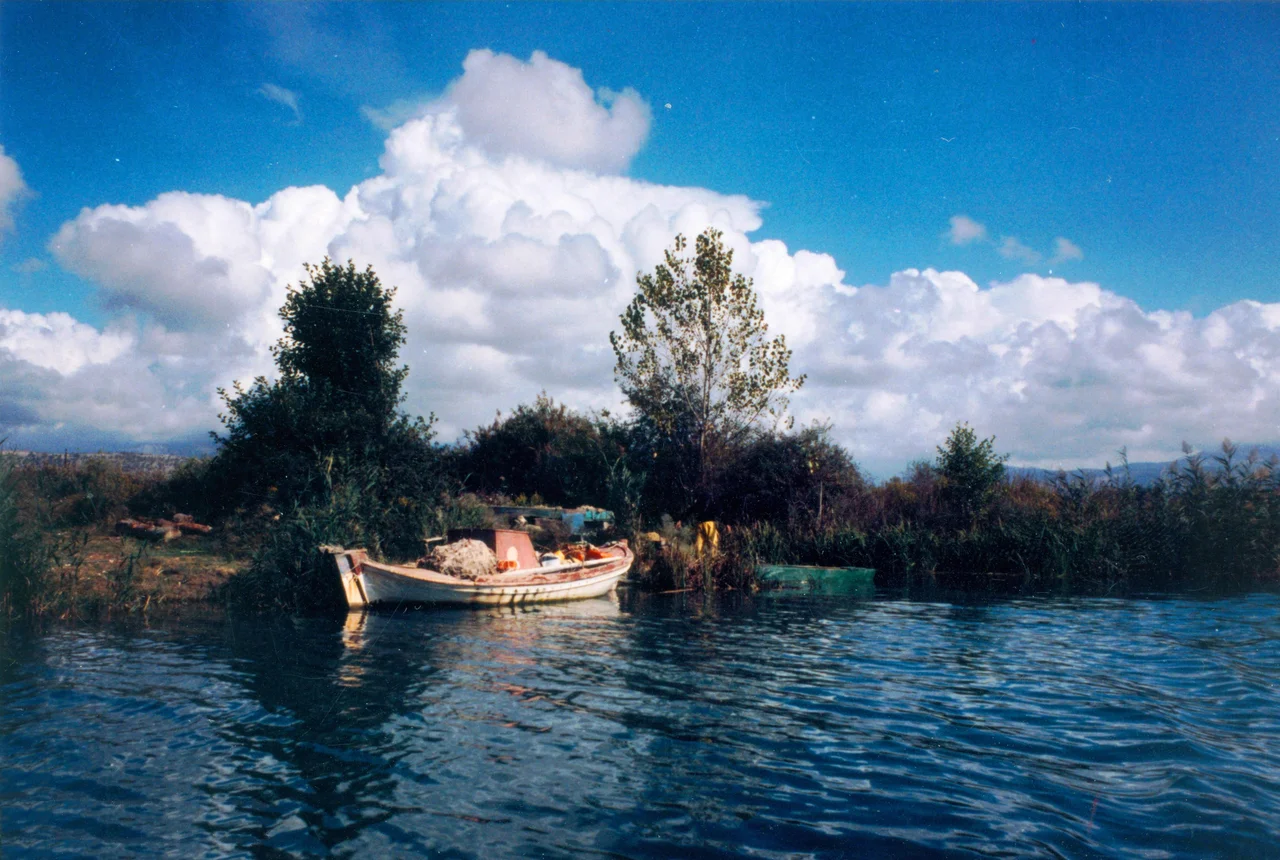

Acheron
Sigmund Freud chose a line from Virgil as the motto for The Interpretation of Dreams: flectere si nequeo superos, Acheronta movebo — "If I cannot bend the will of Heaven, I shall move Hell." He meant it as a metaphor for the unconscious, but Virgil meant the Acheron as a real place, and in a sense it is. The river exists. It runs cold and turquoise through limestone gorges in northwestern Greece, its source rising near the village of Zotiko in the mountains of Ioannina, its water staying around 12 degrees Celsius year-round regardless of season. Fifty-two kilometers later it reaches the Ionian Sea at the small village of Ammoudia. Along the way it passes the ruins of the one place in the ancient world where the living could speak to the dead.
The River the Poets Imagined
The Acheron appears in Homer as one of the rivers of Hades, the place where Cocytus and Phlegethon both flowed. Later writers elaborated the geography: Virgil made the Acheron the principal river of Tartarus, from which the Styx and Cocytus both sprang, and placed Charon at its bank, ferrying the newly dead across with his oar. Dante put the Acheron at the very border of Hell in the Inferno — the first river a soul must cross, the threshold between the world of the living and whatever comes after. Plato, in the Phaedo, called it the second greatest river in the world, excelled only by Oceanus itself. The name's etymology is uncertain. Sometimes the river was called the "river of woe." The Suda, the Byzantine encyclopedia, offered a more unusual reading: a place "of healing, not punishment, cleansing and purging the sins of humans." Whether the Acheron was punishment or release seems to have been a genuinely open question in the ancient world.
What Draws People Here Now
The mythology is one reason visitors come to the Acheron. The river itself is another. The Acheron gorge, particularly the section accessible from the village of Gliki, is one of the more dramatic natural landscapes in Epirus. The water is clear enough to see the riverbed in detail, and cold enough that on a summer afternoon, when the temperature in the surrounding hills is pushing 35 degrees, wading into the Acheron is a shock the body remembers. Organized river trekking takes visitors up through the gorge, past stands of plane trees and through narrows where the walls close in and the sky becomes a thin blue stripe overhead. Rafting, kayaking, and canoe trips run the lower sections toward Ammoudia. The combination of mythological weight and physical immediacy is unusual. Not many rivers have been described by Homer, Virgil, Dante, Shakespeare, and Marlowe — and also rated four stars on hiking platforms for the quality of the water.
Shakespeare, Marlowe, and the Living Memory of a Name
The name has never stopped circulating. In Marlowe's Doctor Faustus, when Faustus conjures Mephistopheles he addresses the gods of Acheron directly: Sint mihi dei Acherontis propitii — "May the gods of Hell be propitious unto me." Shakespeare's Hecate, in Macbeth, summons the witches to "the pit of Acheron." These are not scholarly references; they are the casual shorthand of writers who assumed their audiences knew what Acheron meant. The name attached itself to other things: a lake in Antarctica, several Royal Navy ships named HMS Acheron, a stream in Canterbury, New Zealand. An Eocene turtle genus was named Acherontemys. When ancient Greeks named a river in Epirus after the boundary between life and death, they gave the entire concept a geographic address — and the address proved permanent.
The River's Mouth
At Ammoudia, where the Acheron reaches the sea, the mythological and the physical converge one last time. The Necromanteion of Ephyra — the Oracle of the Dead, where ancient visitors came to consult the souls of the departed — stands about four kilometers from the river's mouth, at the confluence of the Acheron and the Kokytos. The two rivers that Homer described flowing into one another in Hades actually do meet here, above a beach where the water is shallow and warm and families with children wade through the shallows. Four kilometers inland, on the hill of Agios Ioannis near the village of Mesopotamo, the ruins of the oracle's walls and chambers still stand. The geography made the choice of this place as an entry to the underworld logical: a cold river emerging from a dark gorge, flowing through flatlands toward a marsh, surrounded by the sound of water. It felt, to those who came here, like the edge of something.
From the Air
The Acheron river system runs through the Preveza and Thesprotia regional units of northwestern Greece. The river's mouth is at approximately 39.236°N, 20.476°E, at Ammoudia on the Ionian coast. From the air, the river is visible as a clear blue-green ribbon cutting through the flat coastal plain before reaching the sea. The gorge section near Gliki, further inland, shows as a deep cut through limestone hills. The Necromanteion site is at approximately 39.2362°N, 20.5345°E. The nearest airport is LGPZ (Aktion National Airport, Preveza), about 50 kilometers to the south. Flying north along the Ionian coast at 3,000–5,000 feet, the river mouth at Ammoudia is clearly identifiable where the turquoise river water meets the sea.
Nearby Stories
- Battle of Olpae 9.5 km away
- Achilleion (Corfu) 12 km away
- Battle of Nicopolis (1798) 14 km away
- Corfu 38 km away
- Vikos Gorge 45 km away
- Battle of Karpenisi 49 km away
- Meteora: The Monasteries Built on Impossible Pillars 50 km away
- Hellenic Trench 136 km away