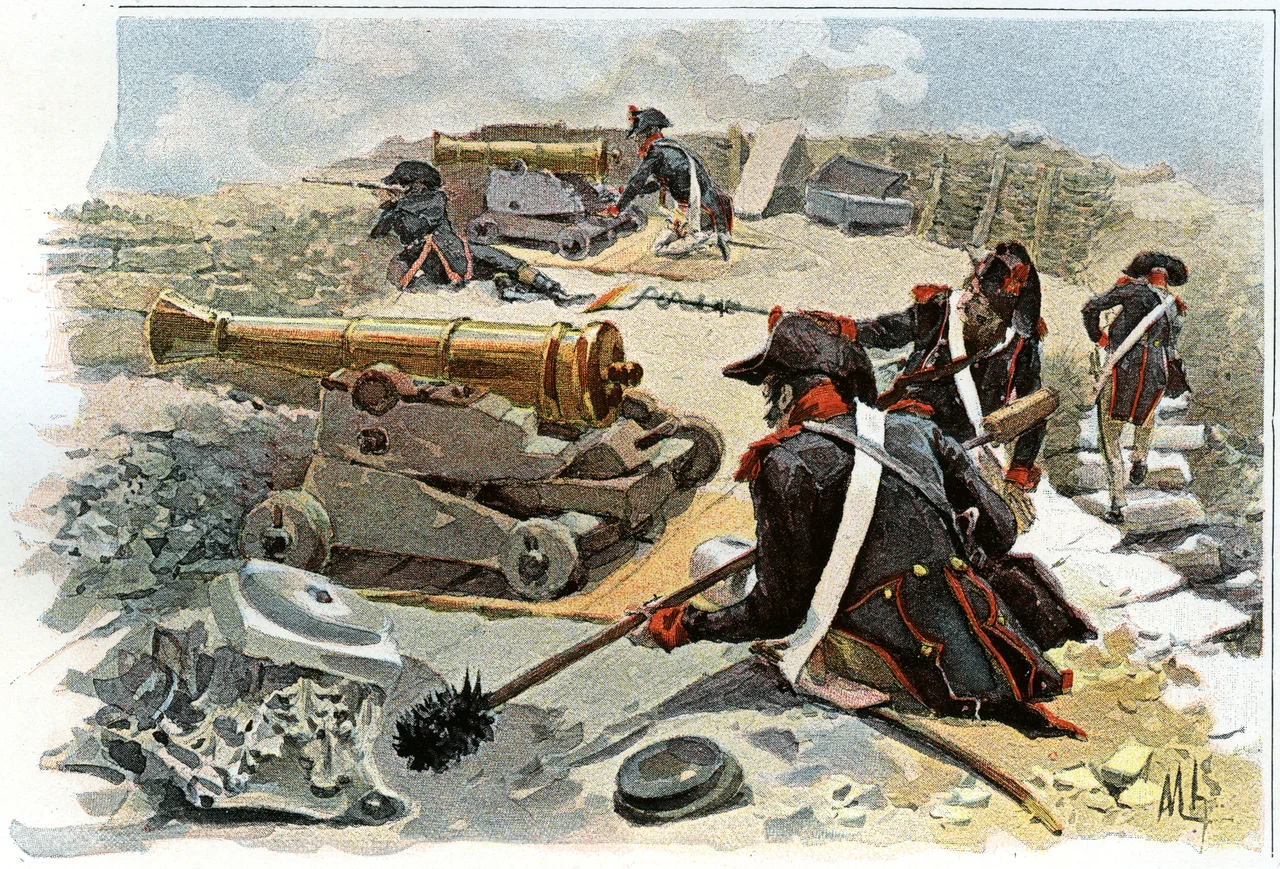

Battle of Nicopolis (1798)
The ruins of ancient Nicopolis were already eighteen centuries old when soldiers began dying among them in October 1798. The battle fought there that autumn was small by the standards of the Napoleonic Wars — a few hundred French troops and their Greek allies against a force many times larger — but its aftermath fell on the people of Preveza with devastating force. What happened to the town's inhabitants after the fighting ended belongs to the history of this place as much as any troop movement or tactical maneuver.
A Republic Falls, an Empire Shifts
The chain of events that brought French soldiers to Nicopolis began in 1797, when Napoleon's campaigns ended the Republic of Venice. By the Treaty of Campo Formio, the former Venetian islands — Corfu, Cephalonia, Lefkada, Zakynthos, Ithaca, Kythira — passed to France, along with a handful of mainland towns including Preveza and Butrint. These Epirote enclaves sat directly inside the territory of Ali Pasha of Ioannina, the semi-autonomous Ottoman-Albanian ruler whose pashalik encompassed much of Albania and mainland Greece.
Both sides initially courted each other. Ali met French commanders, received their envoys, even feigned sympathy for Jacobin ideals. What he actually wanted was Preveza and the other exclaves — and the French refused to give them. Napoleon's invasion of Egypt in 1798 then alarmed Ali about French ambitions, and the news of the French defeat at the Battle of the Nile resolved his hesitation. He sided with the Ottoman-Russian alliance, mobilized his forces, and moved on Preveza.
The Stand at Nicopolis
The French commander at Preveza had anticipated trouble and set his men to work building fieldworks on the isthmus at the site of ancient Nicopolis — the narrow neck of land that controls the approach to the peninsula. In just over two weeks they threw up two artillery redoubts on small hills, armed with old Venetian three-pounder guns. The left redoubt faced the Ionian Sea; the right faced the Ambracian Gulf. Between them, five discontinuous trenches.
The force defending these positions was small. The most reliable figures give approximately 440 French soldiers, 381 from attached demi-brigades, plus 41 sappers and 18 artillerymen. They were joined by around 200 local men from Preveza and 60 Souliote fighters. Against them Ali Pasha brought an army that French eyewitnesses estimated at 10,000 to 15,000 men.
Fighting began at midnight on October 22-23. Attacks came in waves through the night and into the morning. At one point French grenadiers counter-attacked and drove Ali's soldiers back as far as the ancient theatre of Nicopolis. But the pressure was relentless, and by around 08:00 Ali launched the mass of his cavalry. The French lines broke. Officers were captured one by one — La Salcette, then Richemont. A detachment under Captain Tissot fought a slow retreat through the ruins, repulsing cavalry attacks, allowing some civilians to escape toward the sea. They held out at the house of the French consul until they ran out of ammunition. The gunboat La Frimaire, anchored offshore, had already departed after receiving false reports that no French had survived.
What Happened in Preveza
After the fighting ended, the people of Preveza faced what fell on many towns that found themselves on the losing side of such a contest. Ali Pasha had the town's inhabitants who had supported the French publicly executed. The town was torched.
Many Prevezans had fled to Aktion, across the mouth of the gulf, during the battle. The metropolitan bishop of Arta — who may not have known what was intended — was used to carry Ali's message that they could return safely, that amnesty was guaranteed. The people who trusted that message and came back were executed.
These were townspeople: merchants, craftspeople, families who had lived in Preveza under Venetian and then French administration. They had no say in the political allegiances that made their town a military objective. Their deaths are the human reality that lies behind the strategic and diplomatic history of this place.
The Prisoners and What Followed
La Salcette, seven French officers, and 149 other ranks were taken prisoner. They were subjected to mistreatment and paraded through the streets of Ioannina before being sent to Constantinople as a demonstration of Ali's loyalty to the Ottoman Sultan. A number of them, including La Salcette, Richemont, and Tissot, were later imprisoned in the Yedikule Fortress in Constantinople. Many died in captivity. The survivors were freed in 1801.
Among the French prisoners was the diplomat and writer François Pouqueville, who recorded accounts of the battle from conversations with the captured officers. His writings became one of the primary sources through which the events of October 1798 entered the historical record. Vonitsa surrendered to Ali shortly after Preveza fell. Only Parga held out. Preveza itself remained under Ali's control until 1800, when the Septinsular Republic was established and the mainland exclaves came under direct Ottoman administration. The town would change hands several more times before the Kingdom of Greece took it during the First Balkan War in 1912.
Ancient Ruins, Modern Soldiers
The site of the battle is inseparable from the ruins of Nicopolis — Augustus's city, eighteen centuries old by the time the redoubts were built. Ali Pasha made his command post on a hill the sources call Michalitsi, which may have been on or near the Monument of Augustus itself. French grenadiers counter-attacked toward the ancient theatre. Tissot's men fought their retreat through the old street grid. The aqueduct, the stadium walls, the long Byzantine fortifications — all of them formed the landscape of the battle.
Today the ruins are on Greece's tentative list for UNESCO World Heritage designation. From the air, looking down on the isthmus between the gulf and the sea, the shape of the ancient city is still visible in the scrub. The narrow approach that the French tried to hold with their Venetian three-pounders is still the same narrow approach. The ground remembers what happened there, even when the documents disagree on the numbers.
From the Air
The battlefield of Nicopolis (1798) coincides with the ancient city site at approximately 39.014°N, 20.733°E, on the isthmus north of modern Preveza. From altitude, the peninsula is clearly defined by the Ambracian Gulf to the east and the Ionian Sea to the west — the narrowing that made the Nicopolis isthmus strategically unavoidable. Aktion National Airport (LGPZ) sits directly across the gulf mouth, less than 5 km east-southeast. Recommended altitude for site overview: 1,000–2,000 m. The ruins of the Byzantine walls and the Roman theatre are visible in clear weather from low cruising altitude.
Nearby Stories
- 2015 Lefkada Earthquake 2.9 km away
- Cichyrus 4.9 km away
- Battle of Olpae 5.1 km away
- Stratos 19 km away
- Achilleion (Corfu) 42 km away
- Lake Plastiras 58 km away
- Corfu 75 km away
- Hellenic Trench 97 km away