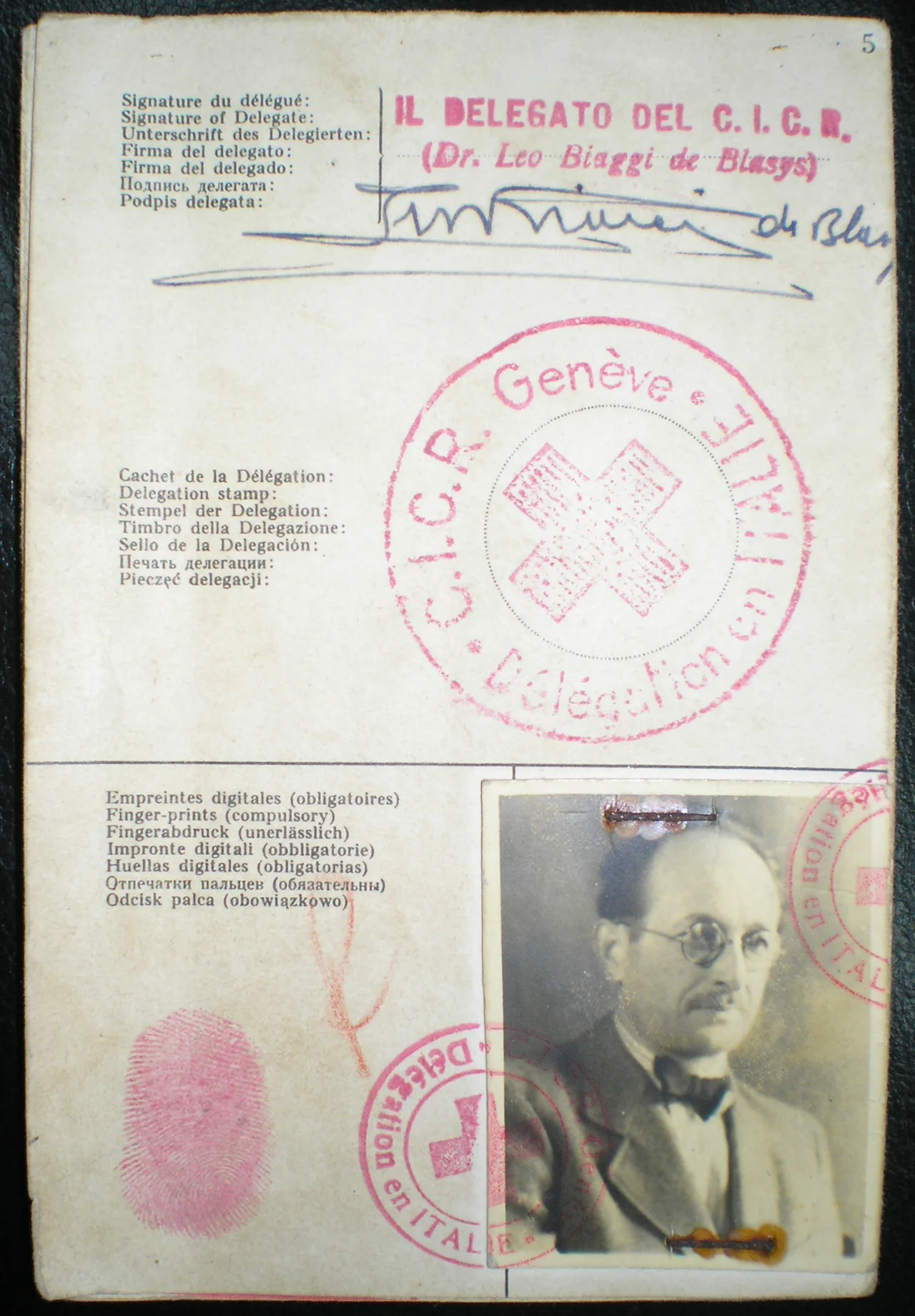

Adolf Eichmann's Capture
He had spent fifteen years pretending to be an ordinary man. Under the name Ricardo Klement, he rode the same bus home each evening to a modest house on Garibaldi Street in San Fernando, a working-class district north of Buenos Aires, and his neighbors knew nothing of who he was. But the man calling himself Klement was Adolf Eichmann, the SS officer who had managed the logistics of the Holocaust - the trains, the timetables, the bureaucracy that carried millions of Jews to the extermination camps. On the evening of 11 May 1960, as he walked the last stretch from the bus stop toward his door, a stranger stepped into his path and spoke to him in Spanish: "Un momentito, señor." One moment, sir. In just over twenty seconds, the men who said those words had him in a car. The architect of a genocide had finally been found, on a dark street at the far edge of the world he had helped to ruin.
The Weight of What He Did
To understand why this capture mattered so deeply, you have to begin not with Eichmann but with his victims. He was a central organizer of the "Final Solution," present at the Wannsee Conference where the murder of European Jewry was coordinated, and the man who oversaw the deportations that fed the death camps. The people he sent east were not abstractions. They were families pulled from cities and villages across Europe - grandparents, children, neighbors, whole communities erased. For the young state of Israel, this was not distant history but lived grief: roughly 200,000 of its residents had themselves survived the Nazi camps and ghettos, and most carried the names of relatives who had not. Eichmann sat at the very top of the list of wanted Nazis. His capture was, as one account put it, a matter of principle - a debt owed to the murdered millions who could no longer speak for themselves.
Found by a Blind Man
The trail that led to him ran, improbably, through the home of a German Jew named Lothar Hermann. Hermann had been persecuted by the Nazis and had lost his sight, and he had settled in Argentina. When his daughter befriended a young man named Klaus who boasted of his father's service to the Third Reich and whose surname was Eichmann, Hermann's suspicions stirred. He reported them, and his information eventually reached Israeli intelligence and the German prosecutor Fritz Bauer, who passed it on. It was a humbling truth that the world's intelligence services had failed for years to find Eichmann, and that the decisive clue came from an ordinary, blind survivor who simply paid attention. Hermann received the promised reward only in 1972, near the end of his life, and when his role became known he was harassed by local Nazis - his daughter forced to flee the country.
The Operation on Garibaldi Street
Once agents confirmed that Klement was indeed Eichmann, the head of the Mossad, Isser Harel, came to Buenos Aires to lead the operation himself. The team were volunteers; nearly all had lost relatives in the Holocaust, and they were under strict orders to take Eichmann alive and unharmed - to deliver him not to vengeance but to a courtroom. The capture itself was carried out by an operative named Peter Malkin, who later wrote that he was so repulsed by the idea of touching Eichmann that he wore gloves. The timing was delicate: Israel had no regular flights to Argentina, so the team arranged to spirit Eichmann out aboard the aircraft that had brought an official Israeli delegation to Buenos Aires for the 150th anniversary of Argentina's independence. For nine days they hid him in a rented villa. On 20 May he was flown to Israel, disguised and sedated, on an El Al flight.
A Trial, and a Reckoning
The operation outraged Argentina, which accused Israel of violating its sovereignty and took the matter to the United Nations Security Council. Israel did not deny the moral stakes: it argued that the unprecedented nature of Eichmann's crimes justified extraordinary means, noting that the men who seized him were themselves drawn from the people he had tried to annihilate. In 1961 Eichmann stood trial in Jerusalem, sealed inside a bulletproof glass booth as survivor after survivor testified - a public accounting that taught a new generation the full shape of the Holocaust. He was convicted and hanged on the night of 31 May into 1 June 1962, the only judicial execution in Israel's history, his ashes scattered at sea beyond the country's waters. Forty years later, in 2000, Argentina's president offered a formal apology to Holocaust victims for his country's sheltering of Nazis. The man who had hidden so long on a quiet street had, in the end, been made to answer - and in answering, gave his victims a measure of the justice the world had owed them all along.
From the Air
Eichmann's hiding place and the site of his capture lie on Garibaldi Street in San Fernando, a northern district of Greater Buenos Aires, at roughly 34.48°S, 58.60°W - about 20 km northwest of the city center, inland from the Río de la Plata delta. From the air the area reads as a flat expanse of low-rise residential blocks on the alluvial plain, with the braided channels of the Paraná delta and the riverfront suburbs of Tigre and San Isidro visible to the north and east. A viewing altitude of 4,000-6,000 ft over the northern suburbs keeps the street grid and the nearby delta waterways in view. Aeroparque Jorge Newbery (SABE) lies about 18 km southeast on the river shore; Ministro Pistarini International (SAEZ, Ezeiza) is roughly 35 km to the south. Visibility is best on dry, clear autumn and winter days (April-August), when haze over the delta lifts.
Nearby Stories
- Ezeiza Massacre 1.9 km away
- Luján, Buenos Aires 5.1 km away
- Curutchet House 13 km away
- Colonia del Sacramento 17 km away
- Martín García Island 28 km away
- Atucha Nuclear Power Plant 37 km away
- Lobos 43 km away
- Cry of Asencio 87 km away