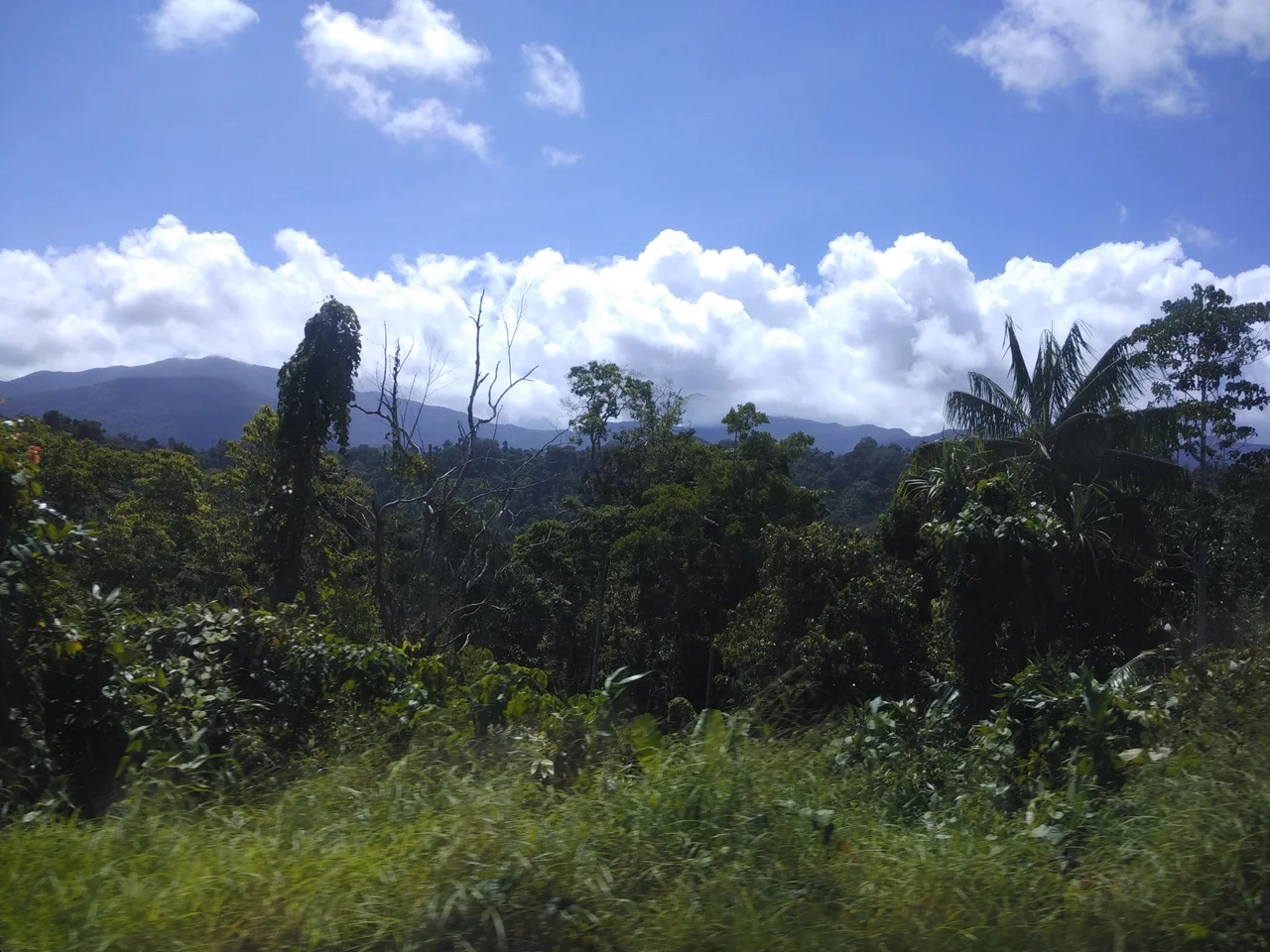

Aketajawe-Lolobata National Park
When BirdLife International declared Aketajawe-Lolobata a priority site, the organization used a word rarely applied to conservation areas: vital. Not important, not significant -- vital. The park protects at least 23 bird species found nowhere else on Earth, all concentrated on Halmahera, the largest and most biologically enigmatic island in North Maluku. Declared a national park in 2004 after more than two decades of advocacy, Aketajawe-Lolobata spans 167,300 hectares of lowland and montane rainforest in the Wallacea biodiversity hotspot -- the transition zone between Asian and Australian ecosystems that Alfred Russel Wallace first described in the 19th century.
Wallace's Threshold
Wallacea is not a place so much as a boundary condition. Named for the naturalist who noticed that Asian species gave way to Australian ones across an invisible line in the Indonesian archipelago, the region encompasses islands that have never been connected to either continental shelf. Halmahera sits deep within this zone, and the consequences for its wildlife are profound. Species that arrived here did so by crossing water, which means the island's fauna evolved in relative isolation. The result is endemism on a scale that draws biologists from around the world -- birds, in particular, that exist only in the forests of this four-armed island and nowhere else.
The Forest and Its Inhabitants
The park's vegetation transitions from lowland tropical rainforest to montane forest at higher elevations. The canopy is dominated by towering species including Agathis, the ancient conifer genus that has persisted since the Jurassic period, alongside tropical hardwoods like Intsia bijuga and Pometia pinnata. Calophyllum inophyllum lines waterways and coastal margins. Beneath the canopy, an estimated 300 to 500 indigenous people live in near-complete isolation, obtaining their subsistence from the forest. Their presence predates the park's designation and raises complex questions about conservation boundaries and indigenous rights that Indonesia's park management is still navigating.
A Long Campaign for Protection
The push to protect Halmahera's forests began in 1981, when Indonesia's National Conservation Plan proposed four protected areas: Aketajawe, Lolobata, Saketa, and Gunung Gamkonora. The 1993 Indonesian Biodiversity Action Plan recommended integrating them into a single protected zone, but action was slow. Meanwhile, the forests were disappearing. Between 1990 and 2003, forest cover across North Maluku plummeted from 86 percent to just under 70 percent, with the most severe losses occurring in the lowlands below 400 meters -- precisely the habitat where many of the endemic species have the largest portion of their range. By the time the park was formally declared in November 2004, the urgency had shifted from preservation to rescue.
What Remains at Stake
The park's 2004 declaration was historic, but it did not halt all threats. Mining interests continue to exert pressure on Halmahera's forests -- Indonesia's new national park announcement coincided with statements that mining operations would not be stopped. Illegal logging, agricultural encroachment, and the economic pressures facing rural communities all challenge the park's integrity. Yet what Aketajawe-Lolobata protects is irreplaceable. The 23 endemic bird species that BirdLife International identified cannot relocate to another island. The lowland forests that fell between 1990 and 2003 will not return within a human lifetime. The park represents a wager that one of the most biologically distinctive corners of the planet is worth more standing than cleared.
From the Air
Located at approximately 1.15°N, 128.27°E on northern Halmahera. The park occupies dense rainforest terrain in the interior of the island, visible from altitude as unbroken canopy covering the mountainous spine of Halmahera's northern arm. No airports within the park. Nearest access is via Kao or Tobelo on Halmahera's north coast, or Ternate's Sultan Babullah Airport (ICAO: WAMN) with onward boat and road travel. Expect heavy cloud cover and convective weather over the forested interior.
Nearby Stories
- Fort Tolukko 27 km away
- North Halmahera Regency 39 km away
- Halmahera 39 km away
- Sultan of Ternate Mosque 46 km away
- USS Shark (SS-174) 56 km away
- The Ocean's Hidden Crossroads 136 km away
- Japanese Submarine Ro-41 139 km away
- USS Shelton (DE-407) 171 km away