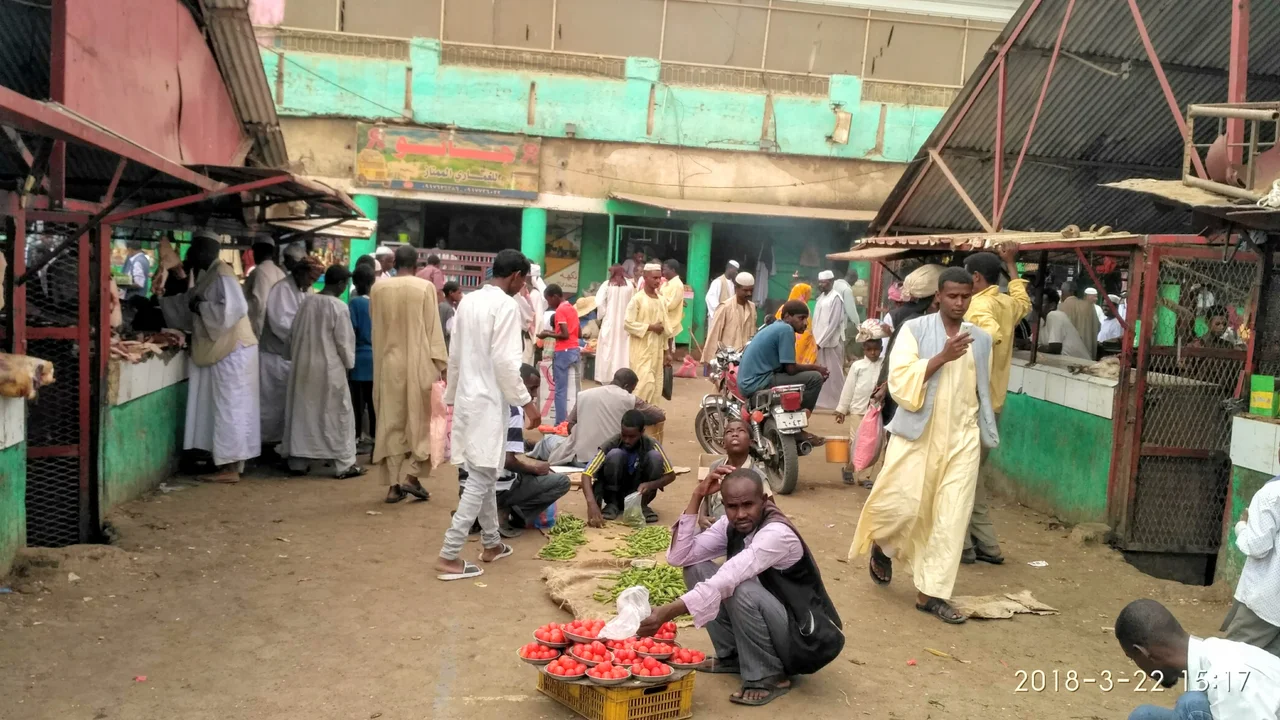

Al Qadarif State
The rain makes the difference. From 500 to 600 millimeters fall here in a typical year, enough that Al Qadarif State can grow crops without irrigation on an almost industrial scale. The dark clay soil stretches from the eastern slopes of the Ethiopian plateau down to the seasonal rivers and valleys of eastern Sudan, and on those 75,263 square kilometers about 2.2 million people lived before Sudan's current war began - farmers, herders, traders, and the descendants of waves of migrants from Eritrea, Ethiopia, Yemen, Somalia, Chad, Egypt, and beyond. They call it Sudan's granary. When the war came in 2023, that granary also became a refuge.
A Crossroads Population
Al Qadarif State's demographic map reads like a history of the Horn of Africa. The state's population includes Sudanese from many tribes along with communities descended from Eritrean, Ethiopian, Yemeni, Somali, Chadian, Egyptian, Armenian, and Kurdish migrants who arrived during the Turkish period of Sudanese history or during the Mahdist War of the 1880s and 1890s. Some came as refugees, some as traders, some as soldiers in colonial campaigns who never left. Others arrived for the same reason people still come today - the state's agricultural potential and its position on the border with Ethiopia and Eritrea, where cross-border trade has continued through every political rearrangement. Even the Copts, Egypt's Christian minority, have a recognized presence in this multicultural state.
The Granary
Mechanized agriculture arrived here in 1945 and changed everything. Today Al Qadarif hosts some of Sudan's largest rainfed agricultural projects, with 7,162,133 hectares of arable land and tractors, combine harvesters, and large-capacity grain silos organizing the harvest at industrial scale. About 2,376,563 hectares of forest - mostly acacia - produce the country's share of the world's gum arabic, a key ingredient in beverages, pharmaceuticals, and food processing worldwide. The main crops are sesame, maize, millet, gum arabic, and sunflower; horticultural produce includes lemons, watermelons, tomatoes, okra, and squash. The state capital, El-Gadarif, hosts the country's largest market for sesame and sorghum, and the city overlooks the main transit road between Khartoum and Port Sudan.
Belts of Land
Local planners divide the state into distinct agricultural belts, each with its own soil and rainfall regime. The Dry Agriculture Belt in the north gets 500 to 600 millimeters of rain on Ptrepettha mud. The Rainfed Agriculture Belt, about 2.96 million acres, has clay soil on flat plains at slightly higher rainfall. The Water Basin Area, where clay soil meets readily available surface water, supports about 1.58 million acres of mixed cultivation. The Mixed Farming Belt spans 1.39 million acres. Protected lands - forest reserves, water reserves - cover another million acres combined. The largest water projects lean on the Rahad Agricultural Project, which draws from the Rahad and Blue Nile rivers for both agriculture and industry.
Cattle Country
Livestock numbers rival the crops. About five million head of cattle graze Al Qadarif's pastures year-round, and that number swells to around seven million during the rainy season when seasonal pasture draws herders from neighboring states. Shepherds arrive with their animals, graze for the season, and move on. The state's cities reflect the layered economy: Acanthosis hosts the state's largest livestock market and the state veterinarian's office; Alhawwath, capital of Rahad province, sits between the agricultural heartland and the railway line to Port Sudan via Kassala; Dawkah, capital of Tippers province in the southeast, is another agricultural hub; Tippers itself sits on the Sudan-Ethiopia border and functions as a corridor for cross-border trade with Ethiopia, Somalia, and Djibouti via the continental road network.
Industry and Services
The industrial base of Al Qadarif is almost entirely derived from its agriculture: sesame oil, peanut products, soap, sweets, and sunflower processing. Workshops assemble tractors and combine harvesters and offer repair services, while lathes produce spare parts that would otherwise have to be imported. The banking system includes twenty-four branches - seventeen commercial and seven specialized - with most concentrated in the capital city. Near the border, the state's Dinder National Park Reserve protects some of eastern Sudan's remaining wildlife, and recent mineral surveys have identified gold ore and natural gas deposits in this same southern zone, promising either prosperity or new conflict depending on who controls the land.
The War That Came
In April 2023, Sudan's war between the army and the Rapid Support Forces began in Khartoum and cascaded across the country. Al Qadarif, relatively far from the initial fighting, quickly became one of Sudan's largest refuges for internally displaced people. By 2024, the state sheltered hundreds of thousands of Sudanese fleeing the destruction of Khartoum, Gezira, Sennar, and other governorates. Voice of America reported on the war spilling into this farming state while it was still also feeding the displaced. The disputed Al Fushqa District along the Ethiopian border, long claimed by both Sudan and Ethiopia, became strategically more charged as the Sudanese state's attention was consumed elsewhere. The granary keeps growing its crops, as best it can, while a greatly enlarged population tries to find food, work, and eventually a way home to homes that in many cases no longer exist.
From the Air
Coordinates: 13.859°N, 34.925°E. Al Qadarif State occupies eastern Sudan along the Ethiopian border. From altitude, the landscape shows a distinctive pattern of geometric rainfed fields in clay plains, interspersed with acacia woodlands and the seasonal courses of the Atbara, Rahad, and Dinder rivers. The Dinder National Park Reserve sits in the state's southeastern corner. Nearest airport: Al-Qadarif Airport (HSGG) near the state capital. Overflight conditions should be checked against current Sudan airspace advisories, as the ongoing civil war has disrupted civil aviation across the country.
Nearby Stories
- Northern front, East Africa, 1940 65 km away
- Wad Madani 108 km away
- Eritrea-Sudan Border 116 km away
- Jebel Moya 121 km away
- Gezira State 129 km away
- Western Zone, Tigray 161 km away
- Kassala 217 km away
- Ethiopian Empire 236 km away