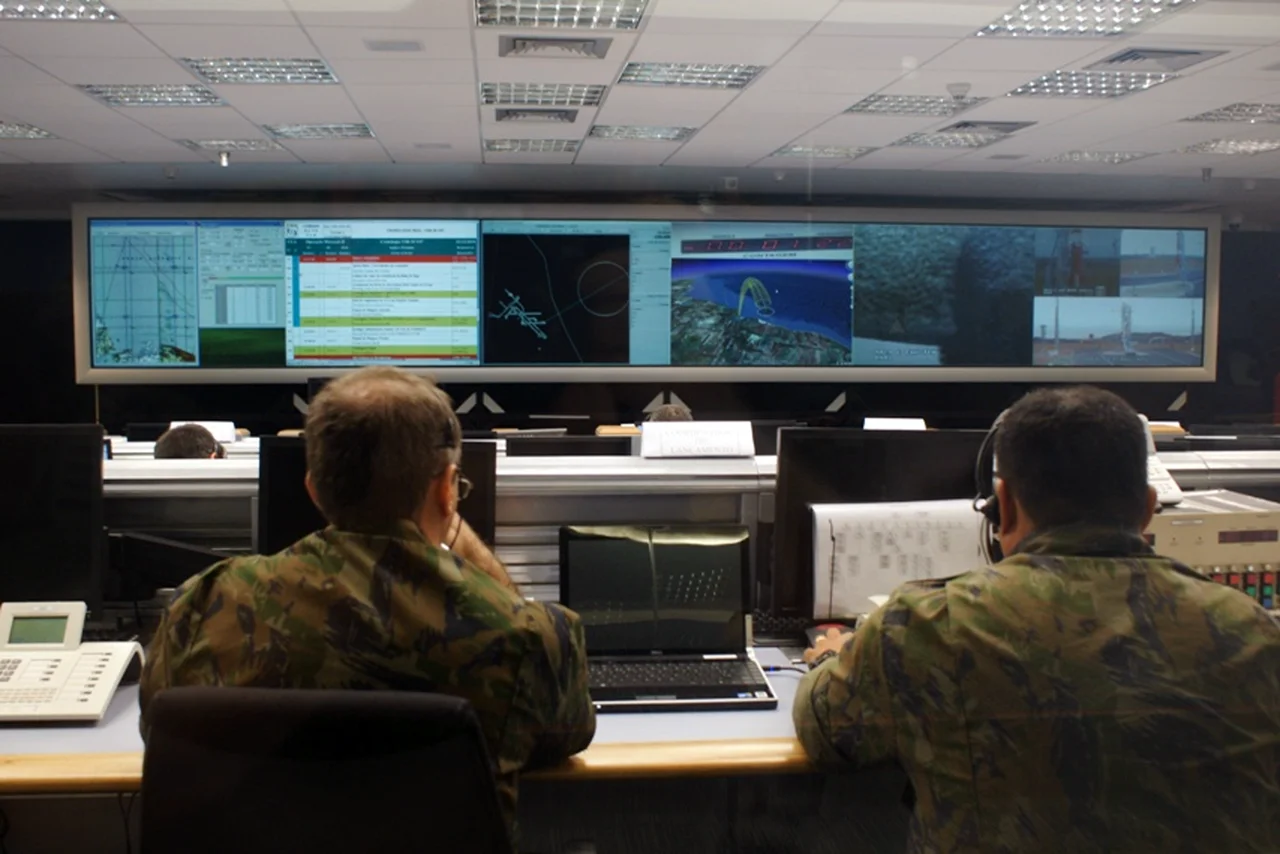

Alcântara Space Center
At 2 degrees south of the equator, a rocket launched from Alcântara gets a free push from the Earth itself. The planet rotates fastest at its middle, and that eastward spin - a little over 1,670 kilometers per hour at the equator - adds velocity to any launch headed east toward orbit. Engineers have known this for decades; it is the same physics that led the Europeans to build their spaceport in French Guiana and the Americans to favor Cape Canaveral. On the rust-red bluffs above the Atlantic coast of Maranhão, the Brazilian Air Force built Alcântara to claim that same advantage. It is the closest orbital launch site to the equator anywhere on Earth.
The Promise of the Equator
Construction of the Alcântara Space Center began in 1982, when Brazil's older sounding-rocket range at Barreira do Inferno, near Natal, could no longer meet the country's ambitions. On February 21, 1990, a Sonda 2 sounding rocket (XV-53) became the first vehicle to rise from the new base. Since then, Alcântara has drawn the attention of space agencies and private companies from around the world. Ukraine's Tsyklon-4 program signed agreements. Israel's Shavit, Russia's Proton, and Virgin Orbit's LauncherOne all explored the site. South Korea's Innospace has flown from here. The launch pads sit on a flat plateau above the sea - liquid-fuel loading facilities, a mobile integration tower 33 meters tall, a universal launch pad rated for rockets up to ten tons, and a 2,600-meter runway built to handle heavy cargo aircraft.
August 22, 2003
Three days before its scheduled flight, the third Brazilian VLS-1 (XV-03) stood on its pad, fueled and ready for final checks. At 1:26 in the afternoon on August 22, 2003, one of the rocket's four solid-fuel boosters ignited unexpectedly. The vehicle exploded on the pad. Twenty-one technicians - engineers, mechanics, and aerospace specialists, most from the Brazilian space program - were killed. They had been conducting routine pre-launch procedures when the accident occurred. It remains the worst disaster in the history of the Brazilian space program. A monument on the grounds lists the names of the twenty-one; their photographs hang in the halls of the Instituto de Aeronáutica e Espaço in São José dos Campos. Their families still gather each August, in a grief that has become part of how the base remembers itself.
The Land Before the Launch Pad
The ground that Alcântara stands on was not empty when the military selected it. Descendants of Africans who had freed themselves from slavery - quilombolas - had lived along this coast for generations, in communities that farmed, fished, and gathered babassu palm nuts in the mangrove-lined flats. When the base was built, hundreds of families were relocated inland, cut off from the rivers and ocean their livelihoods depended on. They were moved to settlements with poor soils and no access to the sea. For decades they fought for recognition, returning again and again to courts and ministries to demand their ancestral land back. In April 2023, the Brazilian government issued a formal public apology to the quilombola communities of Alcântara for the forced removals, acknowledging what had been taken from them and offering reparations. The apology did not give back the coast, but it named the harm honestly.
An International Stage
In March 2019, Brazil and the United States signed a Technology Safeguards Agreement covering U.S.-made rocket components that might be launched from Alcântara. The Brazilian Congress ratified it in November of that year, unlocking the possibility of American commercial rockets flying from the base without risk of sensitive technology being transferred to third countries. In 2020, the Brazilian government announced plans to expand the center by more than 12,000 hectares, opening the door to a new generation of small-satellite launch companies. South Korea's Innospace flew its Hanbit-TLV suborbital test rocket from Alcântara in March 2023, the first private orbital-class launch from the base. As of the mid-2020s, companies including C6 Launch, Hyperion Rocket Systems, and OrionAST have signed agreements to operate from the site. Every launch adds to the strange economy of this place - a spaceport built on displaced ground, now becoming one of the busier corners of Latin American aerospace.
Looking Up from Alcântara
Alcântara itself is an old colonial town, its cobblestone streets and crumbling 17th- and 18th-century mansions evidence of a sugar-era wealth that vanished long ago. You can walk its ruins on any afternoon: the roofless shell of São Matias church, lichen-covered walls where jaguar roses grow from mortar cracks, a pelourinho (whipping post) in the central square that marks where enslaved people were once punished. Then you drive a few kilometers out of town and reach the launch pads, their gantries visible across the savanna. Two histories, layered on one coast. From the cliffs above the sea at dawn, with the Atlantic running silver below and the red earth still cool, it is not hard to see why engineers fell in love with this place. Nor is it hard to see what was lost so they could use it.
From the Air
Located at 2.37°S, 44.40°W on the northern Atlantic coast of Maranhão, the Alcântara Space Center occupies a plateau above the sea at approximately 45 meters elevation. The closest commercial airport is São Luís - Marechal Cunha Machado International (SBSL), about 40 kilometers east-southeast across São Marcos Bay. The center has its own 2,600-meter runway. During active launch operations, restricted airspace extends well out over the Atlantic to the east. From cruising altitude, the distinctive launch complex is visible as a cluster of white structures on the red cliffs, with the bay of São Marcos to the east.
Nearby Stories
- Campo de Perizes 21 km away
- Ilha de Santana Lighthouse 38 km away
- Maranhão mangroves 62 km away
- Santa Inês 122 km away
- Barreirinhas 125 km away
- São Miguel do Guamá 281 km away
- 2025 United Nations Climate Change Conference 398 km away
- German submarine U-164 (1941) 509 km away