.jpg)
2025 United Nations Climate Change Conference
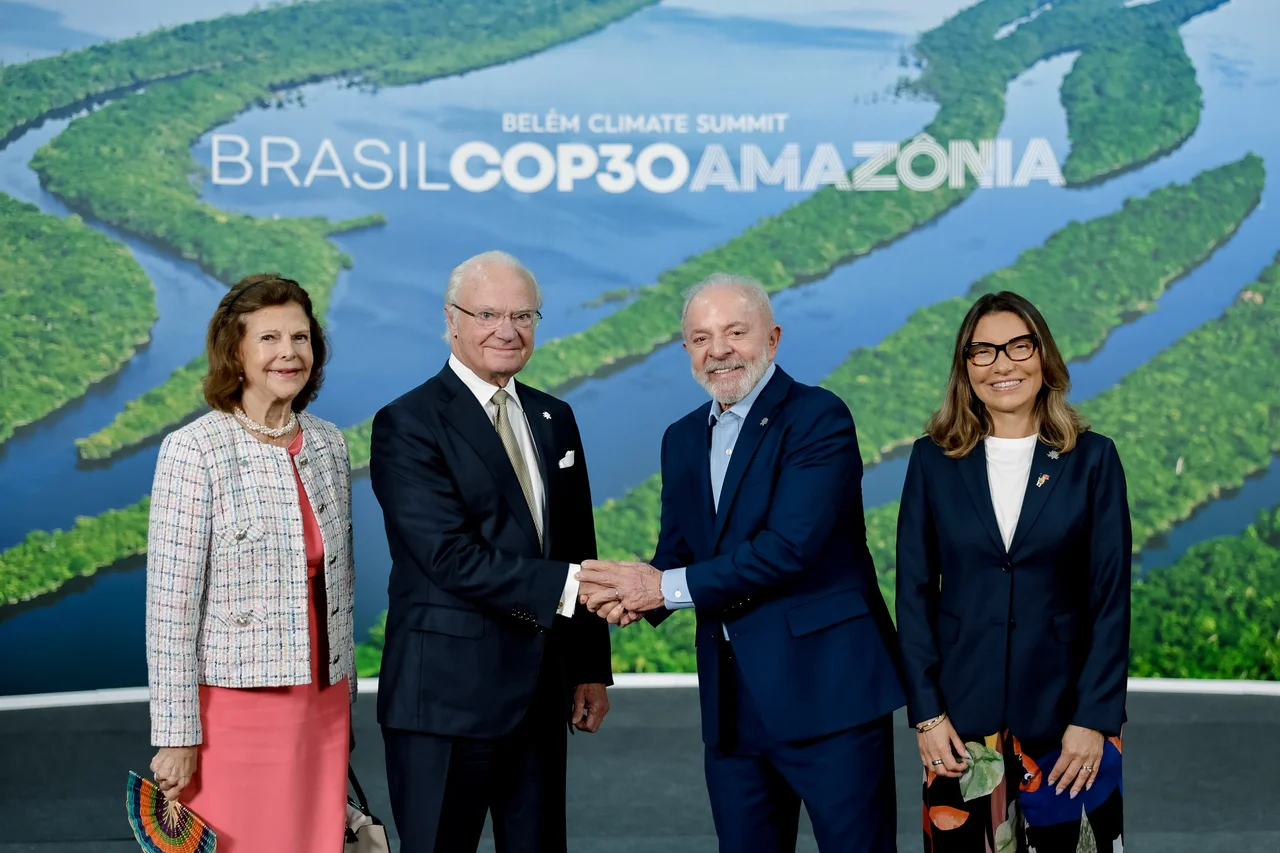
The thirtieth climate summit on Earth did not happen in Geneva or Paris or Dubai. It happened in Belem, a five-hundred-thousand-person Brazilian port city at the mouth of the Amazon, 90 miles from the Atlantic, sweating through 27 degree days and afternoon downpours. Brazilian President Luiz Inacio Lula da Silva had fought for this. When he stood up at COP27 in Sharm El Sheikh in 2022 and announced the bid, his argument was simple: the countries talking about the Amazon had never held a major climate summit anywhere near it. That changed between 10 and 21 November 2025, when delegates from 194 parties stepped off their planes at Val-de-Cans and walked into the rainforest's own capital.
A Capital on Loan
On 4 November 2025, Lula signed a law briefly and symbolically transferring the Brazilian national capital from Brasilia to Belem for the duration of the conference. All presidential acts, all ministerial orders, all three branches of government could conduct official business from the host city between 11 and 21 November. The gesture was legal theater, and Lula knew it. The point was the image. For eleven days, the seat of Latin America's largest democracy would sit next to the Amazon delta. The choice of Belem had always been an argument in stone and humidity: you cannot talk about the largest carbon sink on Earth from an air-conditioned ballroom 2,000 kilometers south of it.
The Room Shortage That Became a Crisis
Months before the opening ceremony, Airbnb listings in Belem that normally rented for 11 US dollars a night were priced at 9,320. One single-occupancy flat on Booking.com was listed at 15,266 dollars per night. Twenty-seven countries signed a letter asking Brazil to fix the price gouging or move the summit. Austria canceled its delegation outright. Some residents received eviction notices from landlords who wanted to cash in. Brazil responded with cruise ships docked along the waterfront, school dormitories converted to hostels, and military barracks opened to delegates, adding 26,000 beds by force of government. The accommodation scramble became one of the summit's defining stories, a crisis the Brazilian government itself called extremely high and incomprehensible. Several countries shrank their delegations rather than pay the prices. The COP still registered 56,118 delegates, the second-largest climate conference in history behind only COP28 in Dubai.
The Fight Over a Word
The most contentious issue at COP30 came down to a single phrase: phase out fossil fuels. More than eighty countries, including the European Union, Colombia, and Kenya, pushed for binding language committing the world to end coal, oil, and gas extraction on a schedule. Saudi Arabia, the United Arab Emirates, and other oil producers blocked it. The United States sent no delegation at all, the first time in COP history, after the Trump administration closed the office of climate diplomacy. California Governor Gavin Newsom showed up anyway, leading an alternate US delegation of over 100 elected officials under the US Climate Alliance banner, and made clear what he thought of the absence. When the final text was gaveled through after running into overtime, the words fossil fuels were not in it. COP30 President Andre Correa do Lago announced two voluntary roadmaps outside the formal UN process instead, one for an orderly transition and one for halting deforestation, to be presented at a special summit in Colombia in April 2026.
What Belem Did Produce
The compromise text committed countries to tripling climate adaptation finance by 2035, without saying who would pay. It launched a Just Transition Mechanism to support fairness in the shift away from carbon-intensive economies. It adopted 59 global indicators to track adaptation progress, and set a two-year work program to refine them. Brazil unveiled its signature initiative, the Tropical Forest Forever Facility, a 125 billion dollar blended-finance fund designed to pay tropical countries to keep their forests standing. Germany committed one billion euros to it shortly after the summit. The Baku-to-Belem Roadmap formalized the ambition to mobilize 1.3 trillion dollars a year for developing countries by 2035, though details remained vague. An Open Coalition on Compliance Carbon Markets formed around Brazil, China, the EU, the UK, Canada, and fourteen other members. Climate misinformation appeared on the formal COP agenda for the first time, and twelve countries signed a Declaration on Climate Change Information Integrity.
The City That Hosted It
Belem during the conference was a city performing itself. Traditional carnival groups from Para, including the Cordao da Bicharada, mingled with a visiting musical roster that included Gilberto Gil, Ney Matogrosso, Fafa de Belem, Anitta, Seu Jorge, and British singer Chris Martin. Indigenous protesters, including a Tupinamba leader, forced their way into the venue on 11 November; two security guards were injured. On 20 November, a fire broke out in the pavilion and was quickly contained; no one was hurt. German Chancellor Friedrich Merz caused a diplomatic incident on the way home by telling a Berlin audience that he and his press corps were delighted to be back in Germany and to have left that place, provoking public rebuke from Lula, the Para governor, and the mayor of Belem. The commentary on the summit was blunt. Civil society and vulnerable nations called the outcome weak. The EU accepted it to avoid total collapse. Turkey won the right to host COP31 with Australia presiding over negotiations, and the climate circus moved on.
From the Air
Val-de-Cans International Airport (SBBE) sits just north of downtown Belem at 1.42 S, 48.46 W, where the Para and Guama rivers meet the Atlantic estuary of the Amazon. Viewing altitude of FL250 captures the vast river system, the expanse of Marajo Island to the west, and the northward shift from rainforest green to deltaic brown. Nearby airports include Macapa (SBMQ) to the north and Santarem (SBSN) upriver to the west. Expect late afternoon thunderstorms and high humidity year-round; best visibility typically between September and December.
Nearby Stories
- São Miguel do Guamá 40 km away
- Santa Inês 344 km away
- Parcel de Manuel Luís Marine State Park 390 km away
- Xingu-Tocantins-Araguaia Moist Forests 396 km away
- Baixada Maranhense Environmental Protection Area 410 km away
- Marabá, Pará 432 km away
- USS Chiron 448 km away
- Oyapock 621 km away