
Alexandra Palace Theatre
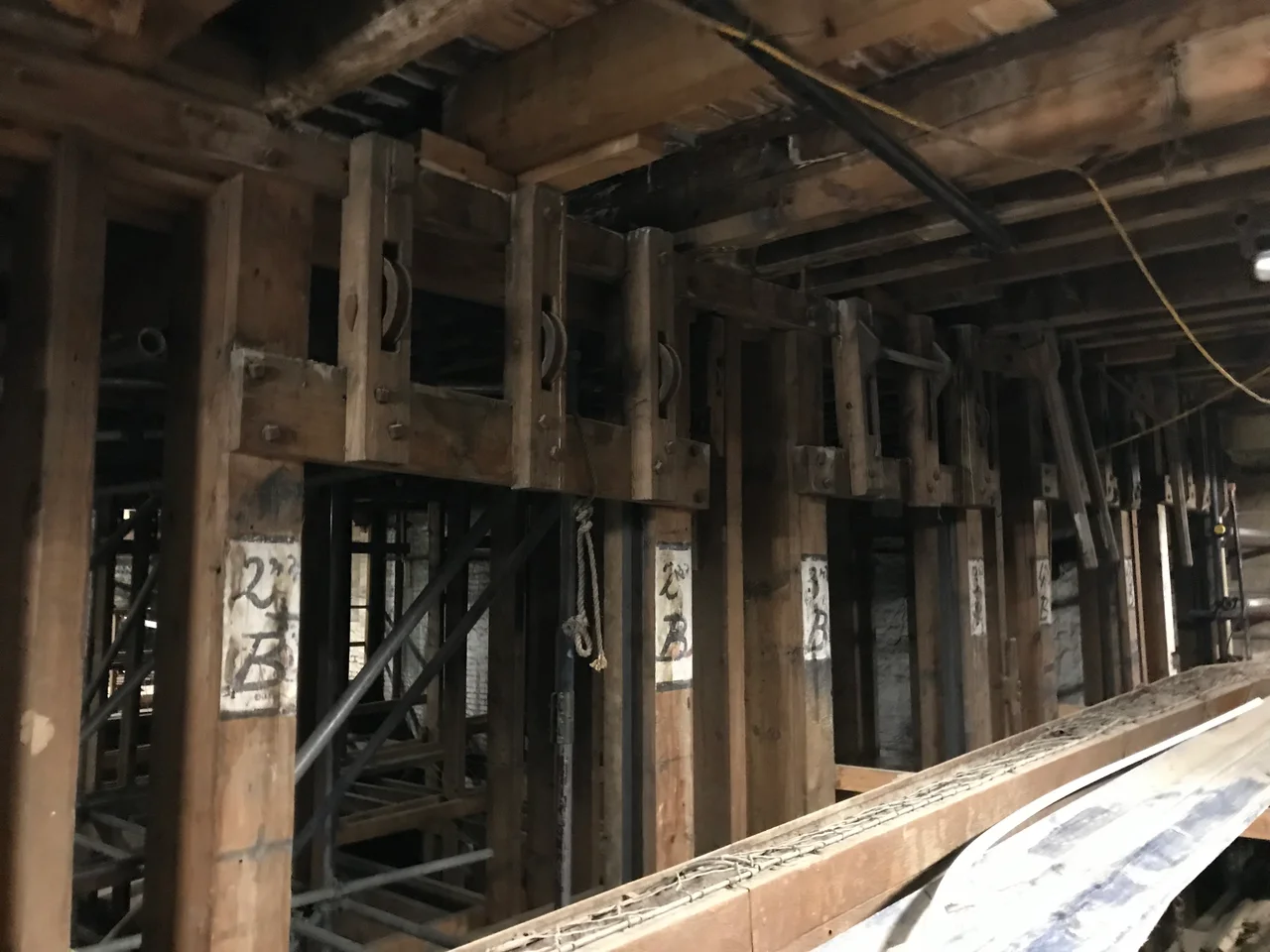
Twenty-two feet below the stage of Alexandra Palace Theatre, a world of iron and rope has been waiting in the dark. Trap doors, counterweights, flying mechanisms, and hidden chambers — the full apparatus of Victorian theatrical magic — survived a fire, two world wars, decades as a BBC prop store, and prolonged abandonment. When restorers finally went down to assess the understage machinery in the 21st century, they found it largely intact. It is one of the few surviving examples of its kind in Britain, a ghostly record of how theatre worked before electricity simplified everything.
Built, Burned, Rebuilt
The original Alexandra Palace Theatre opened in 1873, intended for opera and ballet. It survived exactly sixteen days before fire destroyed the entire palace. The speed of the rebuild was remarkable: the new palace, including the theatre, opened in 1875. Architects John Johnson and Alfred Meeson worked with stage machinery expert Thomas Walford Grieve — son of the celebrated set designer Thomas Grieve — to create a theatre on an enormous scale. The stage floor area was comparable to that of the Theatre Royal at Drury Lane, though the auditorium proportions differed significantly. Two balconies ran partway toward the stage. Gas chandeliers, called gaseliers, hung from the ceiling. Six large sash windows admitted natural light, covered by dark screens during performances. Early shows included an operetta by Offenbach and a pantomime based on the fairy tale The Yellow Dwarf — the full range of Victorian popular entertainment.
What Lives Beneath
The understage machinery was the theatre's most extraordinary feature. Housed in a 22-foot-deep cellar, it included trap doors through which actors could vanish or materialize, flying systems that could lift performers above the stage, and counterweighted mechanisms for rapid scene changes. Victorian melodrama depended on such effects — audiences expected ghosts to rise, villains to sink through floors, and gods to descend from the heavens. Thomas Walford Grieve designed these systems to deliver exactly that. By the 1920s, theatrical taste had moved on. The general manager W. J. MacQueen-Pope spent war reparation money refurbishing the auditorium and simply abandoned the understage machinery. It was left where it was. The BBC leased the building in 1935 and used the theatre variously as a studio and a prop store for nearly five decades. The machinery waited, undisturbed.
The BBC and a Different Kind of History
When the BBC took over Alexandra Palace's east section in 1935, television history was made just meters from the theatre. The world's first regular public high-definition television broadcasts went out from here in November 1936 — a technological leap that had nothing to do with flying actors or trap doors, but everything to do with the building's unusual combination of space and infrastructure. The theatre itself became peripheral to this story. Between 1935 and 1981 it served largely as storage, its Victorian opulence gathering dust while the BBC's cameras revolutionized how the world saw itself. A Friends of Alexandra Palace Theatre group formed in 2002, and in 2016 serious restoration began. The restored theatre reopened in 2018, deliberately left in what conservators call a state of arrested decay — the paint layers preserved, the plasterwork stabilized but not prettified.
Arrested Decay and Second Life
The phrase captures something real. The theatre was not restored to its Victorian glory. Conservators chose instead to halt the deterioration and preserve the accumulated evidence of its many lives: the original gaselier fittings, the layers of different-era paint, the marks left by BBC equipment, the stains and shadows of 140 years. The raked floor was replaced with a flat one, improving versatility, but the original floorboards were reinstalled. The balcony was strengthened. The understage machinery was documented and preserved. Today the space is used for television and film recording, concerts, and live events. Visitors can see the stage machinery — one of the few surviving examples of complex Victorian theatrical infrastructure anywhere in Britain. The cellar that once launched actors into the air still holds its secrets, 22 feet below the boards.
From the Air
Alexandra Palace Theatre sits within Alexandra Palace at coordinates 51.5945°N, 0.1296°W, on a ridge between Wood Green and Muswell Hill in north London. From altitude the palace is clearly visible on its hilltop, with its distinctive television mast. Nearby airports include London City (EGLC) 14km to the southeast and Heathrow (EGLL) 27km to the west. The surrounding north London residential area is visible at 2,000-3,000 feet.
Nearby Stories
- Stevenage 5.7 km away
- Malling Abbey 5.7 km away
- 1952 Farnborough Airshow Crash 7.7 km away
- Ingatestone Hall 8.2 km away
- Hellfire Caves 9.1 km away
- The Carrington Event: The Solar Storm That Could Happen Again 9.8 km away
- Bletchley Park 16 km away
- Castle Hedingham 23 km away