
Stevenage
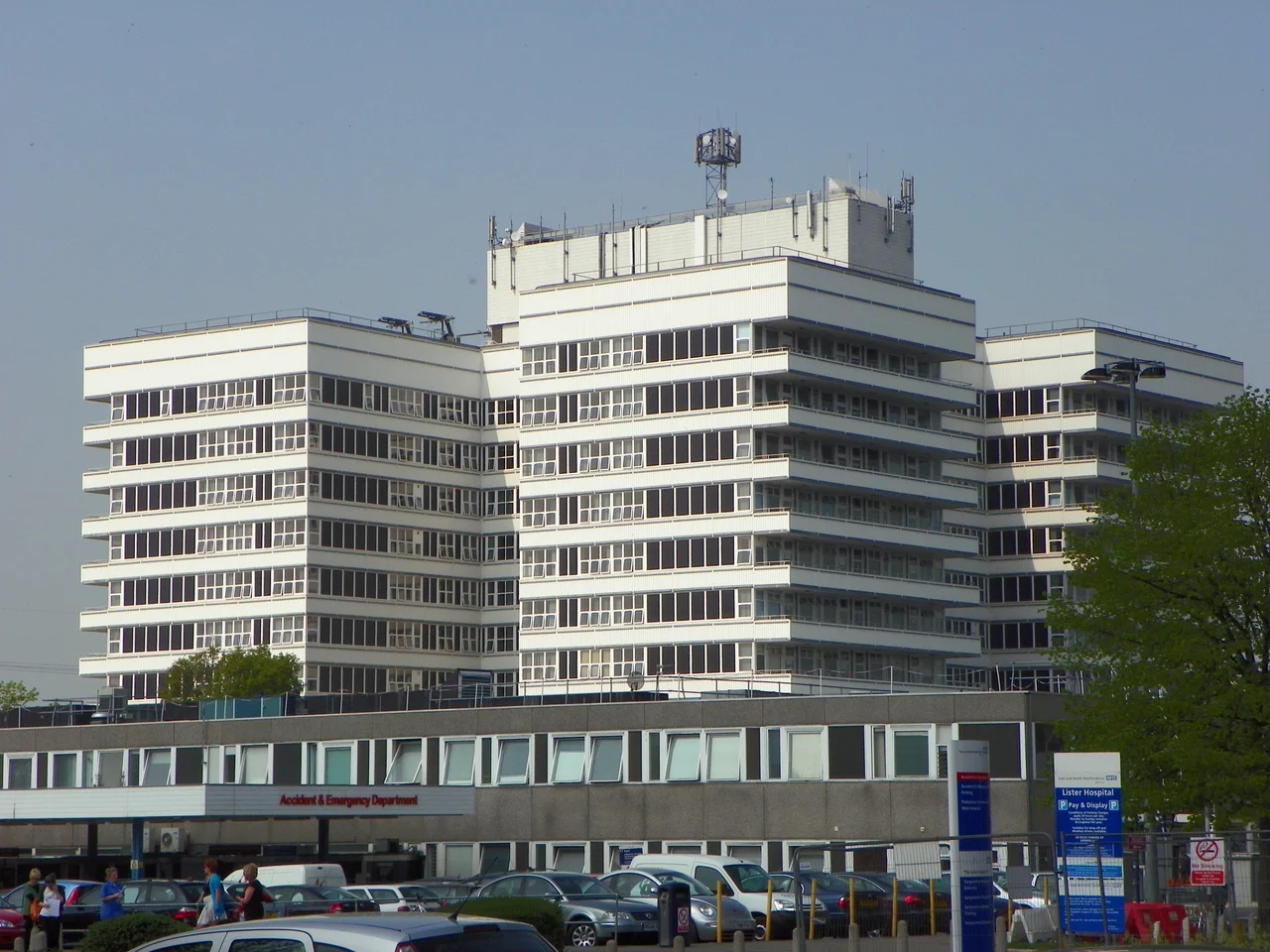
When Lewis Silkin stepped off the train at Stevenage station on a wet evening in early 1946, the platform signs had been changed to read Silkingrad. The Labour minister responsible for housing was on his way to a public meeting to explain that his ministry had decided, under the new New Towns Act, to convert the Hertfordshire village of Stevenage into the first of the post-war New Towns. The hall was full. The crowd outside was bigger than the hall. Roughly half the village's population had turned up to object. Silkin stood his ground. "It's no good your jeering," he said. "It's going to be done." The bulldozers arrived the following year. The first thing they knocked down was the Old Town Hall, the building in which the protest had been held.
The Stiff Oak
Stevenage is an old place. The name probably descends from Old English stiþen āc, meaning the stiff oak, perhaps a particular tree that travellers used as a landmark on the Great North Road. The settlement is recorded as Stithenæce around 1060 and as Stigenace in the Domesday Book in 1086. The road that runs north out of London passes through the town; Roman engineers built it, medieval drovers used it, eighteenth-century stagecoaches stopped at twenty-one different Stevenage inns per day in 1800. The Six Hills, six Roman burial mounds beside the old Great North Road, are still visible from the modern A1(M) and are the most substantial pre-Saxon monument in the area. They mark the graves, archaeologists think, of a single local family. Nobody knows the family's name.
The Highwayman and the Hangman
The road brought wealth to Stevenage and also crime. James Whitney was born in Stevenage around 1660 and apprenticed to a butcher in Hitchin before opening an inn at Cheshunt. When the business failed, he turned to highway robbery and within a few years had a gang of fifty men working the roads of Hertfordshire and Buckinghamshire. He was hanged at Newgate in 1693. The Highwayman pub at Graveley, just outside Stevenage, is named for him. Two centuries later the town hosted a different kind of hanged man's haunt: the Cromwell Hotel, a Jacobean farmhouse once owned by Oliver Cromwell's spymaster John Thurloe, became a regular stopping place for the hangman Albert Pierrepoint whenever he travelled south for an execution. The hotel still stands. Albert Pierrepoint executed approximately 435 people during his career. He stopped in 1956. He preferred a quiet pint.
Silkingrad
On 1 August 1946 Stevenage was designated as the first of the new towns under the Attlee government's New Towns Act. The Stevenage Development Corporation was set up to plan and build the expansion. Its first chairman was the architect Clough Williams-Ellis, best known for creating the fantasy village of Portmeirion in Wales; his deputy was the radical town planner Monica Felton, who later won the Lenin Peace Prize for her opposition to the Korean War and was promptly sacked from her role at Stevenage. The actual building work was carried out under the second and third chairmen, Allan Duff and Thomas Bennett, with Gordon Stephenson as planner, Peter Shepheard as architect, and Eric Claxton as engineer. Six self-contained neighbourhoods were laid out around a central pedestrianised town centre. Each neighbourhood was designed to house between 10,000 and 12,000 people and to have its own shops, schools, pub, and church. Bedwell came first in 1952. Broadwater and Shephall followed in 1953. Chells, Pin Green, and Symonds Green were built through the 1960s. Great Ashby, on the northern edge, is still being filled in today.
Claxton's Cycle Network
Eric Claxton, the development corporation's chief engineer from 1962 to 1972, was the engineer behind one of Stevenage's most unusual features. The town has a complete network of segregated cycle paths and underpasses, designed to keep bicycles entirely separate from cars. Claxton, an enthusiastic cyclist, believed that if cycling was to be safe and convenient enough to compete with the motor car, it had to have its own infrastructure. He won the argument and built the system. Stevenage has more cycle path per head than any other British town of its size. Whether the system has succeeded in encouraging cycling is a more complicated question. Cycling's modal share in the town is about 2.7 per cent, lower than several Cambridgeshire towns with no such network. The paths themselves remain, an extraordinary piece of mid-century planning infrastructure that most people now take for granted. Claxton was also fanatical about roundabouts (he had his own house built on a gyratory system in the Old Town) and the town has very few traffic lights as a result.
Missiles, Satellites, and Lewis Hamilton
Stevenage's industrial estate at Gunnels Wood was designed to make the new town a place of work as well as a place of housing, and the firms that settled there over the next forty years made some of Britain's most advanced products. MBDA, descended through several mergers from British Aerospace, builds missiles in Stevenage. Airbus Defence and Space assembles spacecraft in another part of the estate, including the Solar Orbiter that NASA launched in 2020 and the Rosalind Franklin Mars rover. GlaxoSmithKline has one of its two global research and development hubs in the town. From this same town of carefully planned cul-de-sacs and segregated cycle paths came the seven-time Formula One world champion Lewis Hamilton, who grew up on the Peartree estate in the 1980s, raced karts at the local track, and won his first world title at McLaren in 2008. The golfer Ian Poulter, born in 1976, is another Stevenage child. The footballers Kevin Phillips and Ashley Young grew up here as well.
Old Town, New Town, Next Town
The medieval core of Stevenage is still there, up the hill from the new town centre. The Old Town high street has Tudor House (built before 1500), the Cromwell Hotel, and several of the old coaching inns. St Nicholas's Church, parts of which date to the twelfth century, sits at the top of the hill on a Saxon site. North of the church lies Rooks Nest, the house where E.M. Forster grew up between 1884 and 1894 and which became the model for Howards End in his novel. The land around it, known as Forster Country, is the last farmland inside the borough boundary. Forster, who lived long enough to see the new town built, called it a meteorite that had fallen out of the sky onto the delicate scenery of Hertfordshire. The new town centre, opened with great ceremony by the Queen in 1959 as Britain's first purpose-built traffic-free shopping precinct, is now itself being demolished and rebuilt in a £1 billion regeneration. The seventy-year-old experiment is becoming, in its turn, a place to be replaced.
From the Air
Stevenage lies at approximately 51.9038°N, 0.2014°W in north Hertfordshire, about 28 miles north of central London, immediately east of junctions 7 and 8 of the A1(M) motorway. The town is bordered by Letchworth Garden City to the north and Welwyn Garden City to the south. Recommended viewing altitude is 2,000 to 4,000 feet for a clear view of the unusually planned street layout, with the Old Town high street running north-south up the hill on the east side and the New Town's six neighbourhoods spread to the west around the pedestrianised town centre. The Gunnels Wood industrial estate between the railway and the A1(M) is recognisable from the air by its large rectangular buildings, including the MBDA, Airbus, and GSK facilities. Nearest airports: Luton (EGGW) 9 miles west, Stansted (EGSS) 24 miles east, Cambridge (EGSC) 31 miles north, Old Warden (EGTH) 11 miles north. The Six Hills Roman barrows are visible from the air just west of the town centre.
Nearby Stories
- Battle of Barnet: The Fog That Decided a Dynasty 2 km away
- Ingatestone Hall 3.3 km away
- National Horseracing Museum 5.4 km away
- St Neots 6.6 km away
- Bletchley Park 6.6 km away
- Hellfire Caves 7.8 km away
- Sywell Aviation Museum 12 km away
- Pleshey Castle 16 km away