
Alta Gracia
A wheezing four-year-old changed the course of history because of the air in this town. The boy was Ernesto Guevara, later known to the world as Che, and his family came to Alta Gracia because doctors believed its thin, dry mountain air might ease his severe asthma. They were not the first to arrive seeking what this place offered, and they would not be the last. Built on the Sierras Chicas in a region the Comechingón people called Paravachasca, Alta Gracia has spent four centuries gathering up the people who needed it, a healing climate, a sacred name, a refuge in exile, woven through with the stone bones of a Jesuit past.
The Estancia That Built a University
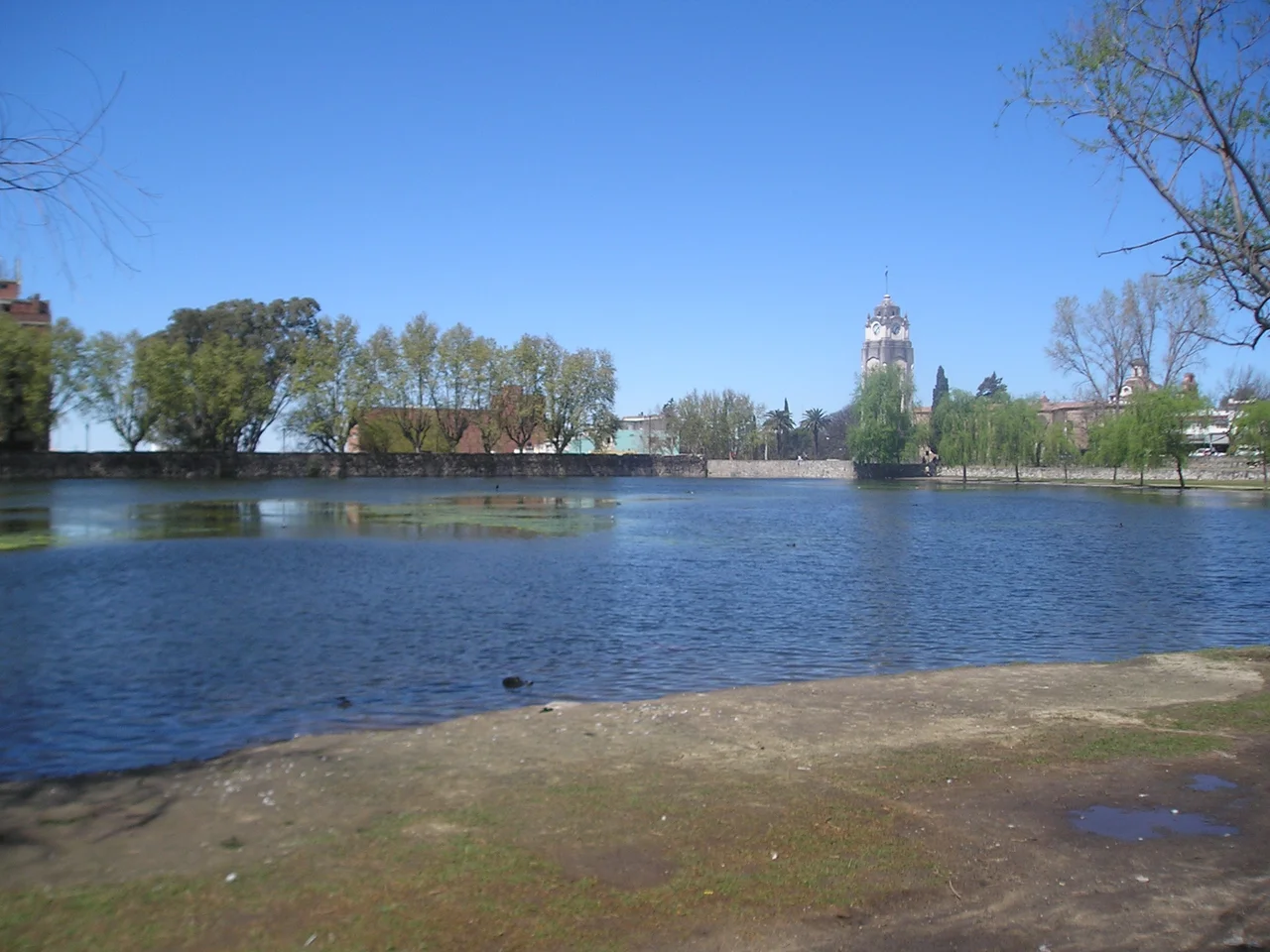
Alta Gracia began as an estancia, a vast colonial ranch. The land was first granted in 1588 to Don Juan Nieto, and it passed to Alonso Nieto de Herrera, who named it for Our Lady of High Grace, before he donated it to the Society of Jesus. Under the Jesuits, Alta Gracia became one of a network of estancias whose farms, mills, and workshops bankrolled the Colegio Máximo in Córdoba, the seed of what is now the National University of Córdoba. The order's surviving compound here, El Tajamar reservoir, El Obraje workshop, and the church, was inscribed in 2000 as part of the UNESCO World Heritage Site known as the Jesuit Block and Estancias of Córdoba.
Whose Hands Did the Work
The beauty of the estancia rested on labor that was not free. The Jesuits drew a hard and telling line: they did not enslave the local Comechingones, whom they sought to convert and whom they paid for their work, but they had no such scruple about the Africans they brought across the Atlantic in chains. Enslaved men and women worked these fields and mills alongside indigenous laborers, and the prosperity that funded a famous university and these graceful colonial buildings was built in part on their bondage. To walk the cool arcades today is to admire real craft and to remember, at the same time, the people whose names the records rarely kept.
The Boy Who Could Not Breathe
When the Guevara family settled in Alta Gracia, they were chasing relief. Ernesto, born with asthma so fierce it shaped his whole childhood, found the dry sierra air easier on his lungs, and he spent roughly eleven years here, from 1932 until 1943, before leaving when the family moved to Córdoba for his secondary schooling. Long before he became a revolutionary whose face would circle the globe, he was a sickly, restless boy reading voraciously and pushing his weak body to keep up with stronger friends. The modest house where the family lived is now a museum, the Casa de Ernesto Che Guevara, where visitors trace the origins of a life that began in illness and ended in legend.
A Composer in Exile
Alta Gracia drew another wounded soul a decade later. The great Spanish composer Manuel de Falla, devastated by the Spanish Civil War and the murder of his friend the poet Federico García Lorca, fled Franco's Spain for Argentina. From late 1942 he lived quietly here in a chalet with his sister, who cared for him, until his death on November 14, 1946. The same dry air that had steadied a young Che eased the final years of an aging master who never went home. His house, too, is a museum now, its rooms still holding his scores, his books, and the small belongings of a man composing in exile.
The Town That Keeps Its Visitors
These two famous houses are only part of what fills Alta Gracia. There is the man-made lake of El Tajamar, the museum of the colonial governor Santiago de Liniers, who lived here briefly in 1810, and the Sierras Hotel, grand enough to have once hosted John F. Kennedy. There is a Lourdes sanctuary modeled on the French original in the Pyrenees and a public clock tower raised for the town's 350th anniversary. Each September 24, the feast day of Our Lady of Merced, the town honors the Virgin whose veneration the estancia's last owner made a condition of the land he gave away, a final thread tying the modern city of forty-odd thousand back to its sacred beginnings.
From the Air
Alta Gracia lies on the Sierras Chicas in north-central Córdoba Province at about 31.67°S, 64.43°W, roughly 600 meters above sea level and some 35 to 40 km southwest of the city of Córdoba. The nearest major airport is Córdoba's Ingeniero Aeronáutico Ambrosio L.V. Taravella International (ICAO SACO, IATA COR), known as Pajas Blancas, about 45 km to the north-northeast. From the air, look for the town spread along the eastern foot of the sierras, the bright open water of El Tajamar reservoir near the historic Jesuit church, and the public clock tower marking the old center. A viewing altitude of 5,500 to 7,500 feet frames the town against the rising hills to the west and the plain stretching toward Córdoba to the northeast. The air is typically clearest in the morning, with afternoon cloud building over the higher sierras behind the town.
Nearby Stories
- Villa Carlos Paz 7.2 km away
- Battle of San Cala 32 km away
- LADE Flight 072 43 km away
- Mar Chiquita Lake 165 km away
- Battle of Quebracho Herrado 168 km away
- San Luis 190 km away
- Sierra de las Quijadas National Park 212 km away
- Battle of Cepeda (1820) 302 km away