
AMIA Bombing
Every year on the morning of 18 July, a siren sounds outside a building on Pasteur Street in Buenos Aires, and for a moment the traffic stops. It marks 9:53 a.m. - the exact minute, in 1994, when a van packed with explosives was driven into the headquarters of the Asociación Mutual Israelita Argentina, the AMIA, and detonated. The five-story building collapsed in on itself. Eighty-five people were killed and more than 300 injured, making it the deadliest terrorist attack in Argentine history. The dead were not soldiers or officials. They were people who had come to a community center on an ordinary Monday - to work, to seek help, to file papers, to volunteer - in a country that was then home to 200,000 Jews, the largest Jewish community in Latin America. More than three decades later, no one has ever been convicted of killing them. The siren is not only mourning. It is a question, asked again and again: who, and why, and when will there be justice?
The Eighty-Five
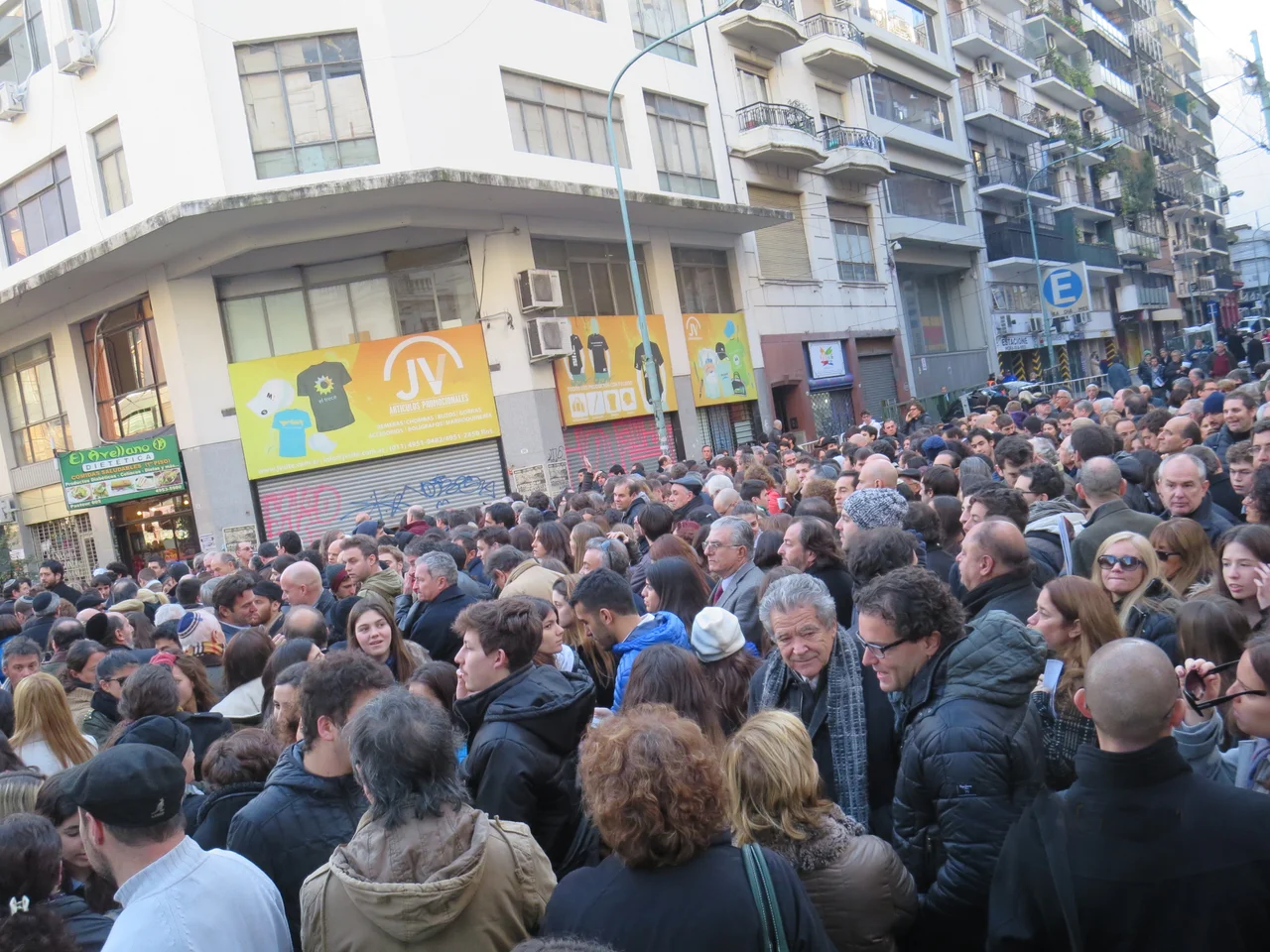
It is easy, with an atrocity this large, to let the people vanish into the number. They should not. The eighty-five were native-born Argentines and immigrants, Jewish and Catholic, religious and secular - doctors and janitors, lawyers and students, the staff of the building and the strangers who happened to be inside it that morning. The AMIA was a heart of communal life, and the bomb was timed for a workday, when the building was full. After the attack, the names of the dead were inscribed on the wall of the rebuilt headquarters, and the trees lining Pasteur Street were each given a plaque bearing a victim's name, so that the block itself became a living memorial. When ten thousand people gather on the anniversary holding photographs aloft, they are insisting on the simplest and most important fact of the case: that these were individual human beings, each one irreplaceable, and that their deaths are not a statistic to be filed away.
The Morning of the Blast
The attack was carried out as a suicide bombing. A Renault Trafic van loaded with roughly 275 kilograms of an ammonium-nitrate and fuel-oil explosive mixture was driven into the building, which stood in a dense commercial district of the city. The structure was of brick masonry, its exterior walls bearing the weight of the floors above; when the blast tore those walls away, the floors pancaked down in a near-total collapse - the kind of catastrophic failure such buildings are tragically prone to. It came barely two years after a related horror: the 1992 bombing of the Israeli Embassy in Buenos Aires, which had killed 29 and, until the AMIA attack, been the country's worst. In the days around the AMIA bombing, a commuter plane was bombed in Panama, killing 21, and car bombs struck Jewish targets in London. Buenos Aires had become the site of a campaign of terror, and its Jewish community its principal target.
A Wound Kept Open
What followed compounded the grief: a generation of failed and tainted investigations. The first federal judge on the case, Juan José Galeano, was filmed offering a key suspect $400,000 for testimony; he was removed from the case and ultimately impeached in 2005 for grave irregularities. Suspects in the alleged "local connection," including provincial police officers, were acquitted in 2004 for lack of evidence. The Argentine state itself, under President Néstor Kirchner, formally accepted a share of blame and called the unresolved case a "national disgrace." In 2006 prosecutors formally accused the government of Iran of directing the bombing and the Lebanese group Hezbollah of carrying it out; in 2024 an Argentine court affirmed that finding and ruled the attack a crime against humanity, opening a path for the victims' families to pursue Iran internationally. But the accused have never been surrendered for trial, and to this day not one person has been convicted of the murders on Pasteur Street.
The Living Memory
Through all the political wreckage, it has been the victims' families and the wider community who kept the case alive. In 2005, on the eleventh anniversary, a Catholic cardinal in Buenos Aires named Jorge Mario Bergoglio became the first public figure to sign a petition demanding justice - a document titled "85 victims, 85 signatures." Eight years later he would become Pope Francis. The headquarters was rebuilt on the same ground and reopened in 1999, set back behind a protective wall covered in the names of the dead; the underground station that serves it was renamed Pasteur - AMIA in their memory. Argentina has since declared Hezbollah a terrorist organization and pressed its case in international courts. Yet the families return each 18 July not to celebrate progress but to refuse forgetting. The siren at 9:53 still sounds over a city that has never stopped owing its dead an answer - and over a community that, by remembering each name, makes sure the silence is never the last word.
From the Air
The AMIA building stands at Pasteur 633 in the Balvanera district of Buenos Aires, at roughly 34.604°S, 58.401°W, in the dense commercial heart of the city just north of the Once and Abasto areas and a short distance from the Congreso. From the air the site sits within a tight urban grid threaded by the broad avenues of central Buenos Aires, with the green rectangle of the Plaza del Congreso and the river beyond to the east. A viewing altitude of 4,000-6,000 ft over the city center keeps the avenue grid and surrounding neighbourhood in clear view. Aeroparque Jorge Newbery (SABE) lies about 5 km northeast on the Río de la Plata shore; Ministro Pistarini International (SAEZ, Ezeiza) is roughly 20 km southwest. Visibility over central Buenos Aires is best on dry, clear autumn and winter days (April-August) - the same season in which the city gathers each year to remember.
Nearby Stories
- Ezeiza Massacre 1.9 km away
- Luján, Buenos Aires 5.1 km away
- Curutchet House 13 km away
- Colonia del Sacramento 17 km away
- Martín García Island 28 km away
- Atucha Nuclear Power Plant 37 km away
- Lobos 43 km away
- Cry of Asencio 87 km away