
Antsirabe
The streets of Antsirabe move to the soft slap of bare feet and bicycle tires, not the roar of engines. More than five thousand brightly painted rickshaws, called pousse-pousse, work this highland city, and a man pulling one is as ordinary a sight here as a taxi anywhere else. The effect is a strange calm: a town of a quarter-million people that feels hushed after the traffic and haze of Antananarivo five hours to the north. At about 1,500 meters, Antsirabe is the coolest city in Madagascar, and its name in Malagasy means roughly the place of much salt, a nod to the mineral waters bubbling up beneath it.
A Spa Born of Volcanoes
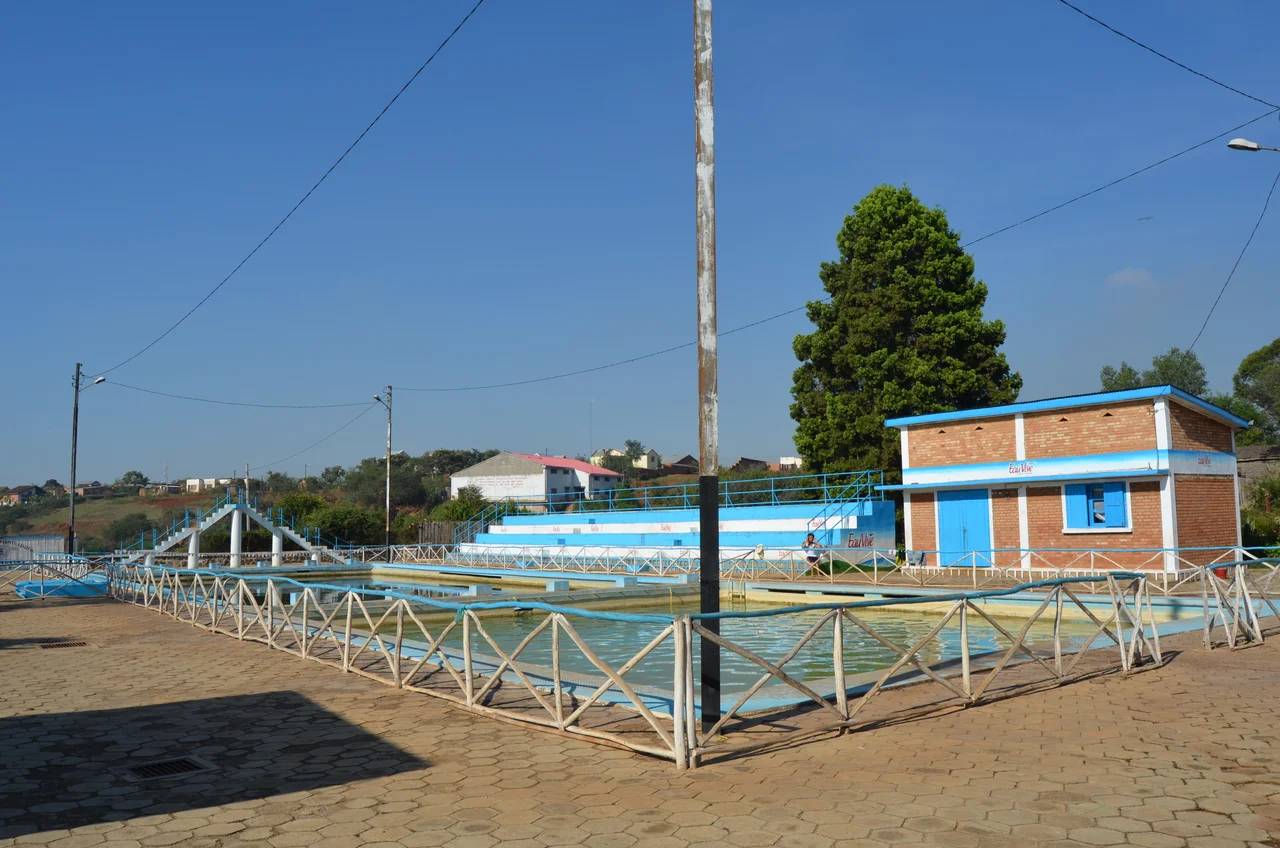
Antsirabe sits on an old volcanic plateau, and that geology is the reason the town exists in its modern form. Hot mineral springs rise here, fed by the same ancient volcanism that shaped the surrounding crater lakes. Norwegian missionaries founded the settlement in 1872, drawn by the cool, clear climate, and the thermal waters soon gave it a second identity as a health resort. The thermal bath centre opened in 1917, and in the early twentieth century the baths were famous across the Indian Ocean for treating rheumatism. The French liked to call Antsirabe the Vichy of Madagascar, after their own celebrated spa town, and the comparison stuck.
The Pousse-Pousse Capital
Nowhere in Madagascar relies on the pousse-pousse the way Antsirabe does. The hand-pulled rickshaws are numbered, individually decorated, and so numerous that they are the second most common way to get around after the bicycle. Pulling one is hard, precarious work, and the men who do it run for fares through the wide colonial avenues in all weather. For the traveler the ride is gentle and slow; for the puller it is a living earned on foot. The sheer density of these carts gives the city its unhurried character, a place where the pace of the street is literally set by how fast a person can walk while towing a passenger.
The Station That Time Forgot
Antsirabe's train station is one of the finest pieces of colonial architecture in the highlands, a handsome building from the era when the French laid Madagascar's railways. The line that once connected it to the capital has been closed since 2007, undone by the breakdowns and disrepair that have shuttered much of the island's rail network. The station still stands, elegant and largely silent, a monument to an ambition that the country could not afford to maintain. It is a common story in Madagascar, where colonial infrastructure was built grand and then left to weather the decades on its own.
Beer, Gemstones, and Miniature Cars
Antsirabe is also a working industrial town, unusual in a country with little heavy manufacturing. The STAR brewery here has produced Three Horses Beer, or THB, since 1958, and it remains Madagascar's most popular brand; the Antsirabe plant turns out around a hundred million bottles a year and is one of the city's largest employers. The highlands' volcanic geology yields gemstones too, and workshops around town cut and polish local stones. Then there is the craft the city is quietly famous for: artisans who build astonishingly detailed miniature cars, bicycles, and rickshaws from scrap tin and recycled materials, sold to travelers as souvenirs of a place that runs on wheels.
Highland Air and Open Country
The same elevation that makes Antsirabe cool also makes it a fine base for getting outdoors. Travelers hike, mountain bike, and ride horses through the surrounding hills and toward the volcanic crater lakes that ring the area. Lake Andraikiba lies just west of town, while Lake Tritriva, about seventeen kilometers out, is a deep emerald pool ringed by sheer cliffs and wrapped in local legend. Avenue Foch and the central market, Antsenakely, anchor a town that is comfortable and walkable, its temperate weather and dry winters a relief from the heat of the coasts. After the choke of Antananarivo's traffic, the climb onto the plateau and into Antsirabe's clean mountain air feels like exhaling.
From the Air
Antsirabe lies at roughly 19.87 degrees south, 47.03 degrees east, on Madagascar's central plateau at about 1,500 meters elevation, around 170 km south of Antananarivo. From the air, look for the grid of wide colonial avenues and the cluster of volcanic crater lakes in the surrounding highlands, which mark the old volcanism that feeds the town's thermal springs. The nearest major airport is Ivato International (ICAO: FMMI) serving Antananarivo to the north; Antsirabe itself has a regional airfield. Expect cool, often clear highland mornings with afternoon cloud development; recommended viewing altitude for the town and crater lakes is 3,000 to 6,000 feet AGL.
Nearby Stories
- Ambositra 47 km away
- French Madagascar 84 km away
- Lemurs' Park 93 km away
- Moramanga 105 km away
- Makay Massif 179 km away
- Kirindy Forest 186 km away
- Tsingy de Bemaraha National Park 189 km away
- Canal des Pangalanes 290 km away