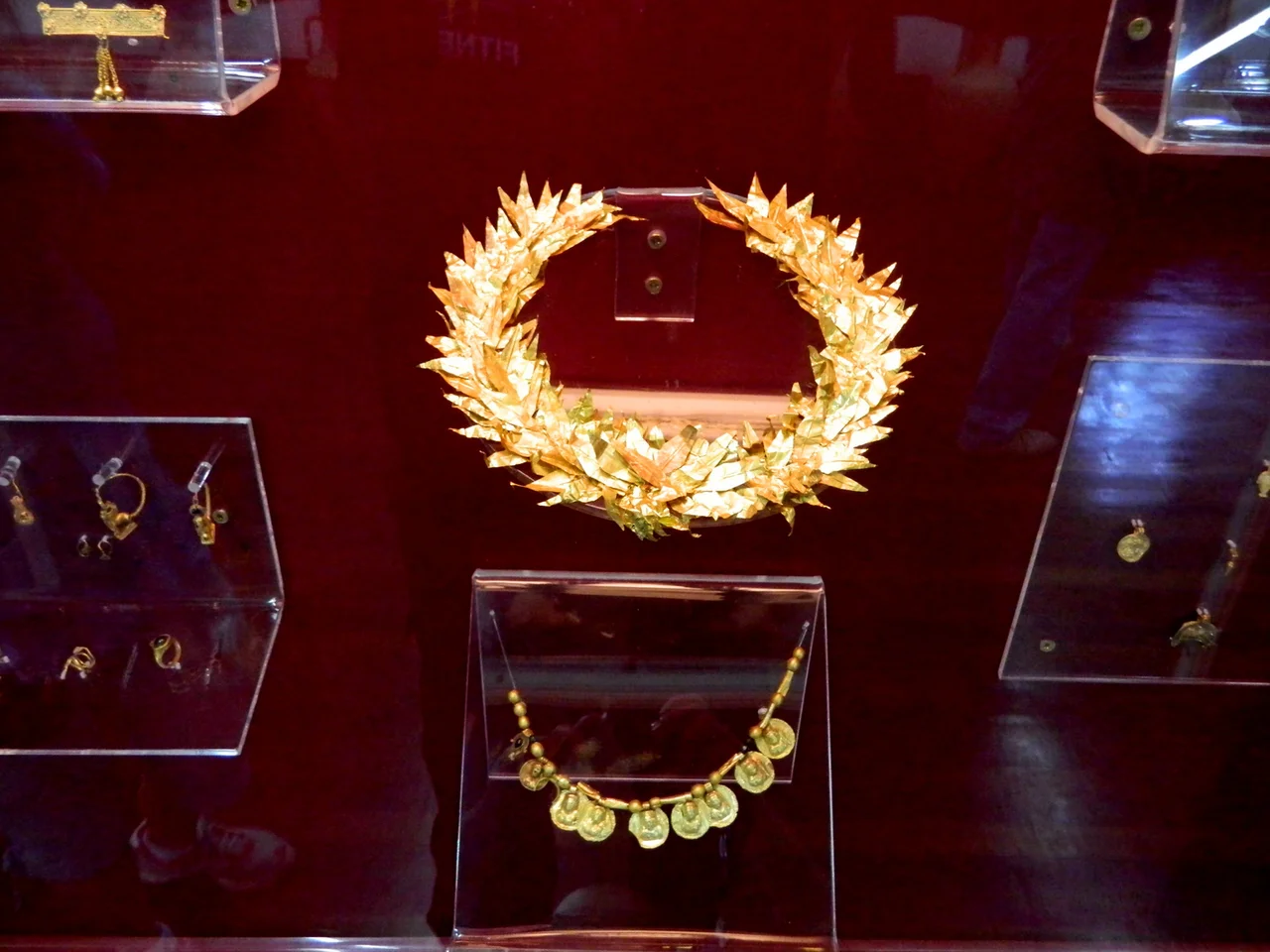

Archaeological Museum of Lamia
The museum sits inside a barracks. That detail, easy to overlook, quietly describes everything about how Lamia's relationship with its past has unfolded: layer over layer, each era repurposing what the last one left behind. The acropolis has been a fortified high ground, a Bavarian-era military post, a World War II garrison, and now a museum — and through every change, the ground beneath it has kept accumulating stories.
Castle, Barracks, Museum
Lamia Castle stands on the acropolis above the city, a commanding position above the Spercheios River valley that humans recognized as defensible long before any particular civilization had a name for it. The barracks building inside the castle walls dates to 1830, constructed by order of Otto — the Bavarian prince installed as Greece's first king after independence. During the Second World War the building served as an army barracks again. The Greek Ministry of Culture took possession of it from the Ministry of Defence in 1973, and after renovation the Archaeological Museum of Lamia opened to the public in September 1994. The two-story building now houses large exhibition halls on its ground floor and rooms on the upper floor.
What the Ground Gave Up
The museum's collection spans from the Neolithic era through the Roman period, drawing on excavations across Phthiotis, Evrytania, Phocis, East Locris, and neighboring regions. Neolithic-period pottery, implements, terracotta figurines, and decorative ornaments form the earliest layers of the collection. From the Bronze Age come gold ornaments, soft stone seal-amulets, and a striking warship-shaped artifact excavated from the site of Kynos. The Archaic period is represented by elements from the Oracle of Apollo temple at Kalapodi — shelter components, pilasters, altar paraphernalia — alongside an Illyrian bronze helmet from Evrytania and a marble torso of Demeter. These are not decorative objects. Each one marks a moment when someone in central Greece made something, dedicated it, buried it, or lost it.
Gods, Children, and a Balance
The Classical, Hellenistic, and Roman galleries hold ceramic and glass vessels, masks of Dionysos and Persephone, children's toys, and mosaic fragments including a representation of the Three Graces. Among the most prominent pieces is a marble votive relief of Artemis Eileithyia, dated to around 400 BC and executed in the style of Praxiteles — Artemis in her role as protector of childbirth. A related Hellenistic relief from Achinos, dated between 400 and 300 BC, depicts Artemis Locheia receiving a baby girl offered by a veiled mother. That gesture — a parent presenting a newborn to the goddess — is one of the most human moments in the collection, and one of the easiest to understand across millennia. A bust of Athena holding a balance, gold ornaments, and a 5th-century BC red-figure amphora from Panagitsa at Elateia round out these galleries.
An Inscription Worth Reading
Among the ground-floor displays is a stone inscription from the site of Achinos recording the manumission — the formal release from slavery — of enslaved people by their owners. Such inscriptions are rare survivors of a legal and human process that was routine in antiquity, and finding one here anchors the museum's collection to the lived experience of real individuals rather than gods and warriors alone. It is an uncomfortable kind of artifact to stand beside. It makes the ancient world legible not as spectacle but as a place where people bought, owned, and occasionally freed other people, and saw fit to carve the record in stone.
From the Air
The Archaeological Museum of Lamia is located within Lamia Castle on the acropolis of the city, at approximately 38.90°N, 22.43°E. Lamia sits at the head of the Spercheios River valley, with the hills of Phthiotis rising behind it and the Maliac Gulf visible to the east. The acropolis is a distinct elevated feature within the city. Recommended viewing altitude is 3,000–5,000 feet to identify the castle's elevated position above the city grid. The nearest major airport is LGBL (Nea Anchialos National Airport, near Volos), approximately 50 km to the northeast. Athens Eleftherios Venizelos (LGAV) is approximately 170 km to the south.
Nearby Stories
- Karpenisi 2.6 km away
- Duchy of Neopatras 2.7 km away
- Kalapodi 5.1 km away
- Farsala 11 km away
- Lake Plastiras 12 km away
- Thermos (Aetolia) 17 km away
- Demetrias 17 km away
- Free and Real 21 km away