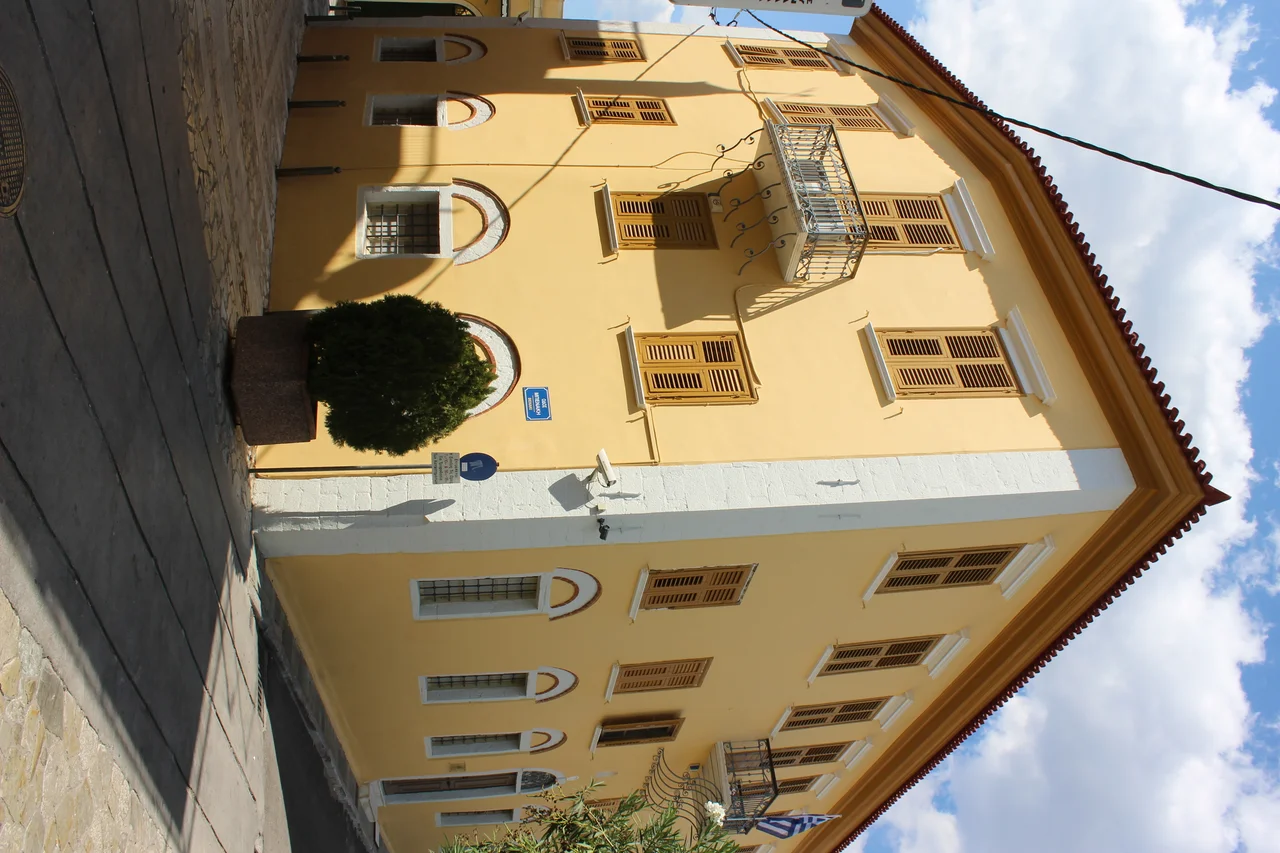

Archaeological Museum of Messenia
The 1986 earthquake that struck Kalamata did more than crack walls and topple rooftops. It brought down a museum. The Benakeion Archaeological Museum — a graceful 1742 building of Venetian architecture in the heart of the old quarter — collapsed in the tremors, taking with it the physical home of Messenia's curated past. What rose in its place, on the site of the city's old market hall, is the Archaeological Museum of Messenia: a new institution charged with preserving an ancient region's story from prehistoric times through the Byzantine and Latin eras.
A Predecessor Lost to the Earth
The Benakeion was not just a repository for old objects. Built in 1742, it was itself a historical artifact — a rare surviving example of Venetian civic architecture in the Peloponnese, a reminder of the decades when Venice administered Kalamata as part of its Kingdom of the Morea. When the earthquake of September 1986 brought it down, the city lost both a building and a landmark. The collections survived; the institution did not. Exhibits were transferred out in November 2008 as the new museum prepared to receive them, and the Benakeion formally closed. What had been gathered and cared for across generations found a new home on Agiou Ioanni Street.
Four Regions, One Story
The museum's organizing principle is geographic: Messenia, the fertile southwestern corner of the Peloponnese, is divided into four traditional sub-regions — Kalamata, Messene, Pylia, and Triphylia — and the collection is arranged accordingly. This structure lets visitors trace how different parts of the same landscape developed across time. A Mycenaean burial find from the Pylia coast sits in a different frame than a Byzantine-era liturgical object from the highlands near Kalamata, even though both come from within a day's walk of each other. Together they tell how long and how richly this corner of Greece has been inhabited.
Layers from Prehistory to the Latin West
Messenia's deep past is disproportionately rich. The region was the heartland of Mycenaean civilization on the western Peloponnese — the Bronze Age palace at Pylos, just up the coast, was one of the most sophisticated administrative centers of the ancient Greek world. The museum holds finds that reach from those prehistoric layers through the Archaic and Classical Greek periods, the Byzantine centuries, and into the era of Frankish and Venetian rule that the medieval Peloponnese sometimes calls the Latin period. The range is unusual: most regional museums in Greece anchor in one era. Messenia's museum must span them all.
Built Where the Market Was
The choice of site carries its own symbolism. The old market hall was the commercial center of Kalamata's daily life — a place of transactions, voices, and the ordinary movement of goods. The Archaeological Museum now occupies that same ground, trading a different kind of exchange: between the present and the deep past, between modern visitors and the civilizations that preceded them on this stretch of southern Greek coast. The building at 3 Agiou Ioanni Street is not architecturally notable in the way the Benakeion was, but it holds what the Benakeion carried, and adds to it the finds of excavations conducted across Messenia in the decades since.
From the Air
The Archaeological Museum of Messenia sits at approximately 37.044°N, 22.113°E in the old quarter of Kalamata, Messenia's capital city on the Messenian Gulf. Approaching from Kalamata International Airport (LGKL), located about 8 km to the southwest at 37.068°N, 22.025°E, the coastal plain and city grid are visible from low altitude. The museum is near the foot of the hill crowned by Kalamata Castle. Recommended viewing altitude: 2,000–4,000 ft. The Messenian Gulf's deep blue water to the south and the jagged ridgeline of Mount Taygetos to the northeast are excellent visual landmarks.
Nearby Stories
- Las (Greece) 1.3 km away
- Karyes 3 km away
- Psari, Messenia 10 km away
- Diocese of Amyclae 11 km away
- 2023 Messenia Migrant Boat Disaster 20 km away
- Kalamakia Cave Site 36 km away
- Agios Andreas, Katakolo 46 km away
- El-Kouf National Park 445 km away