.jpg)
Ardtornish
Tennyson came in 1853 and missed his chance to see Loch Coruisk on Skye, then wrote a small verse forgiving himself because he had spent the day at Ardtornish instead. He spent a day in Heaven, he concluded, which is perhaps the only acceptable excuse for missing one of Scotland's most dramatic lochs. The estate is in Morvern, on the Scottish mainland directly opposite Mull across the Sound. It runs to thousands of acres and is now best known for three things: a 100-guest visitor enterprise centred on Ardtornish House, a hydropower scheme delivering 3.3 megawatts of renewable electricity, and one of the few silica sand mines in Europe, producing material for glassmaking. The estate's twenty-first-century identity holds together because its nineteenth-century owners built ambitiously and its twentieth-century inheritors refused to sell.
Sellar's Name
The estate inherited its name from one of the most reviled figures in Highland history. Patrick Sellar, factor to the Duke of Sutherland and architect of some of the most brutal clearances of the early nineteenth century, purchased the Maclean and MacLachlan holdings in 1844 and combined them as the Ardtornish Estate, taking the name from the pre-existing ruined castle on the coast. By 1850 Sellar held most of the area. Over 3,200 people had left Morvern parish during the nineteenth century; 750 were forcibly evicted, many under Sellar's direct orders or those of his neighbours. The bitter memory lived long after the population had emptied. When Octavius Smith, a London distiller with grocery-wholesale money behind him, bought Sellar's lands at Whitsun 1860, he immediately renamed the entire holding Ardtornish, keeping Sellar's chosen name while pointedly removing his personal stamp. The name was older than the man who had used it. Smith made sure it would outlast him.
The House That Valentine Built
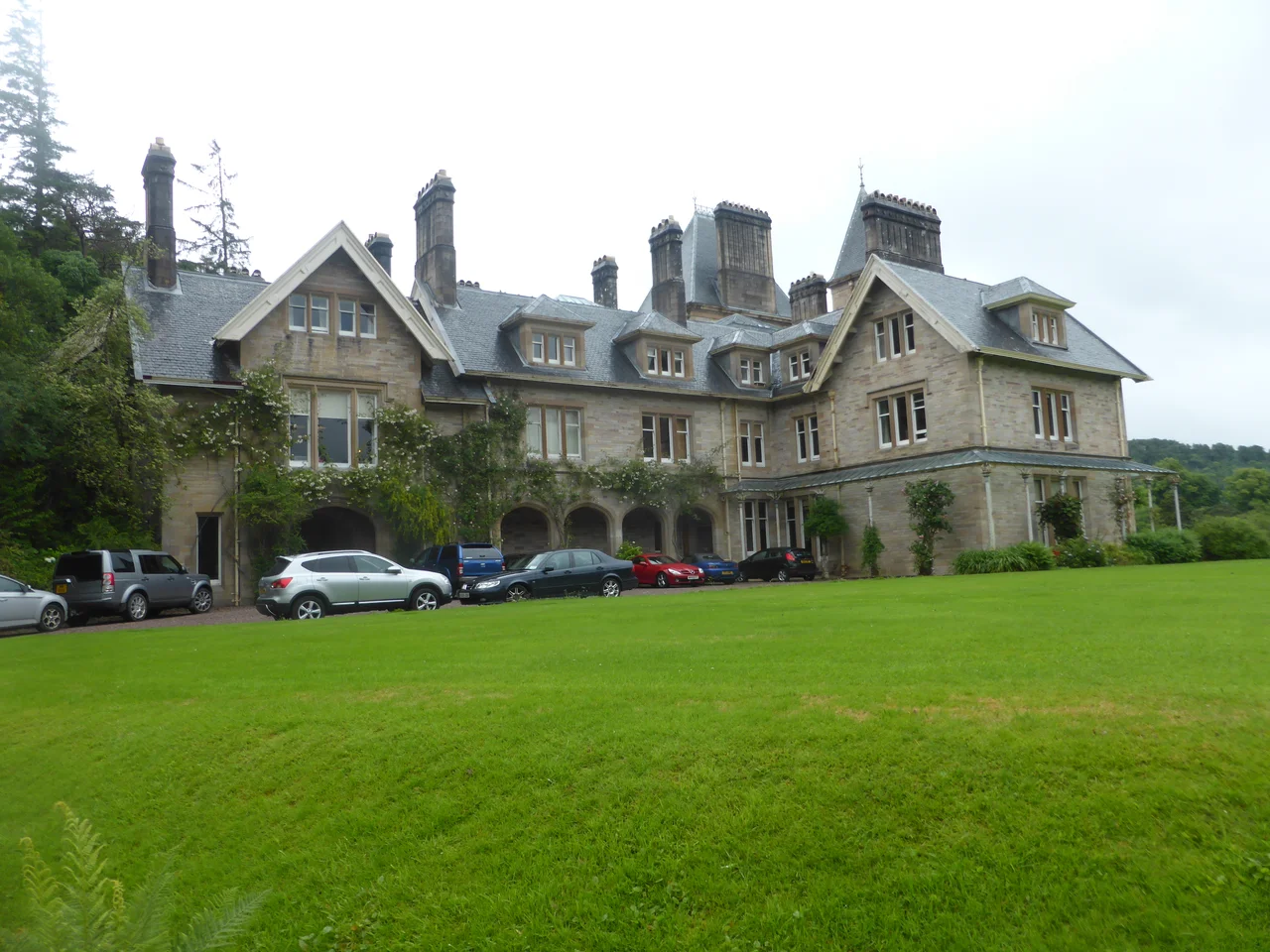
Octavius Smith died in London in February 1871, only eleven years after buying the estate, and never enjoyed his summer house for long. The mansion he had commissioned, designed by Alexander Ross of Inverness and completed in 1866, did not survive him either. His son Valentine inherited the estate and the distilling business, knocked down his father's house, and built something on a heroic scale in 1884. Only the clock tower of the original remains. At its construction peak in 1888 the new house employed 160 workers, an injection of employment at a moment when agitation for land reform from the Highland Land League was at its height. Valentine also bought the neighbouring Lochaline estate in 1880, more than doubling his holdings. The category-A listed building still stands. It accommodates over a hundred guests today as a holiday enterprise, its visitor income now central to the estate's economy.
From Sellar's Son to Faith Raven
The Smith family connection to the Sellars closed an awkward loop. Valentine's sister Gertrude married Patrick Sellar's son Alexander Craig Sellar in 1870. When Valentine died, Gertrude inherited Ardtornish and ran the estate until 1909, then handed it to her unmarried son Gerard. They lived together at the new house until the winter of 1929, when both died within a few weeks of each other. The estate was sold within a year. Owen and Emmeline Hugh Smith of Rutland bought it in 1930, drawn partly by Valentine's elaborate gardens, twelve gardeners' worth of formal landscape, rockeries, and walled herbaceous beds. The Hugh Smiths, inspired by Colonsay House, planted rhododendrons by the hundred. Their daughter Faith married John Raven, a Cambridge classicist and amateur botanist, and eventually inherited. The Raven family still owns and runs the estate. Hugh Raven, Faith's son, has been director through much of the recent expansion.
Water, Glass, and a New Township
Modern Ardtornish runs on the original founder's instinct for industry. The estate house was lit by its own small hydroelectric plant for decades after the second world war until that plant became obsolete. In the early 1990s the estate took advantage of the Scottish Renewables Order and built a 700-kilowatt run-of-river scheme. By 2012 that had been replaced by a 1.5-megawatt turbine called Rannoch Dam. Three more hydropower plants have been built since, bringing total installed capacity to 3.3 megawatts. The estate also operates one of Europe's few mines for silica sand, producing glassmaking material via Lochaline Quartz Sand. Part of the land is co-managed with the Scottish Wildlife Trust as the Rahoy Hills reserve, described as the Trust's most biodiverse of its 130 properties. In 2010 the estate received planning permission for Achabeag, a sustainable new community of twenty houses two miles west of Lochaline, including affordable units built with a local housing trust. The same land that emptied under Sellar is now, slowly and deliberately, being filled again.
From the Air
Coordinates 56.546°N, 5.735°W in Morvern on the Scottish mainland, directly across the Sound of Mull from Mull's east coast. Best viewed at 1,500-3,000 feet AGL with Loch Aline reaching inland to the south, the Sound of Mull and Glenforsa visible to the west, and the Rahoy Hills forming the higher ground inland. Nearest airports: Glenforsa Airfield (grass) 8 nm west on Mull, Oban (EGEO) 18 nm southeast, Tiree (EGPU) 40 nm west. Morvern terrain rises quickly inland; westerly winds bring frequent low cloud against the hills.
Nearby Stories
- Castle Tioram 1.9 km away
- Cairnburgh Castle 3.3 km away
- Lunga, Firth of Lorn 7.2 km away
- Bonawe Iron Furnace 8.8 km away
- West Highland Museum 11 km away
- Inveraray Castle 12 km away
- Bullough Mausoleum 22 km away
- Dubh Artach 23 km away