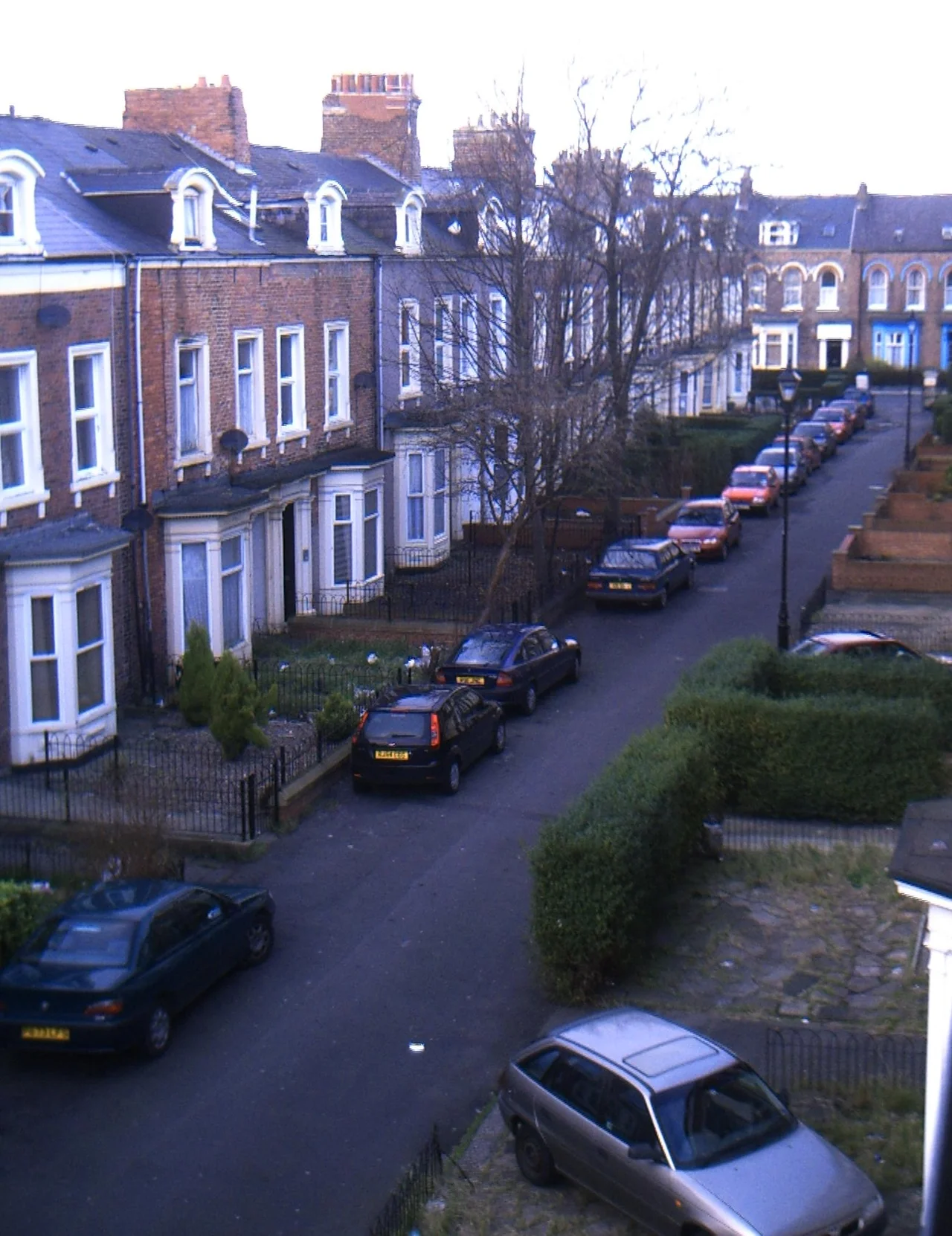

Ashbrooke
In 1990, a seventeen-year-old Indian cricketer named Sachin Tendulkar walked out to bat for the first time on English soil. The ground was not Lord's or The Oval. It was Ashbrooke Sports Ground in Sunderland - a Victorian cricket and rugby club that, against odds, had drawn the touring Indians north to play a friendly. Tendulkar's later career made the moment a quiet pilgrimage site for cricket statisticians. Ashbrooke itself stayed what it had always been: Sunderland's first proper suburb, a grid of tree-lined avenues just south-west of the city centre, where the houses are wide and the street names sound like estate agents' poetry - The Esplanade, The Oaks, The Elms, West Lawn, Holmlands Park.
Sunderland's First Suburb
Ashbrooke grew during the Victorian boom, when Sunderland's shipyards and pottery works produced a generation of merchant families who wanted to live somewhere quieter than the dockside terraces. They built large, solid houses on wide avenues planted with plane trees. Much of Wearside's Jewish community settled here, and the quarter took on the comfortable, slightly formal feel of north-of-England prosperity. A century later many of those big houses have been carved into student flats serving the University of Sunderland, but the avenues are intact, the trees taller, the brick still confidently red. The area lies within walking distance of Park Lane and University stations on the Tyne and Wear Metro, which is how most of its current residents move.
Ashbrooke Launderette
In 1987, the Sunderland punk band The Toy Dolls put out an album called Bare Faced Cheek. One of its tracks is called Ashbrooke Launderette - three minutes of fast guitar and northern in-jokes about a real building on a real street. Various members of the band still live or work in the area, which is its own quiet endorsement. It would be easy to make Ashbrooke sound merely respectable. The Toy Dolls' song is a useful counterweight: this is a place that produced one of British punk's most enduring novelty hits, and the launderette in question is still doing washes. The juxtaposition - Victorian villas and three-chord pop - is more Ashbrooke than the architecture alone could ever be.
Sport on the Green
Ashbrooke Sports Ground opened on 30 May 1887, originally for cricket and rugby, and within decades had become one of the busier amateur sporting venues in the north-east. Bowls, tennis, hockey, squash and rugby union all share the site. In its heyday it hosted a tennis tournament used as a Wimbledon warm-up - Jimmy Connors played here, as did Martina Navratilova. Durham County Cricket Club, when it was still a minor county, played touring international sides on the Ashbrooke turf. A two-day match against the 1926 Australians drew a crowd reportedly over 20,000. In 1950 the West Indians came, and Kenneth Trestrail scored a century in each innings. Sunderland Rugby Football Club still plays here, now in the Durham/Northumberland Division 2.
View From the Air
From altitude Ashbrooke shows as a darker, more wooded square within the lighter terraced grid of Sunderland proper. The plane trees throw enough canopy to soften the street pattern from above. To the north-east the River Wear cuts through the city to the docks; to the south-east the coast runs down toward Ryhope and Seaham. The Ashbrooke Sports Ground itself is unmistakable from the air - a large green rectangle of cricket and rugby pitches, ringed by pavilion buildings, sitting in the middle of one of the most carefully laid out Victorian residential grids in the north of England.
From the Air
Located at 54.895 N, 1.388 W, immediately south-west of Sunderland city centre. Recommended viewing altitude 2,000 to 4,000 feet for the Victorian street grid and the green expanse of the sports ground. Nearest airports: Newcastle International (EGNT) approximately 10 nm north-west, Durham Tees Valley (EGNV) further south. Visual landmarks include the River Wear and Sunderland docks to the north-east, the North Sea coast to the east.
Nearby Stories
- Seaton Carew 2.7 km away
- HMS Unity (N66) 6 km away
- George Stephenson's Birthplace 6.1 km away
- Raby Castle 9 km away
- Cragside 15 km away
- Whitby Abbey 21 km away
- German submarine U-2367 46 km away
- Alexander L. Kielland (Platform) 277 km away