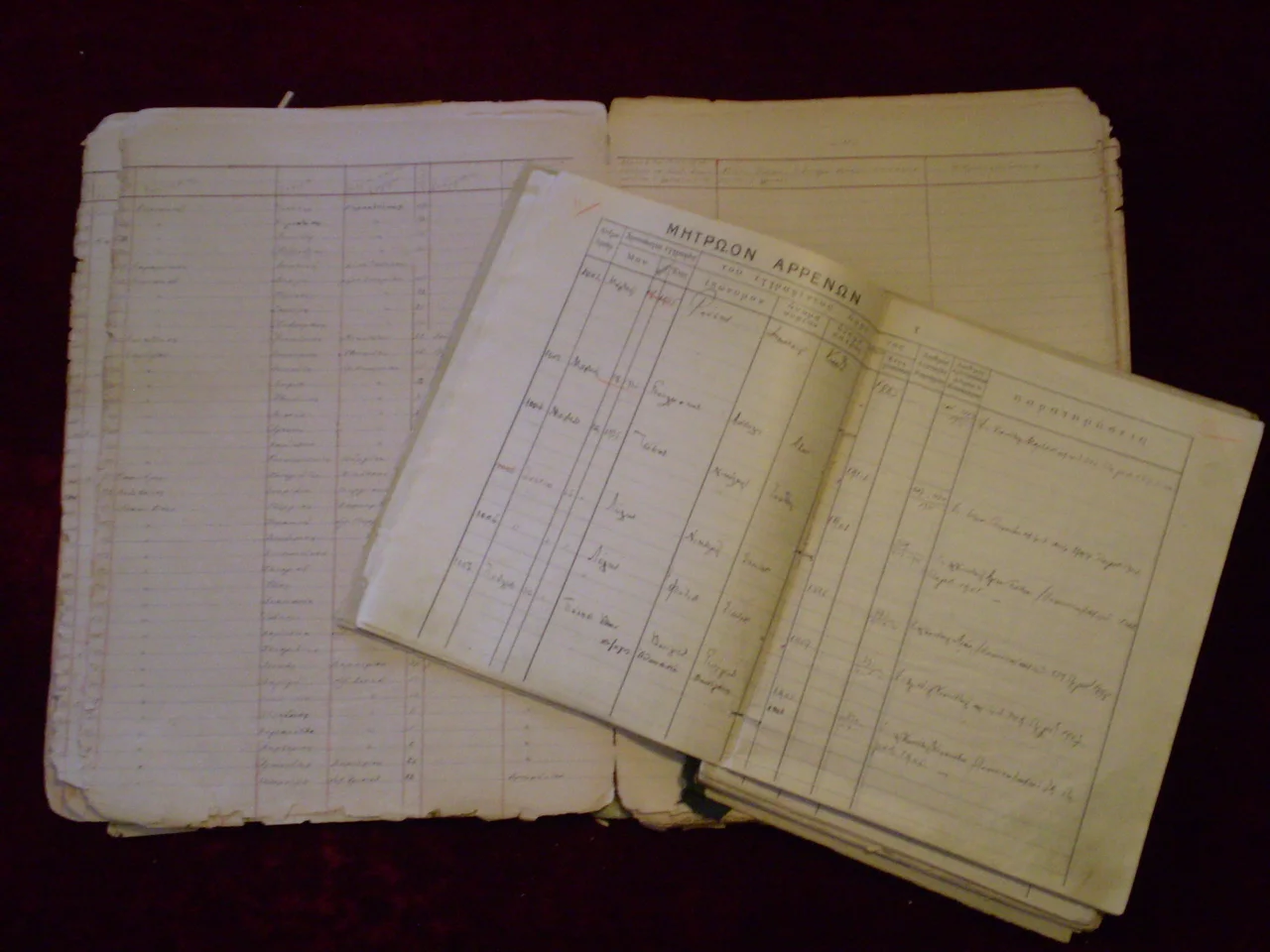

Atalanti
On the morning of April 20, 1894, the ground under Atalanti shook so violently that 255 people died and 3,783 houses collapsed across the Locris region. The earthquake was one of the most destructive in Greek history, and it struck a town that had already endured, in the preceding centuries, Ottoman rule, plague, raiding Saracens and Bulgarians, a Frankish barony, Catalan mercenaries, Venetian adventurers, and the fires of the Greek War of Independence. Atalanti survived all of it. It still holds its annual trade fair every August, as it has since the 18th century. The sardine festival still draws crowds to the beach at Skala every July. The wine flows at harvest time in the valley that gives the region its name. This is what continuity looks like in a place where history never quite stops arriving.
Named for a Huntress
The name Atalanti comes from Atalanta, one of the more formidable figures in Greek mythology — a huntress raised by bears who outran every man who tried to court her and participated in the Calydonian Boar Hunt alongside heroes. The ancient city that preceded modern Atalanti was Opus, capital of the Locrians, a people who according to Hesiod and Plutarch traced their origins to Locros, great-grandson of Deucalion and Pyrrha. The Locrians contributed forty warships and four thousand warriors to the Trojan War, commanded by Ajax the Lesser, son of Oileus. The mythological connection runs deeper still: Patroclus, Achilles' closest companion in the Iliad, was originally from Opus. As a child he killed a nobleman's son during a game and had to flee the city; his father brought him to Peleus, who raised him alongside Achilles. The valley has been inhabited since the Neolithic era, when the first settlements appeared in the Skala Atalanti area around 7000 BC. The Mycenaean city of Opus was built here in the Late Helladic period, its people farming wheat, olives, and grapes, and fishing the northern Euboean Gulf that washes the coast just fifteen kilometers to the east.
A Town That Kept Changing Hands
Few towns in Greece have passed through so many sets of hands and kept as clear a record of the passage. In 431 BC, during the Peloponnesian War, the Athenians fortified the small island of Atalanti offshore to control Locrian pirates — and an earthquake in 426 BC promptly destroyed part of their fortifications. The Romans arrived in 204 BC when the general Gaius Flaminius seized Opus, though the Locrians regained their independence by 197 BC. Following the Fourth Crusade, a Frankish barony was established here under the Catalan noble Pere de Puigpardines; the town became La Calandri in Catalan sources, one of the four major ports of the Aragonese Duchy of Athens. Catalan mercenaries of the Catalan Company seized the Duchy in 1311. By 1388, the Florentine Acciaioli family had taken over. The Ottomans abolished the Duchy of Athens in 1458 and ruled for nearly four centuries. A census of 1571 counted 622 Christian and 77 Ottoman households — making Atalanti the largest settlement in Locris, with a population of about 3,000. The residents had a peculiar arrangement: because they belonged to a waqf (a religious endowment), they paid no taxes and their sons were exempt from the devshirme, the Ottoman levy of boys for the Janissary corps, in exchange for defending the local coastline against pirates.
Liberation and Its Costs
On 31 March 1821, Anthony Kontosopoulos and a thousand armed Locrians laid siege to Atalanti and freed it — one of the earliest actions of the Greek War of Independence. The liberation did not hold easily. Turkish troops burned the town the following year. In 1824, the Ottoman fleet occupied the offshore island and destroyed its facilities, killing or capturing those who had sheltered there. The Battle of Atalanti took place between November 5 and 9, 1826, when Anastasios Karatassos led 1,500 Macedonian fighters against an Ottoman force of several thousand; after fierce fighting, the Greeks retreated having lost 42 men. Final liberation came on November 6, 1828, when Dimitris Liakopoulos mounted a surprise attack and freed the city for good. Within three years, Atalanti had a primary school, a county court, a notary office, tax authorities, a tobacco factory, and a post office. The Macedonian fighters who had participated in the revolution began settling permanently in the town, eventually establishing their own community, Nea Pella — New Pella — named for the ancient Macedonian capital.
The Earthquake of 1894 and After
The earthquake that struck in 1894 was the event that most dramatically shaped the modern town's memory. Two hundred and fifty-five people were killed and nearly four thousand houses destroyed across Locris — a catastrophe for a region that had been rebuilding its civic life since independence. At the time, sericulture — silkworm cultivation for silk production — was at its peak in Atalanti households, a trade now completely vanished. The town rebuilt again. The Locris Gymnastics Club was founded in 1895, one of the twenty-eight clubs that would later form the predecessor of the Greek Athletics Federation. Atalanti continued accumulating institutions: an annual trade fair from 1864, a branch of the National Bank of Greece in 1873, an archaeological museum in 1998 that displays finds from the region's long prehistory. A second destructive earthquake, measuring 6.2 on the Richter scale, struck nearby Vracha on February 5, 1966, prompting another wave of emigration to the surrounding plains and urban centers.
Wine, Sardines, and the View from Skala
Atalanti today is a market town of about 4,500 people, the seat of the municipality of Lokroi, surrounded by mountains on three sides and the northern Euboean Gulf on the east. The soil is notably high in magnesium and iron — a chemical signature that shapes the flavor of the wines produced in the valley. The winery Domaine Hatzimichalis, one of Greece's larger producers, operates more than 200 hectares in the area. The port of Skala Atalanti, a few kilometers to the east, has been a Blue Flag beach since the 1980s, with fish restaurants, cafes, a beach volleyball court, and water sports. The sardine festival each July fills Skala with traditional music, free wine, and sardines grilled over open fires. The annual trade fair in August, established in the 18th century as a cattle market, still runs for six days each year. Atalanti also hosts a choral festival that has run continuously since the early 1980s, drawing choirs from across Greece and abroad to the Aianteio Municipal Theatre. The catacomb of St. Athanasius in the town center is a Roman crypt that, during the Ottoman occupation, reportedly served as a secret school — one of the krifo scholeia, the hidden places where Greek language and Orthodox Christian learning were kept alive during the centuries when the culture was under pressure.
From the Air
Atalanti sits at approximately 38.65°N, 23.00°E in central Greece, at 85 meters elevation, in the valley between Mount Knimida to the north and Mount Chlomo to the south, with the northern Euboean Gulf visible to the east. From Athens International Airport (LGAV, 37.94°N, 23.94°E), Atalanti is about 90 km to the northwest — roughly a 20-minute flight at cruise altitude. Approaching from the south at 6,000 feet on a clear day, the narrow coastal plain between the mountain ridges and the gulf becomes visible, with the small port of Skala Atalanti and its sandy beach marking the coast. The island of Atalanti (Talantonisi) lies just offshore, a low shape in the gulf waters. The Greek National Road 1 traces a path through the valley from Athens northward toward Lamia and Thessaloniki, visible as a thread connecting the coastal towns. Mount Parnassus, highest peak in central Greece, rises to the west.
Nearby Stories
- Battle of Alamana 3.6 km away
- Free and Real 5.7 km away
- Agios Thomas Tanagras 5.7 km away
- Pythian Games 11 km away
- Thespiae 12 km away
- Euripus Strait 14 km away
- French Cruiser Châteaurenault (1898) 17 km away
- Skopelos 32 km away