
Attack on Convoy BN 7
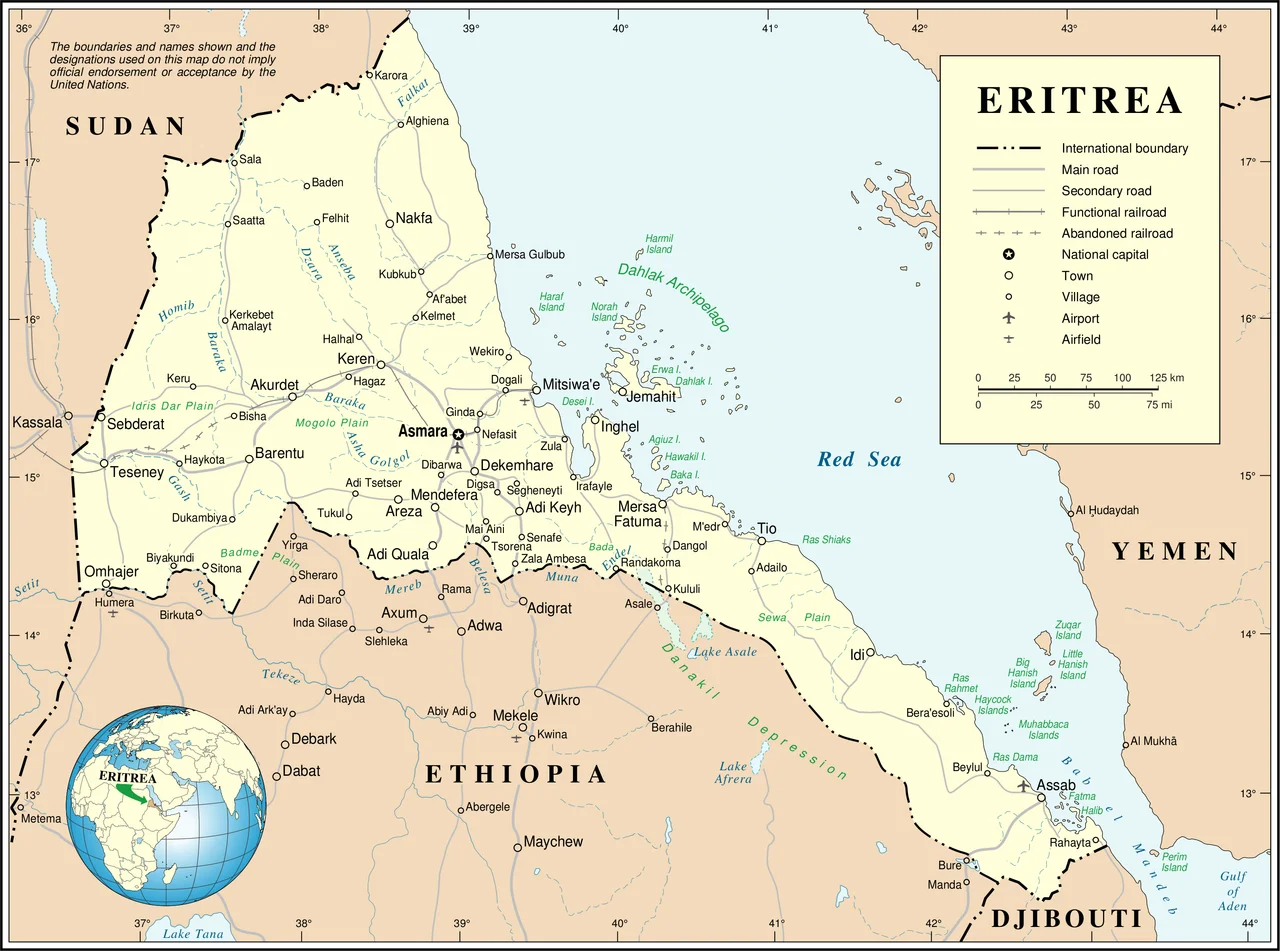
At 06:35 on the morning of 21 October 1940, off the Eritrean coast near Harmil Island, a torpedo from the British destroyer HMS Kimberley struck the Italian destroyer Francesco Nullo amidships and broke it in two. Most of the Italian crew had already abandoned ship on the orders of their commander, Lieutenant Commander Costantino Borsini. Borsini himself refused to leave. His young assistant, Seaman Vincenzo Ciaravolo, watched from a lifeboat, then made a decision that seaman have been making about their captains since the age of sail: he jumped back aboard to accompany his commander. Both men drowned when the ship went down. The Attack on Convoy BN 7 was a small action in an overlooked theater of the Second World War, but it came to stand for what the Red Sea campaign was actually like - confused, mismanaged, personally costly, and decided in the dark.
The Red Sea Problem
When Italy entered the war in June 1940, Mussolini's East African empire sat astride one of the most important sea lanes on earth. The Red Sea is a narrow, hot corridor between Africa and Arabia, walled by desert to the west and mountain to the east, and shipping funnels through the Bab-el-Mandeb - the Gate of Tears - at its southern end. British supply convoys from India and the Far East bound for the Middle East had to run this corridor. Italian submarines and destroyers based at Massawa, on the Eritrean coast, were positioned to intercept them. The Italian Red Sea Flotilla commanded by Rear Admiral Mario Bonetti was formidable on paper. In practice the climate wore down engines, the British blockade cut off fuel, and the flotilla's sorties in the summer of 1940 had returned again and again without finding their targets.
Convoy BN 7
The convoy was northbound through the Red Sea in mid-October 1940: thirty-two Norwegian, French, Greek, and Turkish merchant ships escorted by the light cruiser HMS Leander (New Zealand Division), the destroyer HMS Kimberley, the Australian sloop HMAS Yarra, the sloop HMS Auckland, and smaller vessels. Aboard one of the French liners was a contingent of New Zealand troops bound for Suez. On 19 October, approaching the volcanic island of Perim in the Bab-el-Mandeb, the convoy came under air attack for the first time. Bombs fell wide. The convoy zig-zagged through the next night, with Leander on the port beam between the ships and the Italian base at Massawa. The enemy was expected to come. When, and how many, was the question.
A Night of Torpedoes
On the evening of 20 October four Italian destroyers sortied from Massawa - Sauro and Francesco Nullo as the fast pair, Pantera and Leone as the slower, more heavily armed pair. The plan was for one section to draw off the escorts while the other hit the merchants. At 02:19 on 21 October Leander sighted smoke to the north. The next three hours were a confused chase in haze and darkness. Pantera fired torpedoes at HMAS Yarra, which combed the tracks. Sauro fired at Leander and missed. Nullo's rudder jammed and the destroyer went in circles for several minutes, losing contact. The British were blinded by the flash of their own guns. The Italians used flashless cordite and could see better in the dark. Leander fired 129 six-inch rounds at Nullo, damaging its gyrocompass, before losing sight of it in the mist.
Off Harmil Island
Kimberley, pursuing alone, caught Nullo at 05:40 off Harmil Island, where the Italians had installed four 120mm shore batteries. At 05:53 Kimberley opened fire. Nullo, mistaking the British destroyer for its companion Sauro, took four minutes to return fire. Nullo's commander Borsini ordered her beached. Two engine-room hits took her power. A reef tore a propeller. Then a Kimberley torpedo hit her in the middle and broke her spine. The Harmil Island shore battery engaged Kimberley in turn, holing her engine room and wounding three men. Kimberley silenced two of the four shore guns with 45 HE shells and got clear on one engine, trailing steam from her ruptured pipes. Leander raced up from the convoy and took the limping destroyer under tow just before 10:00. Italian bombers arrived briefly, missed, and left.
The Men Who Died
The Italian survivors of Nullo were pulled from the water by sailors from the Harmil Island coastal battery. Borsini and Seaman Ciaravolo did not survive. Italy later recognized Ciaravolo's decision to rejoin his captain in the sinking ship as an act of exceptional devotion. The Regia Marina attempted more sorties in December and January, one of them cancelled when Daniele Manin was hit by a British bomb, none of them successful. Kimberley was out of action until 31 October and required full repairs through the spring of 1941. Over the whole convoy campaign from August to December 1940, the Italians managed only six successful air attacks and not a single merchant ship sunk by destroyers at sea. The British criticized their own escorts for a lack of aggression, though leaving a convoy undefended at night in the Red Sea was not a trivial choice. Within six months of the action at Harmil, Italian East Africa had surrendered and the Red Sea Flotilla ceased to exist.
From the Air
The engagement occurred off the Eritrean coast near Harmil Island, in the vicinity of 15.61 N, 39.45 E, north of Massawa. The area lies within the Dahlak Archipelago - extensive reefs and islands make modern marine navigation here still demanding. Massawa International Airport (HHMS) is the nearest major airfield. Hot desert climate conditions prevail: surface temperatures above 40 C are common, and haze from dust and humidity often creates the same false horizons and atmospheric refraction that complicated the 1940 action.
Nearby Stories
- Adulis 12 km away
- Northern Red Sea region 20 km away
- Eritrea 27 km away
- Southern region (Eritrea) 55 km away
- Danakil Depression 119 km away
- Nakfa 149 km away
- Italian Submarine Guglielmotti (1938) 188 km away