
Attacks on Shipping in Lough Foyle (1981-82)
The pilot boat had been tied up at Moville on the Donegal shore. The men who hijacked it on the evening of 6 February 1981 were Provisional IRA volunteers - twelve of them, including five who stayed ashore to watch and seven who climbed aboard with two high-explosive charges. They forced the skipper to motor them out across the lough. Three hundred yards off the Republic's shore the British coal ship Nellie M lay at anchor, waiting for the tide to take her up the Foyle to the Derry quays. The IRA team boarded her, gave the captain time to gather his crew into the lifeboat, planted the bombs in the engine room, and towed the lifeboat to safety on the eastern shore before detonating. Huge flames could be seen for miles. The whole operation, by any reasonable definition of military objectives, was a complete success - and yet no one died.
The Lough Between Two Countries
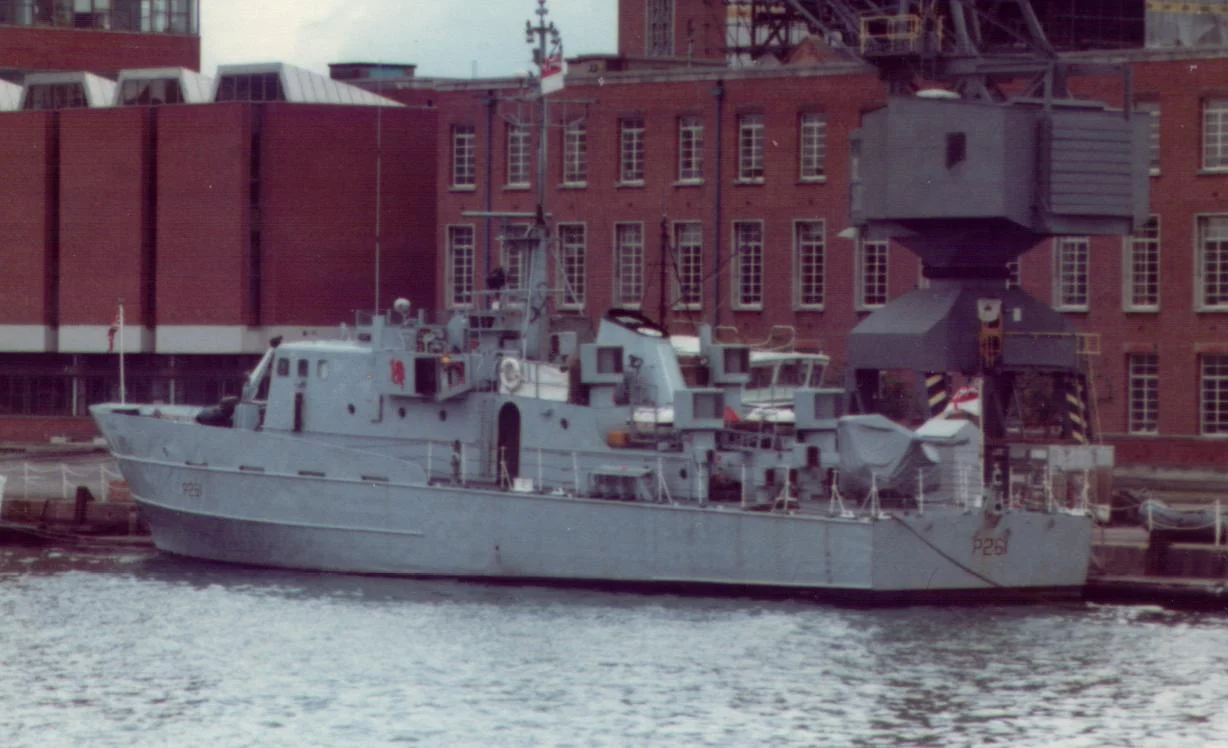
Lough Foyle is a strange piece of water. It separates County Londonderry, in Northern Ireland, from County Donegal, in the Republic of Ireland. Sovereignty over parts of the lough has been disputed by both states for the better part of a century. The shipping channel runs deep enough for coastal vessels to ply between Liverpool, Glasgow, and Derry's port - bringing coal, timber, and cement to the city. By 1981 the lough had become useful to the IRA precisely because of its dual character. A pilot boat hijacked at Moville, in the Republic, was outside the jurisdiction of the Royal Ulster Constabulary and the British Army. By the time it reached a target in the navigable channel it was in disputed waters. The Royal Navy had assigned its Bird-class patrol vessels HMS Cygnet and HMS Kingfisher to the province's waterways, primarily to stop weapons smuggling. But they could not be everywhere. They were not in Lough Foyle on the evening of 6 February 1981.
The Nellie M
The Nellie M was a 782-tonne coaster, launched in Yorkshire in 1972 and owned by S. William Coe & Co. of Liverpool. She had sailed from Liverpool with a cargo valued at £1 million. Once the IRA team boarded her, four members supervised the crew's evacuation while three planted the charges in the engine room. The captain and his men were ordered into the lifeboat. The hijacked pilot boat then towed the lifeboat to the eastern shore - close enough to the beach for the crew to walk to land. As the lifeboat hit the gravel, the first explosion shook the Nellie M. Flames engulfed her bridge. Hours later a second blast tore open her bulkheads. By the next morning her stern was underwater. The hull was eventually raised in 1982 for salvage. The IRA's stated objective had been to disrupt maritime traffic to and from Londonderry Port and to force the British and Irish governments to deploy security guards on merchant ships. They described the ships as 'commercial targets'.
The St. Bedan
One year later, almost to the day, they did it again. On 23 February 1982 the St. Bedan, a 1,250-tonne coal ship built on the Clyde and owned by J&A Gardner & Co. of Glasgow, was at anchor five nautical miles northeast of Derry, waiting for the tide. Another twelve-man IRA team launched from the pilot boat at Moville. The boarding procedure was identical to the previous year: a forced evacuation into the lifeboat, charges planted in the engine room, the lifeboat towed to the eastern shore. The St. Bedan was sunk. She was raised and scrapped by November 1982. After two attacks in two years, the British shipping industry sailing into Derry installed onboard security. The IRA had achieved its stated objective. The remarkable feature of both operations - acknowledged even by writers hostile to the IRA - was the discipline with which the boardings were conducted. Civilian crew members were given time to gather, escorted into lifeboats, and towed to safety. No one was hurt.
Other Waters
The Lough Foyle operations were not the IRA's first or last attacks on maritime targets. In April 1971 a Royal Navy survey launch attached to HMS Hecate was bombed at Baltimore in County Cork. Between February and October 1972 the IRA bombed sand barges on Lough Neagh - and lost two of its own volunteers when one device exploded prematurely. On 27 August 1979 the assassination of Lord Mountbatten and three others, including a 14-year-old, took place on his fishing boat Shadow V at Mullaghmore in County Sligo. In December 1993 a South Armagh sniper team fired two rounds from a Barrett .50 calibre rifle at HMS Cygnet in Carlingford Lough; no hits were recorded. And on 23 May 1994 an IRA unit stole a motor boat from the Foyle Search and Rescue Service - a civilian volunteer rescue organisation that pulls bodies from the river - and used it to attach an explosive device to the jetty at Fort George British Army base in Derry. Two soldiers were wounded; one was permanently blinded. The Lough Foyle sinkings of 1981 and 1982 sit somewhere in the strange middle ground of Troubles-era operations: militarily successful, politically meaningful to those who carried them out, and executed with an unusual degree of care for the lives of those they targeted.
From the Air
Lough Foyle is the broad sea inlet north of Derry, where the River Foyle widens into the North Atlantic between County Londonderry to the east and County Donegal to the west. The article's coordinates (55.176 N, 7.064 W) place it in the lough itself, north of Magilligan Point. The nearest airport is City of Derry Airport (EGAE), on the eastern shore near the mouth of the river; Belfast International (EGAA) lies sixty miles east-southeast. From altitude the lough is unmistakable: a long flat expanse of grey water between the Inishowen peninsula and the Magilligan dunes.
Nearby Stories
- Killowen Castle 2.7 km away
- Castledawson 11 km away
- Creeslough Explosion 11 km away
- German submarine U-218 12 km away
- Gortin 15 km away
- SS Devonian (1900) 22 km away
- St Patrick's Purgatory 28 km away
- Port Ellen Distillery 42 km away