
Aviodrome
In December 2004, residents of Amsterdam's western canals stepped outside their houses to watch a Boeing 747 float past their front doors. The wings, engines, and tail had been removed and stacked beside the fuselage to clear the bridges, and the jet was riding a barge at walking pace through the night, its blue KLM livery lit by streetlights. The plane had been sold for one symbolic euro to the Aviodrome aviation museum at Lelystad Airport, and the runway at Lelystad was too short to land it, so the 747 went by water. That kind of solution is characteristic of the place that bought it. The Aviodrome is a museum that does aviation history with the same patient, slightly improbable craftsmanship the Netherlands brings to everything else.
A Terminal Rebuilt From Memory
The entrance to the museum is not really an entrance; it is a replica of the original Schiphol Airport terminal as it stood in 1928, when air travel was still a wealthy person's adventure and Schiphol was a grass field with a handful of wooden buildings. The replica was built when the museum moved from Schiphol to Lelystad in 2003, after decades at the old airport under earlier names: Aeroplanorama in 1960, with seven aircraft on display, and Aviodome from 1971 onward. Step through the rebuilt terminal and you walk into the museum proper, where the air smells like old engine oil and warm metal and the lights catch the polished aluminum of a hundred restored airframes.
Connie and the Uiver
Two aircraft anchor the collection. The Lockheed L-749 Constellation, called Connie by everyone who works on her, came back to the Netherlands in 2002 after years of storage in the American desert. She wears the cream and blue KLM colors she would have worn in the 1950s, when the Connie was the most beautiful airliner in the sky and KLM was building its postwar reputation. She has not flown since engine trouble in 2004, but her four Wright Cyclones still run for ground tests, and the smell when they fire up is worth the price of admission. Nearby sits a Douglas DC-2 painted as De Uiver, the Stork: the KLM aircraft that came second in the 1934 MacRobertson Air Race from London to Melbourne, beaten only by a purpose-built de Havilland racer. The original Uiver is long gone. This DC-2 is one of the last airworthy in the world.
Fokker's Country
Anthony Fokker built airplanes in this country and Aviodrome curates his legacy: an S-12, an S-14 Machtrainer, two F-27 Friendships, an F-50 prototype, a Fokker 100. One of the F-27s is the oldest series-produced Friendship still flying, bought in Australia in 2004 and painted in the colors of NLM, an old Dutch regional carrier. On 24 November 2005, exactly fifty years after the type's maiden flight, it flew a memorial circuit to mark the anniversary. Fokker the company is gone, having collapsed in 1996, but the F-27 it built was the best-selling Fokker airliner ever made, and a surprising number of them are still earning their keep around the world.
From Lilienthal to the Huygens Probe
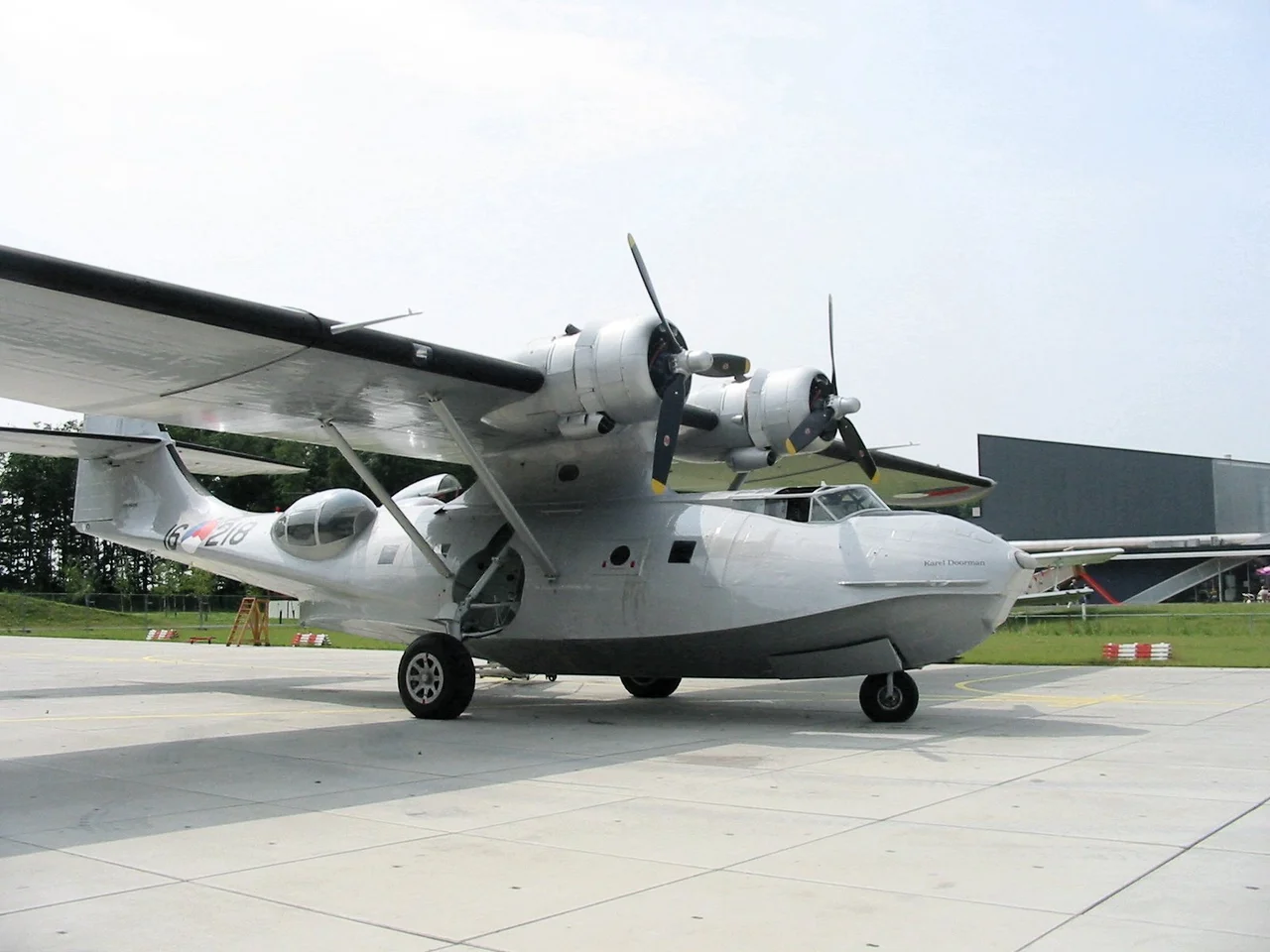
Beyond the famous airframes, the collection sprawls into corners. A replica of Otto Lilienthal's hang glider from the 1890s, the original of which crashed and killed him. A MiG-21, a Saab Viggen, a Hawker Sea Fury, a Junkers Ju 52 built under license in Spain. A Wright Flyer replica. A row of homebuilt Pou du Ciel flying fleas from the 1930s, the do-it-yourself airplanes that briefly convinced ordinary Europeans they could build their own wings in a garage. There is even a small space section, with the backup flight article of the Astronomical Netherlands Satellite and a windtunnel model of the Huygens probe that landed on Titan in 2005. Aviodrome is unembarrassed about being a national museum: it tells the story of Dutch flight from gliders to deep space, and lets you sit in the cockpit when no one is looking.
From the Air
Located at 52.46°N, 5.53°E on Lelystad Airport (EHLE), on the Flevopolder at sea level. The replica 1928 Schiphol terminal and the parked Boeing 747 are visible from the air; the 747 sits permanently on its own apron beside the museum. Lelystad Airport handles general aviation only — no scheduled service. Amsterdam Schiphol (EHAM) is 45 km southwest.
Nearby Stories
- Zaanstreek-Waterland 0.5 km away
- Veluwsche Stoomtrein Maatschappij 5.3 km away
- Hattem 6.3 km away
- Giethoorn 6.8 km away
- Onze Lieve Vrouwetoren 7.2 km away
- Windpark Noordoostpolder 10 km away
- Battle of Woerden 13 km away
- Battle of Krabbendam 14 km away