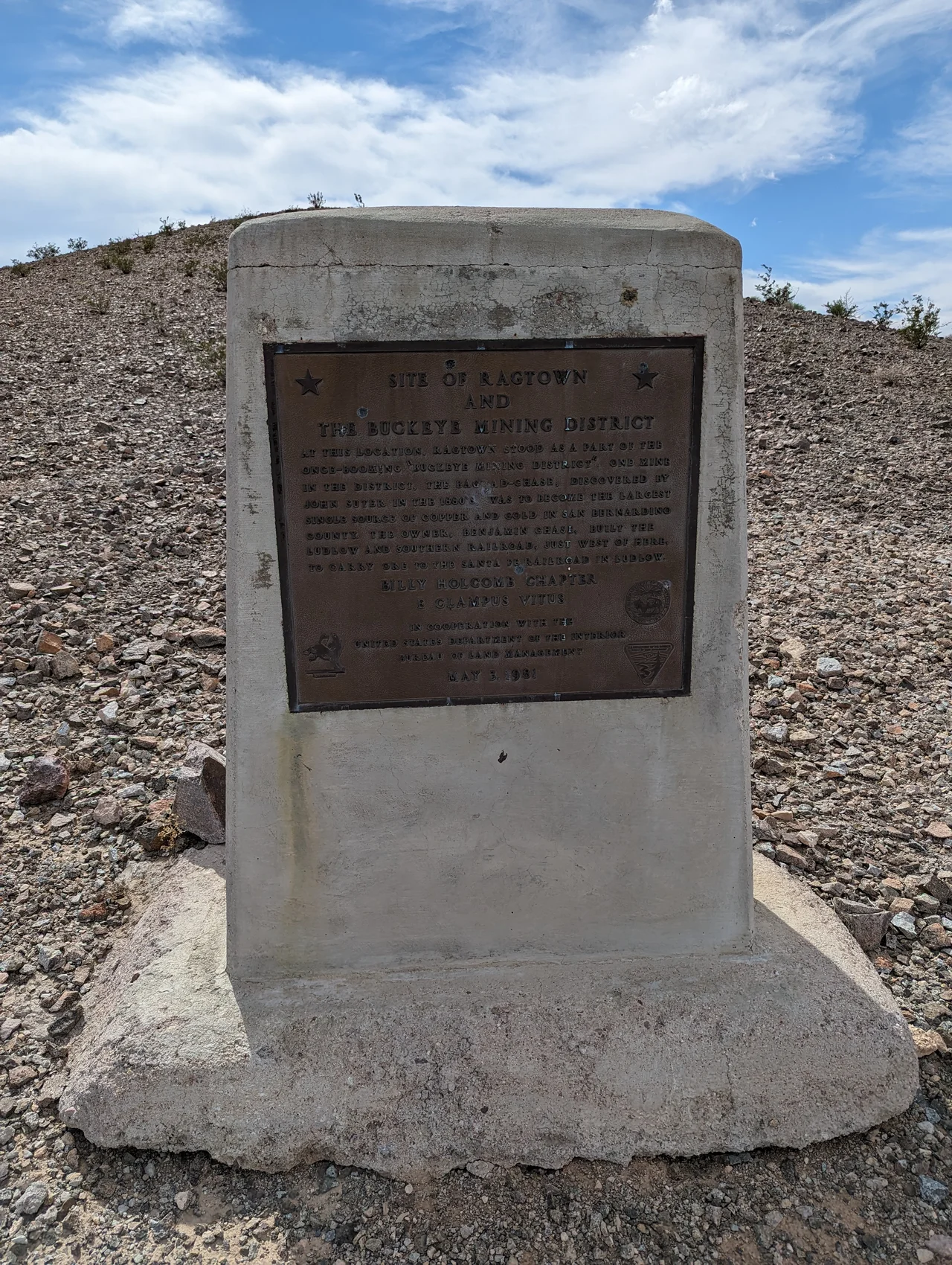

Bagdad-Chase Mine
The Mojave Desert has produced gold in quantities that seem improbable given the landscape, but the Bagdad-Chase Mine surpassed all of them. John Sutter — not the John Sutter of California Gold Rush fame, but another man with the same name — found gold here in 1898. The mine that followed became the largest single gold and copper producer in the history of San Bernardino County, responsible for roughly half the county's total gold output across its entire mining history.
Discovery and Peak
John Sutter's 1898 discovery led to the mine's formal opening in 1900, along the old Route 66 corridor in the central Mojave, in terrain associated with the small desert communities of Stedman and Ragtown. The mine reached its productive peak between 1904 and 1916, a twelve-year run during which it extracted roughly $4.5 million worth of gold — a figure that, adjusted for inflation, represents an extraordinary concentration of wealth from Mojave rock.
The ore was quartz-hosted gold and copper, typical of the hardrock gold deposits that the Mojave's ancient geology produced. The stamp mills that processed the ore required water — a constant challenge in the desert — and the infrastructure of a working mine camp. Stedman, the associated community, functioned as both housing for workers and a supply point for the surrounding desert mining district.
Survival Through Crisis
The Panic of 1907 disrupted mining operations across the American West. Credit contracted, investors withdrew, and operations that depended on outside capital found themselves unable to continue. The Bagdad-Chase Mine survived. Its ore grades were sufficient to sustain operations through the financial crisis that closed less productive mines permanently.
The Great Depression of the 1930s presented a different challenge: collapsing commodity prices and the general collapse of investment. The mine survived this crisis as well, continuing to produce through years when most industrial activity contracted severely. By World War II, domestic mineral production had become a strategic priority, and the Bagdad-Chase was one of only four California mines still in operation during the war years — a distinction that speaks to both the mine's productivity and the scarcity of viable gold operations in the state.
The Reckoning
By the time the mine closed in the early 1950s, it had produced approximately 150,000 tons of ore and $6 million in gold — which represented roughly half of San Bernardino County's total gold production across all mines and all time. That proportion is worth sitting with: one mine, producing for half a century from a single deposit in the Mojave, accounting for half the gold that the county's entire history of mining delivered.
The town of Stedman, also called Ragtown in its earlier years, followed the mine into ghost-town status as the ore ran out and the workers left. The Route 66 corridor through which the mine's output traveled has itself been largely superseded by Interstate 40, the modern freeway that replaced the old highway. The mine site remains in the desert between Barstow and Ludlow, marked by the waste rock and structural remnants that desert mines leave behind — a monument to what the Mojave contained and what human effort extracted from it.
From the Air
Located along the old Route 66/Interstate 40 corridor in San Bernardino County, approximately 34.57°N, 116.08°W, between Barstow and Ludlow. The mine site and the ghost town of Stedman (Ragtown) lie in open Mojave Desert terrain. Interstate 40 passes nearby. The Lavic Lake Volcanic Field is visible to the northwest. Nearest airports: Barstow-Daggett Airport (DAG) ~40 miles west, Twentynine Palms (TNP) ~35 miles south.
Nearby Stories
- San Bernardino County, California 4.1 km away
- Camp Dunlap 8.7 km away
- Cadiz, California 14 km away
- Cadiz Dunes Wilderness 18 km away
- Mitchell Caverns 20 km away
- Calico: The Ghost Town Walter Knott Saved 21 km away
- Cabazon Dinosaurs 40 km away
- San Bernardino Train Disaster 73 km away