.jpg)
Bajo de la Campana Phoenician Shipwreck
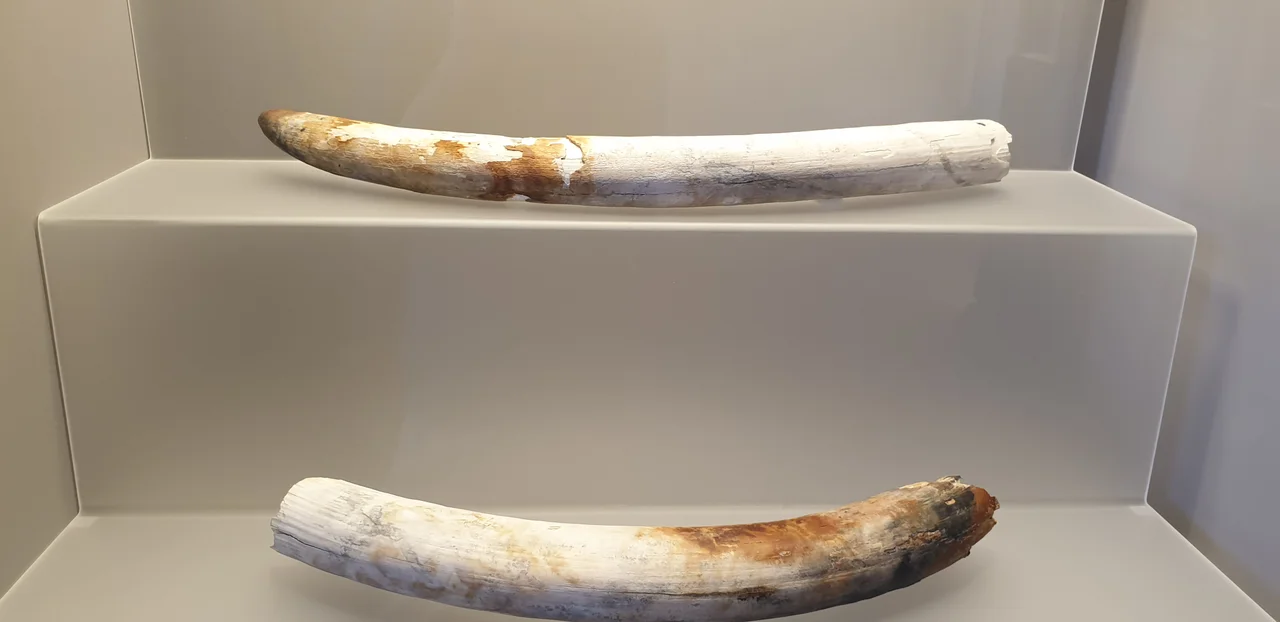
Sixty-four elephant tusks came up from the seabed off Cartagena, and at least eleven of them still carried prayers. Cut into the ivory, in the angular letters of the Phoenician alphabet, were pleas to the goddess Ashtart and the god Eshmun, declarations of piety and requests for a blessing. Other tusks bore men's names, most likely the merchants who supplied them. These were carved by hands that expected the ivory to end its voyage in a temple, laid before a god as an offering. Instead it ended on the floor of the Mediterranean, where a trading ship went down more than 2,600 years ago and lay undisturbed until divers found it by accident in the 1950s.
The Shoal of the Bell
The wreck rests at the Bajo de la Campana, the shoal of the bell, a submerged reef roughly 20 miles northeast of Cartagena and just offshore from the long sandbar of La Manga del Mar Menor. Spanish inspections in 1972 and 1988 concluded that scattered finds here belonged to three different eras of loss: a Phoenician ship, a later Punic one, and a Roman one. The oldest of the three drew archaeologists back. Beginning in 2008, the Institute of Nautical Archaeology worked the site over four field seasons, logging close to 4,000 dives and more than 300 hours underwater. Most of the ship had been buried beneath rock, sediment, and seagrass for millennia. Its cargo had tumbled into a shallow cave at the base of the reef and lodged between boulders, spread across roughly 4,300 square feet of seabed. Only a single fragment of the hull survived, a piece of softwood about 43 centimeters long, still holding part of a joint that a Phoenician shipwright had cut by hand.
The Last Voyage
The ship set out near the end of the seventh century BC, most likely from a Phoenician port along the south coast of Spain, heading east with more than four tons of cargo. When it reached Cabo de Palos, the rocky point where the Spanish coast bends northward, a hard easterly wind pushed its bow toward land. Ahead lay a gauntlet of shoals and rocks: Las Hormigas, Isla Grosa, El Farallón, and the Bajo de la Campana itself. For a while the ship threaded them, holding a couple of miles offshore. Then the weather turned. On the eastern edge of the shoal it ran aground, and boulders on the seabed tore open its hull. It sank a short distance from the reef, carrying its cargo down with it. What the sea trapped in that cave, it kept.
Cargo From a Dozen Shores
The hold was a map of the ancient Mediterranean. There was more than a ton of lead ore from southeastern Spain, 154 tin ingots from the northwestern Mediterranean, thirteen copper ingots traced to at least eight different regions from southern Iberia to Sardinia and Cyprus, and 10,000 nuggets of galena, the raw material of silver. Two small lumps of amber had traveled all the way from the Baltic. Isotopic analysis of the metals pointed to at least a dozen far-flung sources, a single ship gathering the output of workshops and mines strung across a whole sea. The pottery told the same story. Amphoras of one type were made near Malaga; others came from the central Mediterranean. Small ceramic bottles for perfumed oil, imported from Phoenicia itself, rounded out a manifest built for trade rather than bulk supply, most likely bound for a specific workshop on the Spanish coast.
Names Cut in Ivory
The finds that linger longest are the personal ones. Beyond the inscribed tusks came an ivory knife handle carved with quiet elegance, double-ended boxwood combs, decorated ostrich eggs, an alabaster jar, and a bronze fitting shaped like a forearm holding a stylized lotus blossom, perhaps the head of a ceremonial staff. A small stone cube, likely a gaming piece, bears a Phoenician inscription that may be the name of the ship's owner, one man's mark on the venture that drowned him or ruined him. Because so much survived, the Bajo de la Campana became the earliest Phoenician shipwreck ever fully excavated and studied. It offered a rare look at how these ships were built and, in its scattered cargo, a vivid picture of how tightly the ancient Mediterranean was already laced together by trade.
From the Air
Coordinates 37.74 N, 0.69 W, in the Mediterranean off Cabo de Palos. The wreck lies underwater, but the setting is unmistakable from the air: the thin sandbar of La Manga separating the turquoise Mar Menor lagoon from the open sea, the Cabo de Palos headland with its striped lighthouse, and the low Islas Hormigas offshore. Fly the coast at 2,500 to 5,000 feet in clear, calm conditions to trace the reef line and the lagoon's color. Nearest airports: Murcia-San Javier (LELC) on the Mar Menor, Region de Murcia at Corvera (LEMI), and Alicante-Elche (LEAL) about an hour up the coast.
Nearby Stories
- Fonda Milagros Nightclub Fire 6 km away
- International Habaneras and Polyphony Contest of Torrevieja 14 km away
- Phoenician shipwrecks of Mazarrón 25 km away
- Battle of Cape Palos (1758) 58 km away
- Penyal d'Ifac Natural Park 74 km away
- Xanadu (Calp) 104 km away
- Cabo de Gata-Nijar Natural Park 118 km away
- Battle of Mazagran 172 km away