
Ballymote
In the 1390s, somewhere in or near this small market town, a scribe sat down to compile a manuscript that would survive everything that came after. The Book of Ballymote ran to hundreds of vellum pages: genealogies of Irish kings, the legendary history of the country, a treatise on ogham script, an Irish translation of the tale of Troy. Six centuries later it sits in the Royal Irish Academy in Dublin, still legible, still studied. The town that lent its name to it is now a commuter stop on the Dublin to Sligo line, but the manuscript carries Ballymote into every serious bookshelf of medieval Irish learning. Not bad for a place of seventeen hundred people.
The Mightiest Castle in Connacht
Ballymote Castle was raised in 1300 by Richard de Burgh, Earl of Ulster, and earned the title of the last and the mightiest of the Norman castles in Connacht. The Annals of the Four Masters record it twice: in 1300, when the castle was commenced by the Earl, and in 1317, when it was demolished. The stone walls survived the demolition and the centuries since, a roofless rectangular keep with corner towers brooding at the western edge of town. From its ramparts the Norman lords once watched their lordship dissolve into Gaelic Ireland, then into Tudor conquest, then into the long indignities of plantation. The walls are still there. The lordship is not.
The Linen Experiment
When John Fitzmaurice, Lord Shelburne, bought the Ballymote estate in 1753, he found the land uncultivated and the inhabitants - all Roman Catholic - subsisting on herding cattle. He decided to make Ballymote a linen town. Cottages were built for Protestant weavers and spinners brought south from Ulster. The looms went from twenty to sixty. In 1774 his son Thomas Fitzmaurice took over, built a bleach mill and workers' houses, and even hired the architect James Paine to redesign the town. By 1799 most inhabitants were weavers. Production peaked between 1815 and 1820. Then came the steep decline of the 1840s and the Famine, and the linen industry collapsed. The planned industrial town quietly returned to being a market town, which it had always also been.
The Fighting 69th
On 22 August 2006, Michael Bloomberg - then Mayor of New York City - travelled to Ballymote to unveil Ireland's national monument to the 69th Infantry Regiment, the unit known to American history as The Fighting 69th. The monument honours Michael Corcoran, who was born nearby and rose to brigadier general of the regiment during the American Civil War. At the foot of the monument sits a piece of steel from the World Trade Center, donated by the family of a local man who died in the September 11 attacks. The metal is rust-coloured and twisted. It is the only fragment of that day to anchor a public memorial in this part of Ireland, and it sits in a market town that has been sending sons across the Atlantic for two centuries.
Brother Walfrid
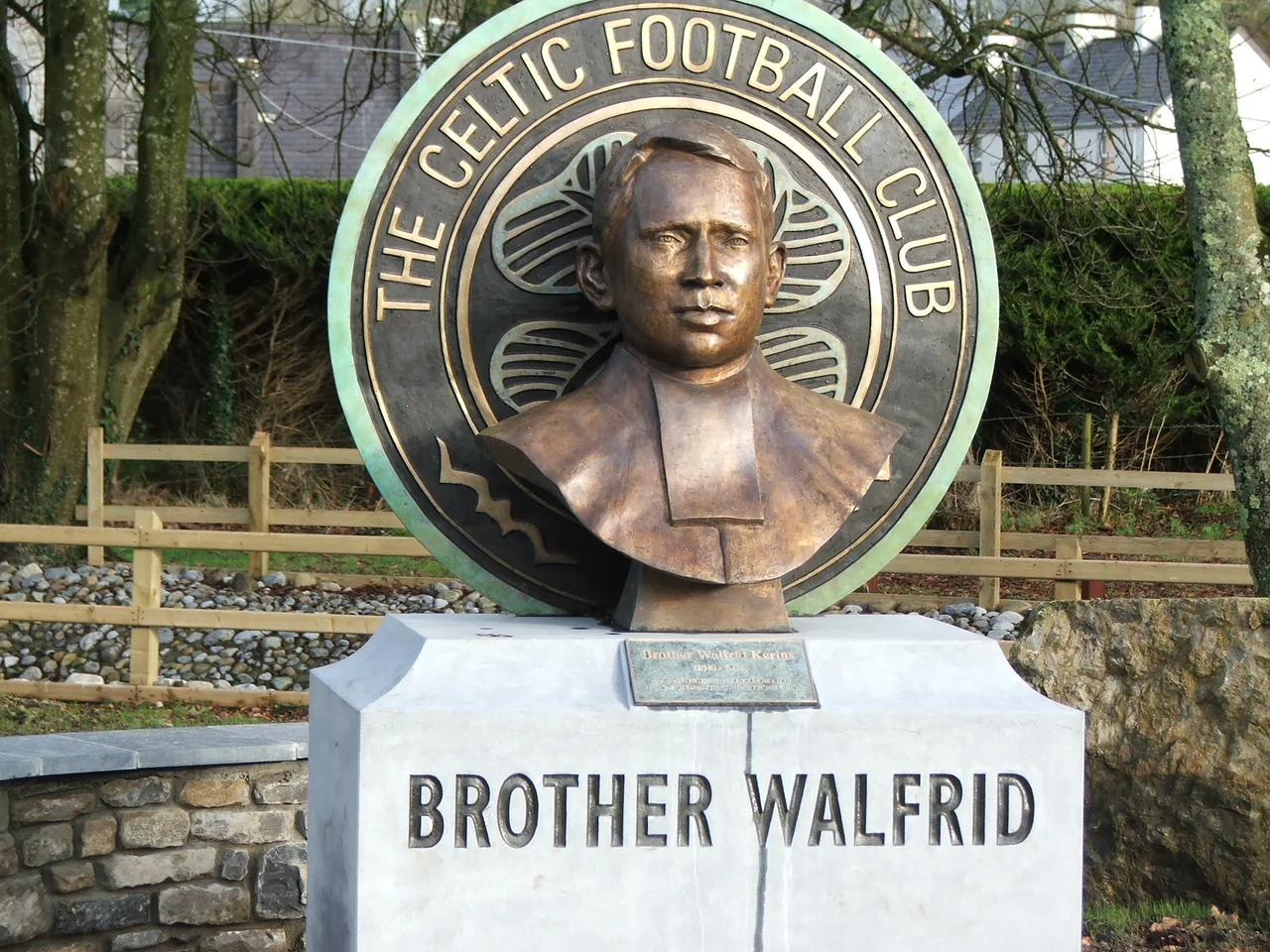
Andrew Kerins was born near Ballymote in 1840. He took religious vows with the Marist Brothers and became Brother Walfrid. In Glasgow's Catholic East End, he watched Irish immigrant families starve through the soup kitchens of the 1880s, and in 1887 he founded a football club to raise money for them. He named it Celtic. The club he started in a Glasgow church hall now plays in front of sixty thousand fans, has won Europe's premier trophy, and counts supporters across every continent. The soccer pitch in Ballymote bears his name. The man who founded Celtic Football Club is buried in Dumfries. The town that produced him plays Gaelic football and remembers him on a memorial sculpture by the road.
Generals of the Habsburg Service
Two field marshals of the Habsburg empire were born here. Francis Taaffe, 3rd Earl of Carlingford (1639-1704), commanded Imperial forces under the Holy Roman Emperor and helped defeat the Ottomans at Vienna. His cousin Nicholas Taaffe, 6th Viscount Taaffe (1685-1769), also rose to Feldmarschall in Austrian service. Both were Hiberno-Norman aristocrats whose family had been edged out of Irish life by the Cromwellian and Williamite settlements. Continental military service was the path open to them. They took it, rose high, and were remembered there longer than they were here. The Taaffes ran the Ballymote estate before the Fitzmaurices arrived, but their gravestones are scattered across Bohemia and Austria, not the soft Sligo churchyards.
From the Air
Ballymote sits at 54.09 N, 8.52 W in south County Sligo, about 24 km southeast of Sligo town. The closest airports are Ireland West Airport Knock (EIKN), roughly 30 km southwest, and Sligo Airport (EISG) about 30 km north. From 3,000 feet on a clear day you can spot the ruined rectangular keep of the castle on the western edge of town and the long straight line of the Dublin-Sligo railway running northwest. The Bricklieve Mountains and the Caves of Keash rise five kilometres south. Atlantic systems track in from the west - expect changeable visibility.
Nearby Stories
- Scramoge Ambush 3 km away
- Drumshanbo 3.4 km away
- Lissadell House 4.2 km away
- Ballyglass 5.3 km away
- Ballina Railway Station 6.4 km away
- Castlerea 7.8 km away
- Caves of the Tullybrack and Belmore Hills 16 km away
- Action of 7 May 1794 109 km away