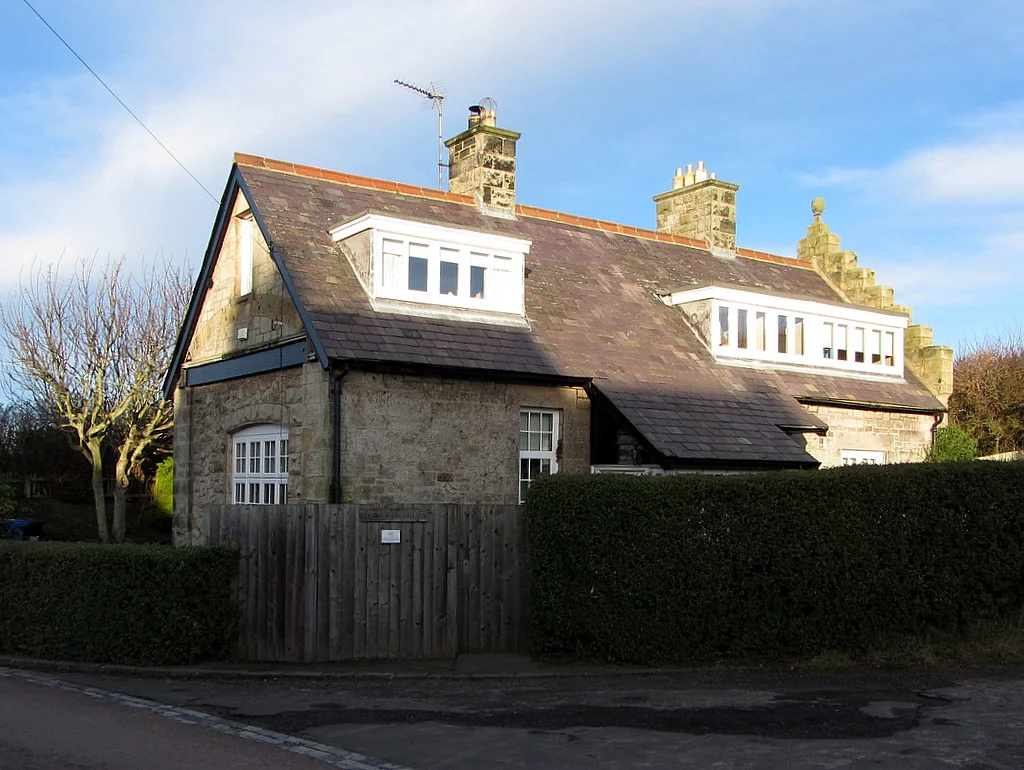

Bamburgh Castle Lifeboat Station
The lifeboat at Bamburgh Castle launched twice in earnest, and saved one ship. On 15 March 1888, eleven days after that single successful rescue, the Albion of Brevig went onto the rocks within sight of shore. Seven of her ten crew drowned. The Bamburgh lifeboat did not launch. At the inquiry held afterwards at the Victoria Hotel, the crew were acquitted, but the reasons given said everything about the station's problem: the flat sand beneath the castle was so soft that men and wheeled carriage alike got stuck before reaching the surf. The lifeboat was in the wrong place, and everyone knew it.
The First Lifeboat Station That Wasn't
In 1786, the inventor Lionel Lukin modified a local coble - a flat-bottomed fishing boat - into something he believed could survive a heavy sea. It was placed at Bamburgh at the request of Dr Sharp and the Crewe Trustees, a charitable foundation set up in 1704 under the will of Nathaniel Crewe, Bishop of Durham. For two centuries this was claimed as the first lifeboat station in Britain. Recent research has knocked the title back to Formby in Lancashire, founded ten years earlier. But Lukin's Bamburgh coble was certainly among the earliest, and the Crewe Trustees ran it until 1824 - a remarkable run for a piece of equipment that, by modern standards, would barely qualify as safety gear.
The RNLI Years
On 3 November 1881, after a string of shipwrecks along the coast, the Royal National Lifeboat Institution agreed to establish a proper station at Bamburgh. The boathouse on The Wynding cost £231. The lifeboat itself - a 32-foot self-righting Pulling and Sailing boat with both oars and sails - cost £282, built by Woolfe of Shadwell and funded by the late John Cuttell of Holmfirth in Yorkshire. On 24 August 1882, she was named John and Betty Cuttell, after the donor and his sister. Miss Cuttell then donated a further £1,000 for the boat's upkeep in perpetuity. The Bamburgh crew, drawn mostly from North Sunderland four miles south because local men kept moving for work, had to be summoned to the boathouse before any rescue could even begin.
Two Calls, One Save, One Tragedy
The second John and Betty Cuttell - a slightly older boat brought up from Ferryside in Wales after the first was transferred to Whitby - made both her active rescues in March 1888. On the 4th she launched to the Marshall of Thurso and saved the crew. Eleven days later, on the 15th, came the Albion of Brevig. Three of her ten crew made it to shore by their own efforts; seven drowned. The Bamburgh boat never launched. The inquiry exonerated the crew but pointed at the fundamental problem: the flat shallow beach made launching from the wheeled carriage almost impossible in serious surf, and the crew had to be summoned from miles away before they could even attempt it. North Sunderland (modern Seahouses), with its proper harbour four miles south, could put a boat in the water faster and in worse conditions.
Closing the Station
A third John and Betty Cuttell arrived in 1889, this one a 34-foot self-righter built fresh by Woolfe for £426. She launched exactly once in operational service - on 4 April 1891, alongside the North Sunderland boat Thomas Berwick, to the Ornen aground at Greehill Rocks. Both lifeboats were beaten by the conditions and turned back. The North Sunderland boat returned the next day in calmer weather and completed the rescue. The Bamburgh boat was called out three more times, but always stood down before launching. The station closed in 1897 after just fifteen years of RNLI service. The 1882 boathouse on The Wynding still stands - now a holiday let, its lifeboat doors converted into windows. In 2021 the mechanic Chris Mason chose Bamburgh as the starting point for a personal pilgrimage to every lifeboat station in the UK and Ireland, raising money for the RNLI. He began at the one that didn't last.
From the Air
55.61N, 1.72W on The Wynding at Bamburgh, Northumberland, immediately below the bulk of Bamburgh Castle and 18 mi southeast of Berwick-upon-Tweed. From altitude, the boathouse is the small stone building set back from the wide sand beach north of the castle. Nearest ICAO: Newcastle (EGNT) 50 mi south. The flat shallow beach that made launching so difficult is unmistakable from the air - mile after mile of pale sand with no break, the same condition that ultimately doomed the station.
Nearby Stories
- St Abbs Lifeboat Station 1.2 km away
- Etal Castle 1.6 km away
- Warkworth Castle 3.4 km away
- Otterburn Training Area 12 km away
- Eyemouth Disaster 28 km away
- German submarine U-2367 79 km away
- Saltburn Pier 117 km away
- Alexander L. Kielland (Platform) 265 km away