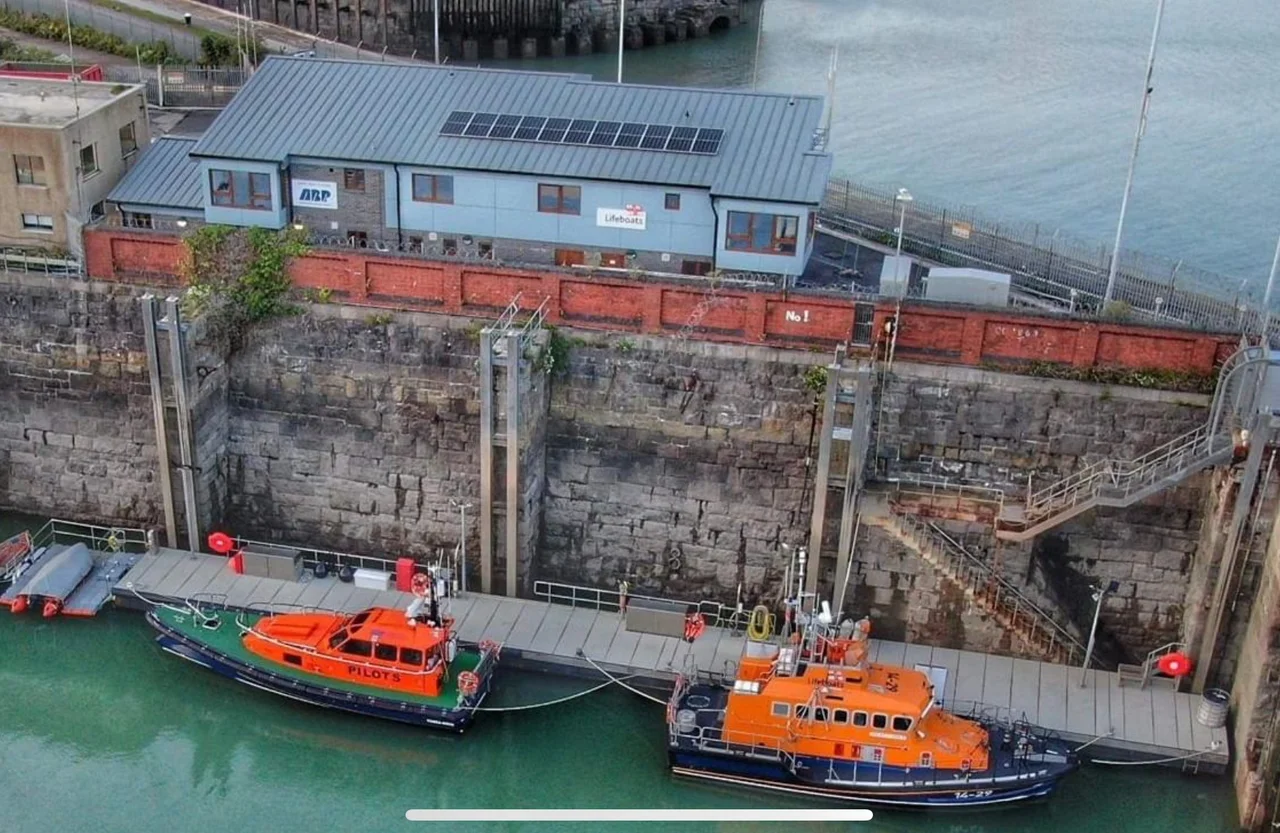

Barry Dock Lifeboat Station
A businessman named Richard Colton died in 2015 and left the Royal National Lifeboat Institution two cars. The first was a silver 1967 Ferrari 275 GTB/4. The second was a red 1960 Ferrari 250 GT SWB. Both went to auction in London. The 275 fetched £1.93 million. The 250 fetched £6.6 million. It was the most valuable single bequest the RNLI had ever received in its 191-year history. Some of that money paid for a new lifeboat at Barry Dock and the £2.8 million needed for a new boathouse to keep her in. Today the station sits at the Pierhead Buildings of Barry Dock's outer harbour, watching the Bristol Channel - a stretch of water with the second-highest tidal range in the world and the kind of weather that makes lifeboats necessary.
Why the Boats Are Here
The Bristol Channel is not friendly. Normal spring tides shift the water level by around 40 feet between low and high. Neap tides give 19.5 feet. In a northwest gale, ships dragging their anchors can find themselves in the shipping lanes off Barry Island in minutes. The station opened in 1901, six years after the great Barry Docks themselves became the busiest coal export port in the world. The first lifeboat, the John Wesley, cost £1,710 and was a 43-foot Watson-class boat moved by oars and sails - the volunteers pulled or hoisted canvas as the weather allowed. They built her a wooden boathouse and a slipway at the dock for another £2,300. The volunteers came from the town itself: dockworkers, fishermen, pilots, merchant seamen who had seen too many of their own go down in the Channel and decided to do something about it.
December 1940, a Northwest Gale
On the 6th of December 1940, in the second winter of the war, the steamship London was making for Cardiff from Penzance when her anchor began to drag near the Breaksea Lightship. The wind was northwest. The seas were heavy. Coxswain David Lewis launched the Rachel and Mary Evans, the station's motor lifeboat, and beat out to her. The first run was a reconnaissance: Lewis returned to Barry to arrange for a tug, then went out again to put a line aboard. The tug could not work in those conditions. So the lifeboat took the men off - all ten of them, one by one in a sea that would have killed an unloaded boat. Coxswain David Lewis was awarded the RNLI Bronze Medal for the rescue. Behind that line is a long day at sea in winter, a small boat full of cold men, and the kind of seamanship that the RNLI Bronze Medal exists to mark.
The Ferrari Bequest
Richard Colton was a businessman who collected cars. When he died in 2015, the cars went to the RNLI. The 1967 Ferrari 275 GTB/4 - a silver V12 Berlinetta, one of about 330 ever made - sold first. £1.93 million. The 1960 Ferrari 250 GT SWB - a red short-wheelbase Berlinetta, the kind that won at Le Mans - sold for £6.6 million. The RNLI is funded entirely by charitable donations. It receives no government money. £8.5 million from a single estate paid for new equipment at multiple stations and, at Barry Dock, helped fund the new Shannon-class lifeboat that arrived in 2024 - the 13-51 Richard and Caroline Colton II - named after the man whose cars made her possible, and his wife. The Inshore lifeboat at Barry, the Frances Mary Corscadden (D-820), came on station in 2018. Both boats sit at a floating pontoon that rises and falls with the tide.
The New Pierhead
The wooden ex-show bungalow that had served as a crew room since 1991 was, as one local put it, well past time for replacement. Associated British Ports owned the land at the pierhead and the lifeboat station shared the site with their harbour pilots. In 2022 construction began on a purpose-built building combining lifeboat crew facilities with quarters for the pilots - two emergency services under one roof, both dealing with the same water and the same weather. On 12 September 2023, the new station became operational. Concrete and steel where there had been wooden walls and patched repairs. Modern dryers for the immersion suits. Heated changing rooms. A radio room with sightlines down the harbour to the floating pontoon where the boats wait. The crew are still volunteers. The boats still launch into the same Bristol Channel that has not got any kinder. But the building is new, and there is a Shannon-class lifeboat tied up outside, and behind both of them is a businessman who liked Ferraris and decided where his collection should go.
The Pierhead at Night
Barry Dock at three in the morning is dark water and red and green channel lights and the slow swing of a buoy in the tide. Cardiff burns to the east. The Channel opens westward into the Atlantic. When the pager goes, the volunteers come down from their houses in the town, get into the gear hanging ready in the building Richard Colton's Ferraris paid for, walk down the pontoon to the boats, and put to sea. They are doing what crews have done from this station since 1901 - leaving their warm beds for the worst place on the coast, because someone is out there in worse trouble. The station, the boats, the lift gear, the immersion suits, the medals on the wall: all of it exists because volunteers volunteer and donors donate. It has never been any other way.
From the Air
Located at 51.39°N, 3.26°W on the north shore of the Bristol Channel, at Barry Dock's outer harbour pierhead, a few miles southwest of Cardiff. The station sits at the entrance to the dock complex, with the Bristol Channel's distinctive tidal mudflats visible at low water. Cardiff (EGFF) is approximately 5 miles northeast. Best viewed at 1,500-2,500 feet AGL with the dock infrastructure spreading inland and the Channel opening west toward Steep Holm and Flat Holm islands. Watch for high tidal range affecting visible coastline.
Nearby Stories
- Aberfan Disaster 1.3 km away
- Glastonbury 6.5 km away
- Quantock Hills 7.4 km away
- Tyntesfield 7.5 km away
- Tintern 9.2 km away
- The Mumbles Lifeboat Station 19 km away
- Carreg Cennen Castle 20 km away
- Appledore Lifeboat Station 26 km away