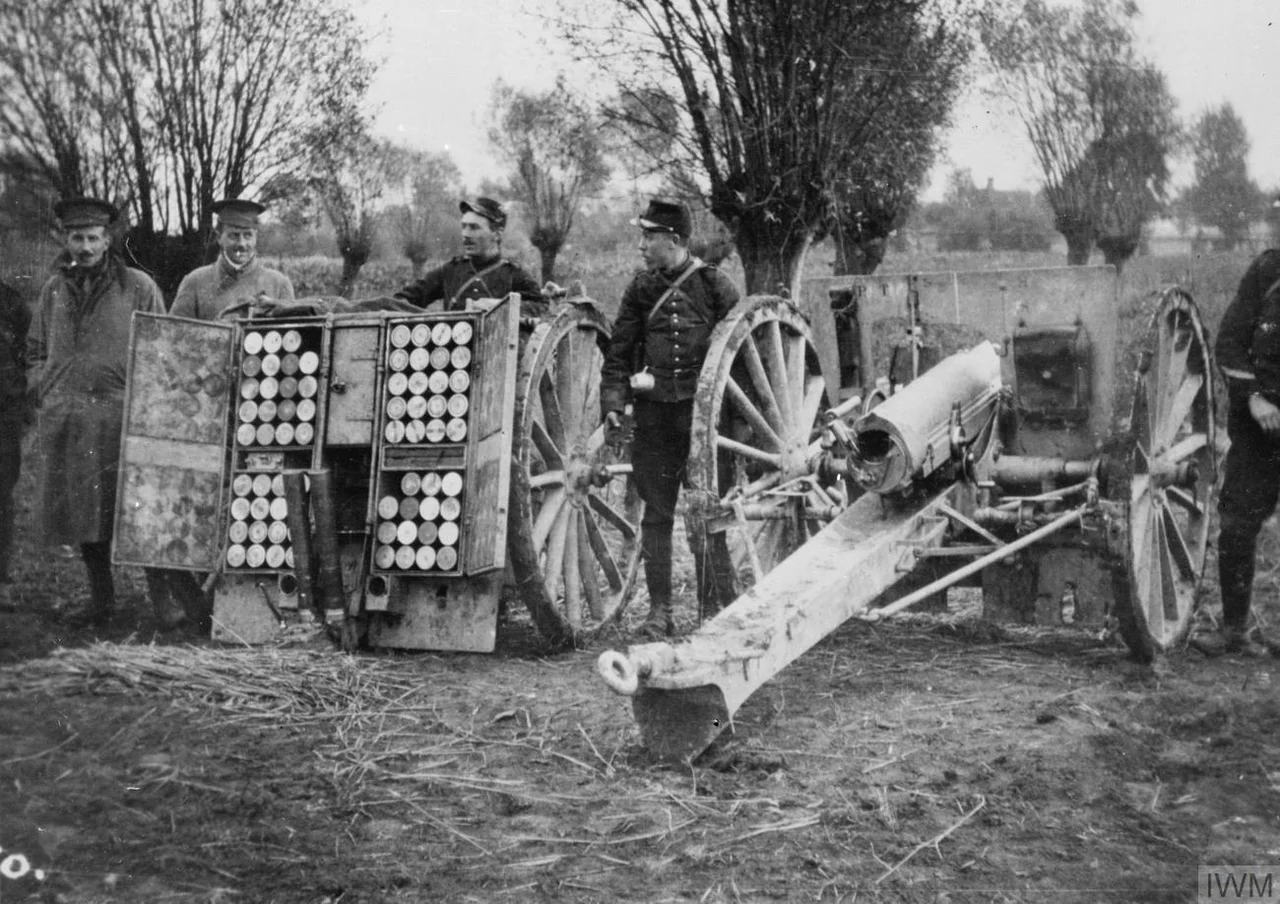

Battle of Armentières
By the third week of October 1914, the German and French armies had finished trying to outflank each other up the length of northeastern France. Each had reached for the other's open northern flank and found infantry there waiting. The race north had run out of country. Around the small Flemish town of Armentières, between 13 October and 2 November, the British III Corps and the German 6th Army fought one of the last battles of manoeuvre on the Western Front — and when it was over, no one was moving any more. The trenches that defined the next four years of the war began to be dug here, in fields between Armentières and the Lys.
The Race to the Sea
After the German advance on Paris stalled at the Marne in early September, both armies began edging north, each trying to find an undefended flank to wheel around. Joffre pulled the French Second Army out of Lorraine. Falkenhayn moved the German 6th Army out of the same region. As they shifted, they kept hitting each other head-on instead of finding open country. The British Expeditionary Force, holding the line on the Aisne, was switched north too: by 5 October the BEF had begun the long rail journey through Amiens and Saint-Omer to join the new fight in Flanders. By the time it arrived, Lille had fallen — German cavalry entered the city on 12 October — and the III Corps under Lieutenant-General William Pulteney was sent forward to take Armentières before the Germans could fortify it. They got there first. Just.
The Country They Fought Over
Flanders in October is unkind to soldiers. The plain is almost flat, cut by the canalised Lys and a dense network of drainage ditches, with the water table never far below the surface. As soon as you dig, you find water. Trees grow in long lines along the field hedges; the country is full of farms and small villages and brick-walled outbuildings that became improvised strongpoints overnight. There was almost no observation: artillery officers complained they could not see what they were firing at, infantry advanced into ground they could not see across. Above all there was no cover. The Germans, dug in along low rises around Prémesques and Ennetières, could see the British coming. The British could see almost nothing. Fighting in this landscape favoured the side that had already stopped moving.
The Battle Itself
On 20 October the German 6th Army opened a general offensive from Arras up to Armentières, four corps attacking at once along a front intended to break the Allied line before the British and French could entrench. The 18th Brigade, holding a salient near the village of Ennetières, was overrun in the dark — Bavarian and Westphalian reservists infiltrated from three directions and the British platoons were captured one by one. To the north, the 4th Division held on around Ploegsteert Wood and along the Lys. For the next ten days, the line bent but did not break. Artillery shortages on both sides forced the fighting into close range; the BEF's rifle fire, famously rapid and accurate, did more damage than its guns. Indian troops of the Lahore Division of the Indian Corps were rushed up to fill a gap when the French I Cavalry Corps was pulled into reserve. Around 28 October, both sides realised the attack had been broken. Both sides began to dig deeper.
Among the Reservists
On the German side, one of the regiments brought into the line opposite the BEF around Messines and Wytschaete was the 16th Bavarian Reserve Infantry — the List Regiment, raised hurriedly in Munich in August. Among the volunteers serving as battalion runners was an Austrian-born painter named Adolf Hitler, who had joined the Bavarian Army a few weeks earlier rather than serve in his own. He carried dispatches through the same churned ground that the British and Indian Corps were defending. He was decorated with the Iron Cross, Second Class, on 2 December 1914 for actions in this sector. The war he came to power talking about began for him in the muddy fields between Wytschaete and Messines, watching men die in front of British rifle fire. He survived. Most of his battalion did not.
The End of Movement
By 2 November the official Battle of Armentières was over. Pulteney's III Corps held a line from Frelinghien to Le Gheer to Ploegsteert Wood; the German XIII and XIX Corps held an almost mirror-image line a few hundred metres east. The two armies stayed where they had stopped. North of the Lys, the fighting flowed into what is now called the Battle of Messines 1914, and beyond it the First Battle of Ypres, but the larger meaning was already clear: open warfare on the Western Front had ended. From now on, what was happening at Armentières would be happening from Switzerland to the sea. The town itself stayed in British hands for most of the war, became a base behind the line, gave its name to the song Mademoiselle from Armentières that British soldiers sang for the rest of the conflict, and was finally devastated by gas and artillery in the German Spring Offensive of 1918.
From the Air
Battle area centered around 50.688 degrees north, 2.881 degrees east, near Armentières on the Franco-Belgian border. The line ran roughly north-south between Frelinghien and Ploegsteert Wood, parallel to the Lys river. Nearest major airport is Lille (LFQQ) about 15 km southeast; Brussels (EBBR) about 105 km east. The terrain is almost flat — the only relief is the Messines Ridge a few kilometres to the north. Visible in clear weather as a green farming plain laced with canalised waterways.
Nearby Stories
- Museum van Deinze en de Leiestreek 0.9 km away
- Castle of Ronse 6.7 km away
- Hooglede German War Cemetery 7.4 km away
- Courrieres Mine Disaster 7.4 km away
- Dunkirk Memorial 7.8 km away
- Arques, Pas-de-Calais 11 km away
- Marcinelle Mining Disaster 66 km away
- Royaumont Abbey 145 km away