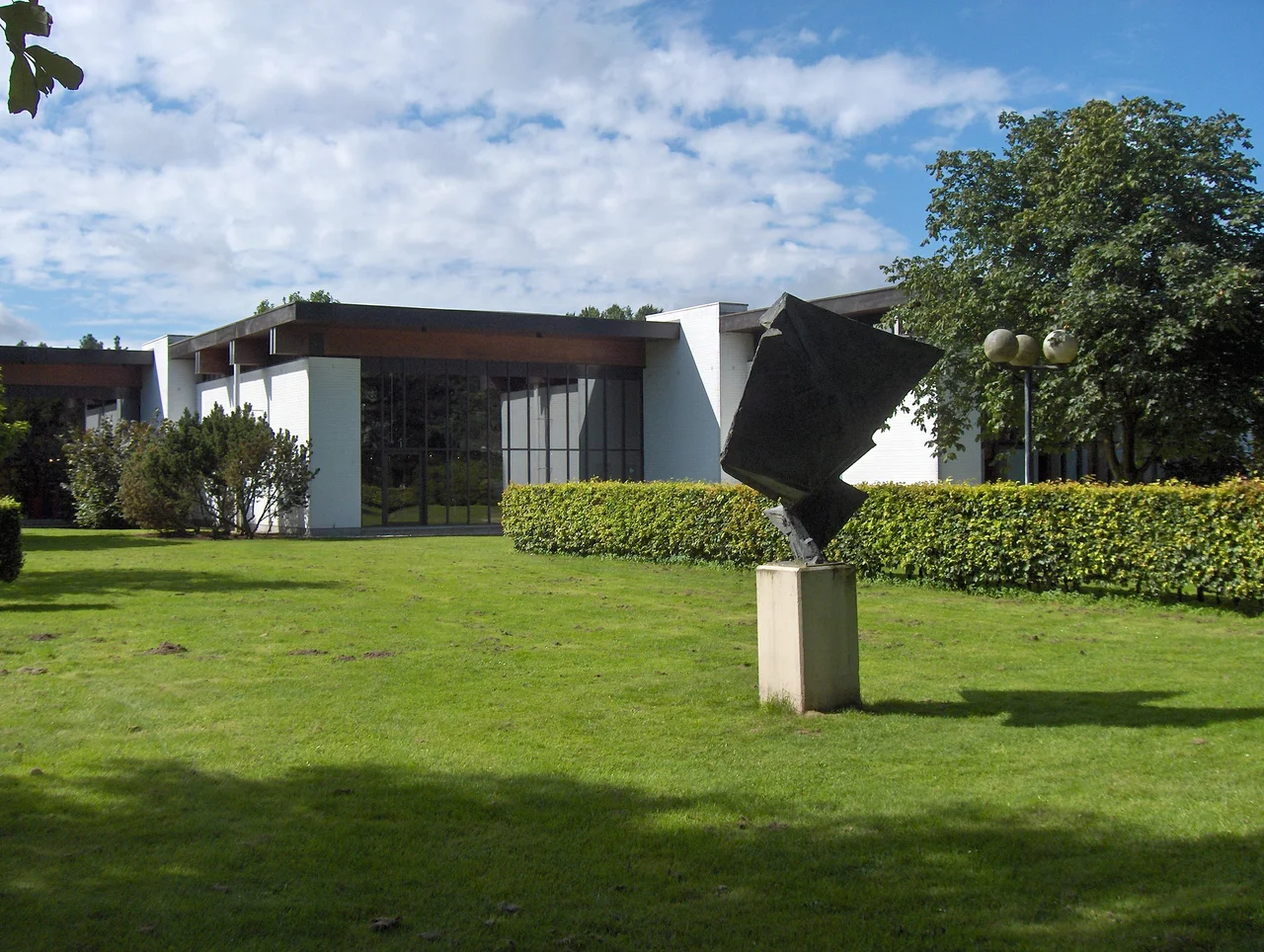

Museum van Deinze en de Leiestreek
A widow donated her husband's painting, and a museum followed. The painting was Emile Claus's 'Beet Harvest,' and the widow gave it to the town of Deinze in 1942 with the implicit promise that the town would build something worthy of it. In March 1942 - in the middle of a German occupation, in a Belgium that had been at war for almost three years - the city established the Museum van Deinze en de Leiestreek. The rule for the collection was unusual then and still is now: every artwork in the building has to have been made by someone who lived or worked in the Leie region. Not by someone who painted the Leie. By someone of it.
The Latem School and Its Region
The Leie is a slow river that winds through the flat country between Deinze and Ghent. In the closing years of the 19th century and the opening years of the 20th, the village of Sint-Martens-Latem became home to one of Belgium's most important artist colonies. The First Latem Group included Valerius de Saedeleer, Gustave Van de Woestijne, Albert Servaes, Albijn Van den Abeele - painters drawn to a kind of mystical, symbolist treatment of the Flemish countryside, gentle landscapes shot through with religious feeling. The Second Latem Group, after the First World War, was harder and stranger: Constant Permeke painted brutal Flemish farmers in heavy expressionist brushwork; Frits Van den Berghe drifted toward surrealism; Albert Servaes returned darker than he had left. Together the two groups, plus Emile Claus's earlier luminist circle, made the Leiestreek a national subject. The museum collects them all. The collection runs from Romantic Realism through Impressionism, Symbolism, Expressionism, Surrealism, figurative and abstract work, organized chronologically as the Leie itself flows.
Beet Harvest and Emile Claus
Emile Claus is the painter the museum is built around. He was born in Sint-Eloois-Vijve on the Leie in 1849, lived most of his life at his house called Zonneschijn (Sunshine) just outside Astene, and led the Vie et Lumiere group that pushed Belgian painting toward open-air, light-saturated Luminism in the 1890s and 1900s. 'Beet Harvest' - 'Bietenoogst' in Dutch - shows farmers gathering sugar beets in cold late-autumn light, the kind of agricultural labor that defined this part of Flanders for centuries. The donation of that one painting by his widow triggered the museum's founding. It still hangs in the central gallery. Around it the collection extends outward: Albijn Van den Abeele's village street, Jan-Frans Cantre's skaters, Valerius de Saedeleer's geese drifting on the Leie itself, Cesar De Cock's quiet pond, Georges Buysse's boat on the Ghent-Terneuzen canal, Frits Van den Berghe's unsettling white interior. The geography names itself in the labels.
The Other Half of the Museum
The fine arts collection is only half the building. The other half is folklore - or, more precisely, the industrial memory of a particular small town. Deinze in the 19th and early 20th centuries had two industries that mattered: silk weaving and the production of children's prams and toys. The museum keeps both alive in its galleries. Cases hold doll-sized carriages with iron wheels and lacquered wood; weaving looms and silk samples; the documentation of small family workshops that produced for the whole Belgian market. It is the kind of regional industrial history that disappears quickly when the factories close, and Deinze decided early to refuse the disappearance.
A New Building, in 1981
The original collection was housed in a neo-Gothic building near the Deinze church. As the holdings grew, this became impossible, and on 28 November 1981 a new museum opened along the banks of the Leie, near the center of town. It was the first building constructed in Belgium solely as a museum after the Second World War. The placement matters: standing in the upper galleries you can look out at the river the paintings depict, the same slow water, often the same light. The architecture is low and modernist, deliberately not competing with the work inside. The museum rebranded itself in recent years as 'mudel,' a small contemporary tag for an institution that has always been about staying local on purpose.
From the Air and the River
Deinze sits on the Leie about fifteen kilometers southwest of Ghent. The river is the museum's strongest navigational reference - the Leie loops back and forth in long meanders here before straightening as it approaches the city. The town itself is small, clustered along the river around the church of Our Lady, with the museum on the eastern bank just south of the central bridge. The villages the Latem painters worked in - Sint-Martens-Latem, Deurle, Afsnee - lie along the Leie between Deinze and Ghent. From altitude you can trace the painters' route by following the river.
From the Air
Museum van Deinze en de Leiestreek (mudel) sits at 50.98°N, 3.53°E in central Deinze on the Leie River, about 15 km southwest of Ghent. Brussels Airport (EBBR) lies 75 km east; Ostend-Bruges (EBOS) 55 km west-northwest; Lille-Lesquin (LFQQ) 55 km south-southwest. The Leie itself is the strongest navigation reference, looping through flat farmland between Deinze and Ghent and passing the Latem-area artist villages (Sint-Martens-Latem, Deurle, Afsnee). The town is small and easy to lose against the surrounding green; the river bend at the museum bridge is the most reliable visual cue.
Nearby Stories
- 2017-18 Belgian Second Amateur Division 3.3 km away
- Duchy of Brabant 5.7 km away
- Wijnendale Castle 7.5 km away
- Battle of Tourcoing 7.6 km away
- Ronse 8.6 km away
- Borssele Nuclear Power Station 12 km away
- Sugar Factory Zeeland 19 km away
- HMS Wakeful (H88) 31 km away