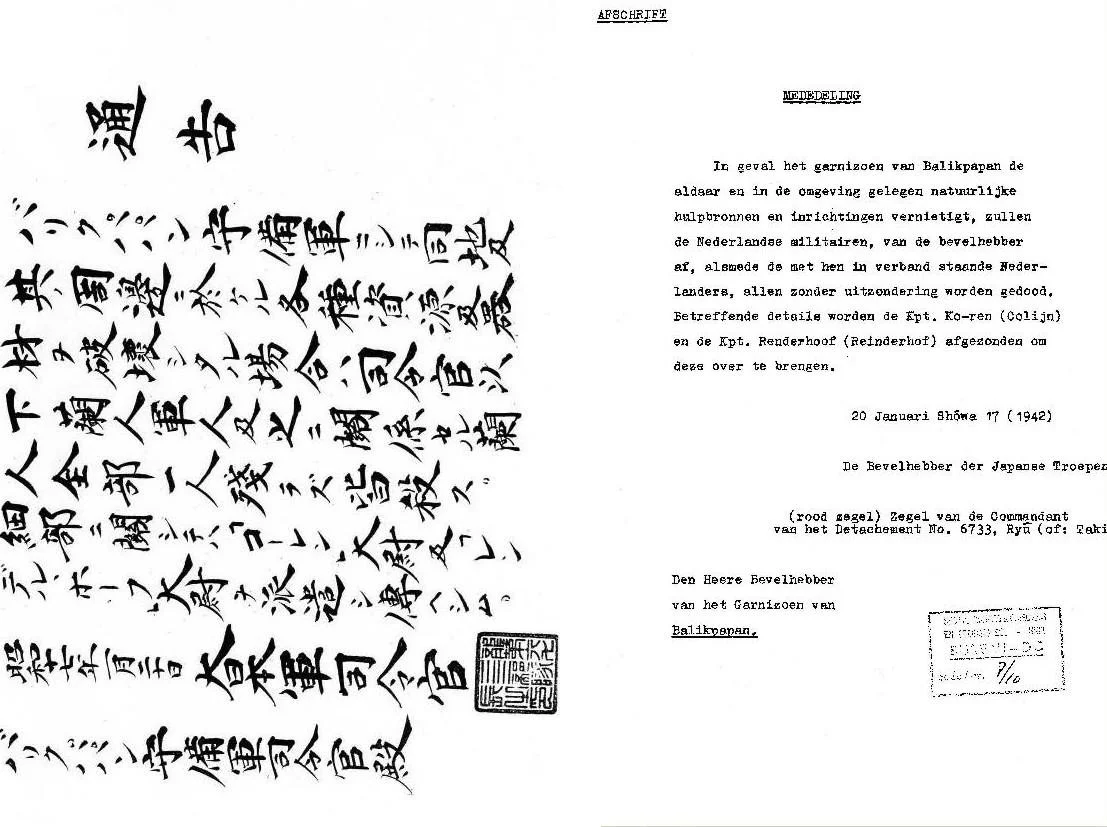

Fire on the Water at Balikpapan
The oil was already burning when the Japanese invasion fleet arrived. Dutch demolition teams had been at work for two days, methodically wrecking every well, every refinery, every pipeline they could reach in and around Balikpapan. Columns of black smoke billowed thousands of feet into the tropical air, and crude oil poured into the harbor, where it ignited. The Japanese had threatened execution if the Dutch destroyed the facilities. The Dutch destroyed them anyway. Into this inferno, on the night of January 23, 1942, four American destroyers -- old flush-deck "four-pipers" dating from World War I -- charged at high speed through the burning waters of Balikpapan Bay. It was the US Navy's first surface action in Southeast Asian waters since Dewey's fleet sailed into Manila Bay in 1898.
The Prize Beneath Borneo
Before the war, Balikpapan was the jewel of the Dutch petroleum industry in Borneo. Within the city stood two crude oil processing plants, a paraffin and lubricating oil plant, a cracking facility, and a sulfuric acid plant. The Pandansari port complex handled the output. Nearby at Sambodja, a network of wells and a pipeline fed crude to the refineries. Japan's entire war strategy in the Netherlands East Indies hinged on capturing these oil-producing regions intact -- without them, the Imperial Navy's fuel reserves would last barely two years. Having already seized the refineries at Tarakan in northern Borneo on January 11, and found them mostly destroyed, the Japanese were determined not to let Balikpapan's facilities suffer the same fate. They captured Dutch prisoners of war and released them with a blunt warning: destroy the refineries, and the consequences for soldiers and civilians alike would be severe.
The Demolition That Changed Everything
Major C.L.J. Vooren commanded the Dutch garrison of roughly 1,100 troops. His orders were unambiguous: defend against a surprise assault, buy time, then destroy everything of value. On January 18, as Japanese reconnaissance aircraft appeared over the city, Colonel C. van den Hoogenband gave the demolition order. The destruction was systematic and thorough. Crews dynamited wellheads, cracked open storage tanks, severed pipelines, and set fire to the refineries. Burning oil flowed downhill toward the harbor and spread across the water. By January 20, the work was essentially complete. When the Japanese threat of reprisal arrived via released POWs, there was nothing left to threaten. The smoke column rising from Balikpapan was visible for miles, a signal to the approaching invasion fleet that their most valuable prize was already lost.
Four Old Destroyers Against an Armada
The Japanese invasion fleet -- one light cruiser, ten destroyers, four minesweepers, three submarine chasers, three patrol boats, and sixteen transport ships -- departed Tarakan on January 21. Dutch flying boats spotted them, but storms prevented sustained tracking. American and Dutch submarines attempted to intercept; only one, USS Sturgeon, managed to torpedo a transport. The surface response fell to Commander Paul H. Talbot's 59th Destroyer Division: USS John D. Ford, Parrott, Paul Jones, and Pope. These were flush-deck destroyers launched during World War I -- antiquated, lightly armed, and vastly outnumbered. What they had was speed, darkness, and surprise. Shortly after midnight on January 24, Talbot's four destroyers raced into Balikpapan Bay among the anchored transports. They fired torpedoes and opened up with their guns. The attack was chaotic and the old torpedoes unreliable, but the confusion among the Japanese was total.
A Night of Burning Ships
The American destroyers made multiple passes through the anchorage. Torpedoes struck the transport Sumanoura Maru, loaded with mines and depth charges, which detonated spectacularly. The Tatsugami Maru, carrying munitions, also went down. Three more transports -- Nana Maru, Tsuruga Maru, and Kuretake Maru -- were sunk, along with a patrol boat. Two additional transports, Kumagawa Maru and Sanuki Maru, were damaged. Japanese escorts scrambled to respond, but the darkness, the oil fires on the water, and the speed of the American attack sowed confusion. Talbot's destroyers escaped without serious damage. Later assessments criticized Talbot for attacking at high speed, which may have impaired torpedo accuracy -- his inexperienced crews were already struggling with notoriously finicky Mark 15 torpedoes. Still, five transports sunk and two damaged was a meaningful blow. Among the losses were an artillery battalion headquarters, anti-aircraft batteries, and an entire infantry company.
Retreat Through the Forest
The naval action could not save Balikpapan. Japanese troops landed and quickly secured the ruined refineries and port. Colonel van den Hoogenband led his surviving troops on a grueling retreat inland toward Samarinda II Airfield, the last functional Dutch air base in eastern Borneo. The retreat became an ordeal. At Batu Ampar, van den Hoogenband found Japanese troops had already occupied key defensive positions ahead of him. Several hundred women and children -- families of Indonesian soldiers -- joined the retreating column. He persuaded them to turn back toward Balikpapan, judging that dragging civilians through the jungle would doom them all. Of the 1,100 Dutch defenders, only 200 reached Samarinda II by February 6. Most were evacuated to Java, where they would face another Japanese invasion within weeks. The battle had not prevented the capture of Balikpapan, but it was the first US Navy surface engagement in Southeast Asia in 44 years, and it gave Allied morale a boost it desperately needed in the darkest weeks of the Pacific War.
From the Air
Balikpapan is located at approximately 1.25S, 116.82E on the southeast coast of Borneo, Indonesia. The harbor and bay are clearly visible from altitude, with the modern city of Balikpapan sprawling along the waterfront. Oil refinery infrastructure remains visible along the coast. Sultan Aji Muhammad Sulaiman Sepinggan International Airport (WALL) serves the city directly. The Makassar Strait stretches east toward Sulawesi. The battle took place in the waters of Balikpapan Bay and the approaches from the northeast.
Nearby Stories
- Samboja Lestari: Planting a Forest from Scratch 10 km away
- The Mahakam: Borneo's River of Kingdoms and Dolphins 29 km away
- The Destroyer That Almost Changed History 67 km away
- The Invisible Wall of Makassar Strait 99 km away
- Sixty Seconds Over Banjarmasin 140 km away
- The Ground Beneath Mamuju 230 km away
- The Million-Hectare Mistake 260 km away
- Oil, Empire, and the Fight for Borneo 288 km away