.jpg)
Sixty Seconds Over Banjarmasin
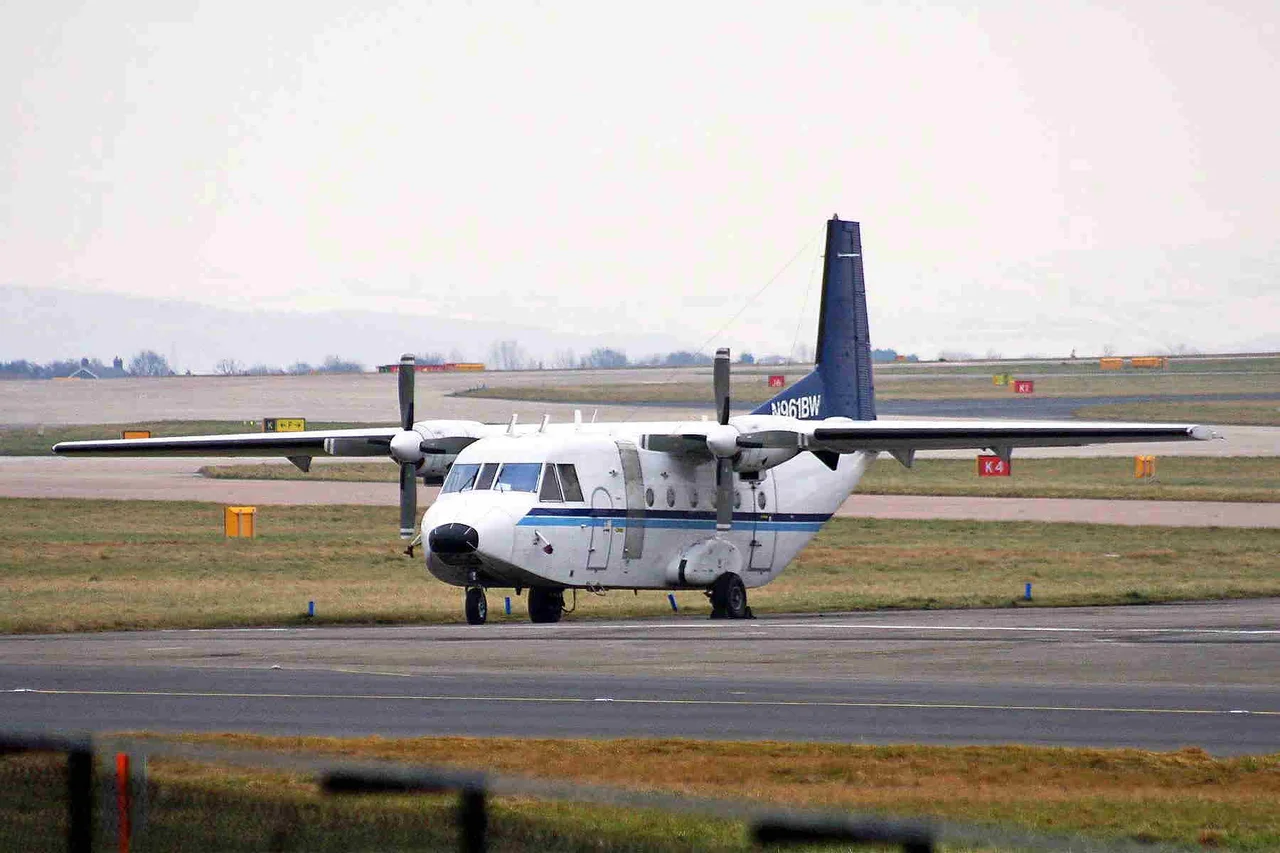
The flight was supposed to last forty-five minutes. Banjarmasin to Sampit, a short hop across the swampy lowlands of South Kalimantan, the kind of route that barely gives the cabin crew time to offer drinks. On December 7, 1996, Dirgantara Air Service Flight 5940 lifted off from Syamsudin Noor International Airport at 3:30 in the afternoon with fifteen passengers and two crew members aboard a CASA C-212 Aviocar, a sturdy Spanish-designed turboprop built under license in Indonesia. Approximately sixty seconds later, the right engine failed. What followed was a chain of miscommunication, lost control, and catastrophic impact that killed nineteen people and left a single survivor in the wreckage of a gas plant three kilometers from the runway.
A Workhorse in Trouble
The CASA C-212 Aviocar was designed for exactly this kind of flying. A high-winged, twin-turboprop transport with short takeoff and landing capability, it was built to serve remote airstrips and regional routes across rugged terrain. Indonesia had produced the aircraft under license since 1975, assembling them at IPTN's facility in Bandung. By the mid-1990s, Indonesia operated more C-212s than any other country in the world, with some 70 aircraft scattered across the archipelago. Flight 5940's aircraft, registered PK-VSO, was operated by Dirgantara Air Service, a military-owned airline that served domestic routes. Captain Herybert and First Officer Sofyan Noor were at the controls when the aircraft climbed away from Runway 10 at Syamsudin Noor, an airport originally built in 1936 by the Dutch colonial government and renamed in 1970 for an Indonesian Air Force pilot killed in a crash.
The Wrong Words at the Worst Moment
About a minute after takeoff, the right engine malfunctioned. In a twin-engine aircraft, losing one engine is serious but survivable, provided the crew follows established procedures. Captain Herybert radioed the tower to report the problem, but in the stress of the moment, the crew made a critical error: instead of reporting which engine had failed, they transmitted that the other engine was operating normally. The distinction matters. Accurate communication with air traffic control helps ground personnel prepare emergency response and can provide the crew with guidance. The crew declared their intention to return to base and began maneuvering for an emergency landing. But somewhere during the turn back to the airport, they lost control of the aircraft. The C-212 became unstable, rolling left and right, losing altitude in a way the pilots could not arrest.
Into the Gas Plant
The aircraft came down on the rooftops of PT Barox Utama Jaya, a factory that produced oxygen tanks and acetylene, three kilometers short of the runway. The impact tore through the facility's structures and triggered explosions as the aircraft's fuel ignited volatile gases stored inside. Thirteen passengers and both crew members died in the crash. A worker at the gas plant was killed instantly, and three other plant workers were injured by the subsequent blasts. Two passengers survived the initial impact. Irianto, a 40-year-old man, was pulled from the wreckage with bone fractures and severe facial injuries. He underwent four hours of surgery at Dr. Soeharsono Military Hospital, performed by Lieutenant Colonel Dr. Dedi Zamhuri. Rusdiana, a 12-year-old child, also survived the crash itself but died from her injuries while being transported to the hospital. A gas plant worker who had initially survived in critical condition later died from his injuries, bringing the final death toll to nineteen.
One Man Walking
Irianto became the sole survivor of Flight 5940. The official investigation determined that the crew lost control after the right engine malfunctioned, but the report noted the communication error and the difficulty the crew faced managing an asymmetric thrust condition during the attempted return. South Kalimantan's Governor, Gusti Hanan Aman, oversaw the identification and repatriation of the victims' remains at Syamsudin Noor Hospital. The crash added Flight 5940 to a grim list of Indonesian aviation disasters involving domestically assembled aircraft, fueling public debate about maintenance standards and the safety of the country's regional air network. For the people of Banjarmasin, a city built on river channels and swamp, the crash was a local tragedy that landed in their backyard, literally, destroying a workplace and killing neighbors who had nothing to do with aviation. The gas plant workers who died that afternoon had simply been at their jobs when the sky fell in.
From the Air
Located at approximately 3.44S, 114.76E near Banjarmasin, South Kalimantan. The crash site was approximately 3 km from the departure end of Runway 10 at Syamsudin Noor International Airport (ICAO: WAOO, IATA: BDJ). The airport sits about 25 km southeast of central Banjarmasin. Surrounding terrain is flat swampland and river delta. Nearby airports include Balikpapan Sultan Aji Muhammad Sulaiman Airport (WALL) to the northeast and Sampit H. Asan Airport (WAOS), the intended destination. Visibility in the region can be affected by seasonal haze from forest fires.
Nearby Stories
- The Sultanate of Banjar 60 km away
- The Million-Hectare Mistake 68 km away
- The Destroyer That Almost Changed History 83 km away
- The River of Four Names 111 km away
- The Vanishing Green Heart of Borneo 111 km away
- The Last Beach 169 km away
- The Great Dayak River 174 km away
- Two Minutes of Distraction 256 km away