
Battle of Barry
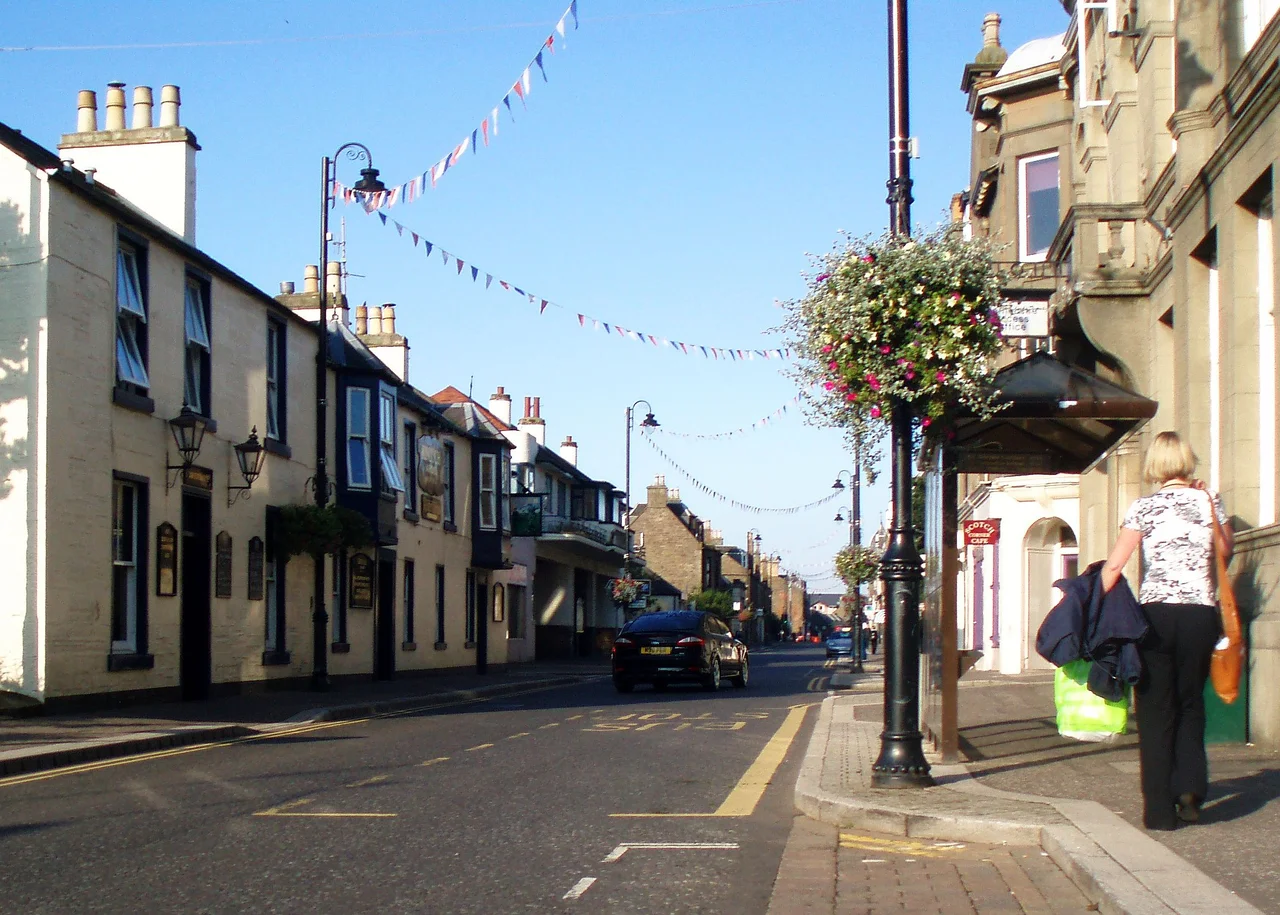
Sometime in the late 18th century, builders breaking ground for new houses at the mouth of the Lochty Burn on the Angus coast began turning up bones. The graves were old. Some held high-status grave goods. To the people who found them, the explanation was already waiting. A famous battle had been fought right here in the year 1010, when Malcolm II of Scotland had ambushed a Danish invasion force under a warlord named Camus and destroyed it. The bones, surely, were the Danish dead. The town that grew up over those graves became Carnoustie. The trouble is that the battle, as we now understand it, almost certainly did not happen.
Boece's Tale
The first written account comes from Hector Boece, a Scots historian writing in 1527 - more than five centuries after the supposed battle. In his Historia Gentis Scotorum, Boece tells how Sueno, king of Denmark and England, sent a naval force to Scotland under a commander named Camus, half sailing from Denmark and half from the Thames. The Scots, led by Malcolm, ambushed them. After Camus fell, Malcolm dipped his fingers in the dying man's blood and ran them along the top of a shield carried by a man named Robert Keith, creating - so the story claims - the red and gold stripes still found on the Keith clan coat of arms today. It is a wonderful piece of foundational mythology. Boece was a native of the area; he likely drew on local folklore. The earlier 14th-century chronicler John of Fordun, on whom Boece relied for much else, makes no mention of any such battle.
The Bones in the Sand
The bones at the Lochty Burn were real, but the interpretation was wrong. When Robert Dickson examined the burials carefully in 1878, he noticed two awkward problems. There were no weapons in the graves - unusual for warrior dead. And many of the skeletons appeared to be female. Stranger still, the burials were laid out in supine, east-west orientation, the Christian position. These were not pagan Viking warriors hastily interred where they fell. They were ordinary local people, buried in the manner of their Christian faith. The Camuston Cross, long held to mark Camus's death, turned out on closer study to be a late Pictish monument from the 10th century, with carvings that have nothing to do with Vikings at all.
What Camus Wasn't
The name "Camus" itself dissolves under scrutiny. It does not appear in any record outside the works that followed Boece. Boece almost certainly derived it backwards from a place name, Camuston, which earlier documents from 1425 and 1426 record as "Cambistown" - a Celtic origin, not a Scandinavian one. The Roman marching camp at nearby Kirkbuddo, once also attributed to the Danes, has likewise been reassigned to its actual builders: Roman legionaries on the march. Even the famous Aberlemno Stone with its battle scene, sometimes cited as evidence, has been dated by stylistic analysis to the mid-8th century or later, which is too early for 1010 and unrelated to it. Every prop in the Battle of Barry story turns out, on inspection, to belong to a different play.
Why the Story Survives
And yet it persists. The site of the supposed battle still appears on early Ordnance Survey maps. Local tradition tells it. Books retell it. The Keith family still bears the red and gold stripes Malcolm allegedly painted with his fingers. There is a real history beneath the legend - the area was Pictish, then Scottish, and did face occasional Viking raids - and a fictional history layered over it that has become its own kind of fact. Standing on the dunes at Carnoustie now, you can hear the wind in the marram grass and the distant pulse of golfers on the Carnoustie Championship Course nearby. The bones beneath the sand belonged to people who lived and died here, going about ordinary lives, long before anyone needed to invent a battle to explain them.
From the Air
The supposed battle site lies at 56.50°N, 2.71°W near the modern town of Carnoustie on the Angus coast, between Dundee and Arbroath. From 2,000-4,000 ft AGL look for the wide sandy beach and the famous Carnoustie Championship golf links along the shoreline. The Lochty Burn enters the sea east of the town centre. Nearest airports: Dundee (EGPN) 9 nm west; Leuchars (EGQL) 13 nm southwest; Aberdeen (EGPD) 38 nm northeast. The A92 runs along the coast through Carnoustie.
Nearby Stories
- Edzell Castle 4.7 km away
- Coupar Angus Abbey 7.5 km away
- Isle of May 8.5 km away
- Lochleven Castle 15 km away
- Lochnagar 21 km away
- Eyemouth Disaster 39 km away
- River Dee Ferryboat Disaster 40 km away
- Girdle Ness Lighthouse 70 km away