_Topography.png)
Battle of Biak
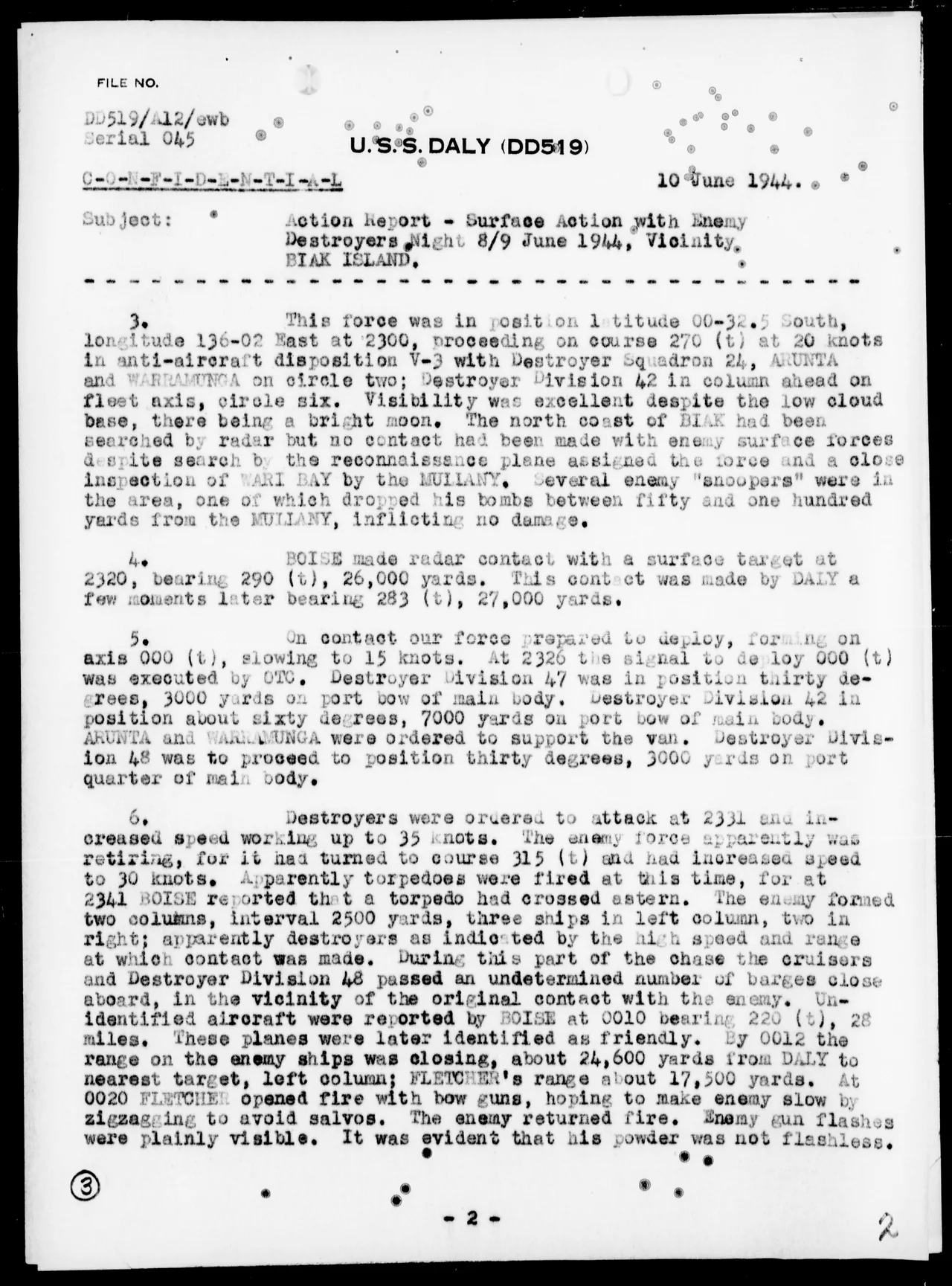
At 5:15 in the afternoon on 27 May 1944, twelve thousand American soldiers stood on the beaches of Biak in quiet satisfaction. They had come ashore with twelve Sherman tanks, twenty-nine field guns, five hundred vehicles, and three thousand tons of supplies - all of it landed against almost no resistance. Allied planners had promised a week-long operation. What those soldiers could not yet know was that Colonel Naoyuki Kuzume had watched them come ashore on purpose. He had pulled his men back from the water's edge and into a honeycomb of limestone caves west of Mokmer airfield, waiting for the Americans to advance into his killing ground. The battle would last until 17 August. It would cost the lives of nearly every Japanese defender on the island.
Why Biak
The island sits at the entrance to Geelvink Bay on the northwestern arc of New Guinea, flat where it mattered, close to the Philippines, and perfect for airfields. General Douglas MacArthur's Southwest Pacific command wanted it badly. Biak's southeastern flats could accommodate heavy bombers that the swampy Hollandia plain could not, and from here B-24s could range across the approaches to Mindanao. Rear Admiral William Fechteler's Task Group 77.2 assembled five destroyer transports, eight LSTs, two heavy cruisers and three light cruisers to deliver the 41st Infantry Division to four beaches near Bosnek designated simply Green 1, 2, 3, and 4. Australian ships sailed with them: HMAS Australia, Shropshire, and Warramunga among the supporting cruisers and destroyers. Intelligence estimated 5,000 Japanese defenders. The actual number was closer to 11,000.
The Trap at Mokmer
The Americans moved inland in the confident quiet of troops who had not yet found the enemy. Then they reached the airstrip. From the ridges above Mokmer came a storm of artillery, mortar, and machine-gun fire that pinned the 162nd Infantry Regiment flat. Japanese Ha-Go light tanks clattered out from cover and struck the beachhead - and were methodically destroyed by M4 Shermans in the first tank-versus-tank engagement of the Pacific War. Amphibious tractors had to extract the infantry after dark. General Fuller was relieved of command, and General Robert Eichelberger took over the Hurricane Task Force with fresh orders to drive the Japanese from every ridge that could fire on the airfield. Kuzume had prepared these caves for years, stockpiled them with ammunition and food, connected them with tunnels. The Americans would clear each one by hand.
Water and Scrub Typhus
Biak has coral bedrock and almost no fresh water. American soldiers fought under relentless equatorial sun, their canteens rationed, their uniforms soaked through with sweat that never dried. More men fell to scrub typhus than to Japanese fire. The battle's casualty math tells the story: 438 Allied ground troops killed in action, 2,361 wounded, and 7,234 non-battle casualties - nearly all from disease. The fighting itself took weeks of grenade-and-flamethrower work against cave mouths, advancing a few dozen meters at a time. About six hundred British Indian and Javanese forced laborers, held by the Japanese on the island, were freed when the caves finally fell.
The Fleet That Never Came
Japan nearly turned Biak into the decisive battle it had been waiting for. Admiral Soemu Toyoda saw MacArthur's landing as a chance to provoke the US Pacific Fleet into a fleet action - the Kantai Kessen that Imperial Navy doctrine had trained for since before the war. Operation KON sent battleship Fuso and heavy cruisers Aoba, Myoko, and Haguro southward to reinforce the island. The first attempt turned back after a scout plane misreported a US carrier. The second was driven off by American and Australian warships. The third, scheduled to sail with the super-battleships Yamato and Musashi behind it, was cancelled when American forces landed in the Marianas and the Imperial Navy raced north instead - to disaster in the Philippine Sea. Half of Japan's 1st Air Fleet was trapped on bases in western New Guinea when the Marianas battle started, too far to fly to the carriers.
The Regimental Colors
Allied radio intercepts revealed that Lieutenant General Takuzo Numata, Chief of Staff of the 2nd Area Army, had been on Biak inspecting when the invasion hit. A floatplane extracted him from Korim Bay on the night of 20 June. Colonel Kuzume did not leave. After two more days of fighting he burned the regimental colors - a signal to his men that the regiment would die where it stood - and committed seppuku. About 4,700 Japanese soldiers were killed in the battle; 200 were taken prisoner. The remainder, perhaps a few thousand, died of disease and starvation in the caves during the months that followed. By the time engineers had rebuilt Mokmer, Sorido, and Borokoe airfields, the strips were already launching B-24s toward the Philippines. The delay had cost the Allies ten days. It had cost the Japanese the chance to fight the war on their terms.
From the Air
The Battle of Biak's key landmarks cluster around 1 degree south, 136 degrees east, on the southern coast of Biak Island in Cenderawasih Bay. Mokmer Airfield (now Frans Kaisiepo Airport, ICAO WABB) remains in operation; Sorido and Borokoe fields are visible from the air as the runways that parallel Mokmer further west and northwest. The limestone ridges where Kuzume's caves network ran are the rising terrain north of the airfield strip. Nearest modern airport is Frans Kaisiepo Airport itself. Owi Island, where Fifth Air Force built emergency airstrips during the delay, lies just southeast.
Nearby Stories
- Owi Airfield 37 km away
- The Battle of Noemfoor: Three Airfields and a Forgotten Cost 51 km away
- 1996 Biak Earthquake 59 km away
- Cenderawasih Bay 141 km away
- Mamberamo River 168 km away
- Mapia Atoll 211 km away
- Spring Rain on Dark Water 355 km away
- Mikura-jima 3859 km away