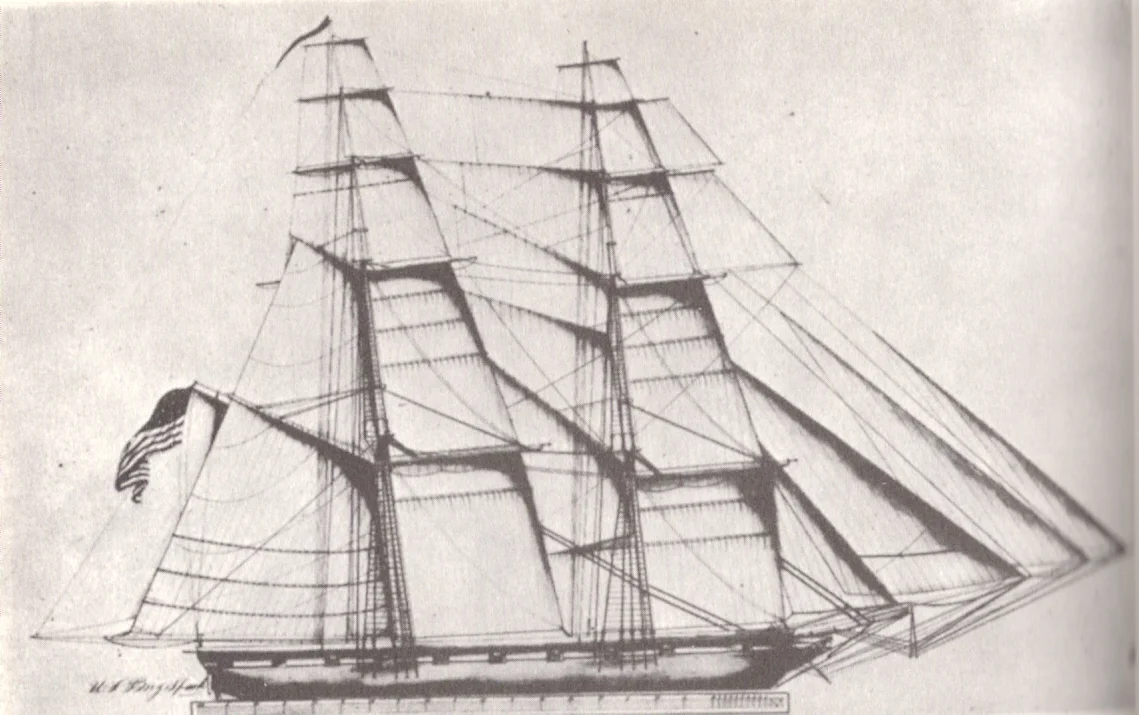

Battle of Cape Palos (1815)
The men in the boats were rowing hard for the cape when the gunfire found them. Their brig, the Algerian Estedio, had fought for half an hour and then given up, and now her crew was trying to reach the Spanish shore off Cabo de Palos in whatever craft they could launch. The American vessels chasing her fired anyway, sinking the boats. When it was over, eighty men had surrendered and at least twenty-three lay dead. This brief, one-sided action in June 1815 was the final battle of the Second Barbary War, and it played out in the shoal waters at the turning point of the Spanish coast.
A Score to Settle
For a decade the young United States had wrestled with the Barbary states of North Africa over the seizure of ships and sailors. In 1815, with the war against Britain finished, Congress sent a squadron into the Mediterranean under Commodore Stephen Decatur, a naval officer already famous at home, to force the Regency of Algiers to terms. Decatur moved fast. He captured the Algerian flagship, the frigate Meshuda, and sent her to Cartagena under escort, then pressed on toward Algiers itself. On 19 June 1815, his squadron sighted a second prize worth taking: the 22-gun Algerian brig Estedio, running along the coast of Spain. The larger aim behind the chase was to end a long grievance. For years the Barbary states had seized foreign ships and held their crews, and the United States had resolved to pay tribute no more.
The Chase Into the Shallows
Decatur gave chase, and the Estedio fled into shoal water near Cape Palos, hoping the shallows would protect her. They nearly did. Fearing that his larger ships might run aground, Decatur held them back and sent in the small, nimble vessels of his squadron, the Epervier, Spark, Torch, and Spitfire, to finish the job. It was the kind of coastline that had wrecked ships for centuries, and the Estedio's captain was gambling that the shallows would do to the Americans what they had done to so many others. The gunboats closed the range where the bigger ships could not go. The fight lasted about half an hour before the Algerian crew began to abandon their brig. What followed was less a battle than a rout, and its harshest moments came after the Estedio had already struck.
Half an Hour
As the Algerians pulled for the cape in their boats, the American vessels kept firing, and the boats went under. Eighty surviving sailors were taken prisoner; at least twenty-three of their shipmates were killed, many of them in that final flight rather than in the exchange of broadsides. These were not anonymous statistics but crewmen who had lost their ship and were trying to save their lives on a foreign shore. The Estedio herself was boarded, and a prize crew brought her into Cartagena, the same Spanish port where the captured flagship had already been sent.
Cartagena's Prize
Spanish authorities interned the brig and, at the war's end, returned her to Algiers. The peace did not hold for everyone. On 18 July 1815, Algiers declared war on Spain, and the Spanish government promptly seized both the Estedio and the frigate Meshuda where they lay at Cartagena. Decatur, meanwhile, had regrouped and sailed on to Algiers to compel the Dey, Omar Agha, to sign. The Second Barbary War ended there, but its last shots had been fired in the shallows off a Spanish cape, far from the enemy capital both fleets were bound for. For the eighty prisoners, the war's close meant a return to a home country that would, within weeks, be at war again. The brief, brutal action off Cape Palos settled little between Algiers and Spain, but for the United States it closed a chapter that had run for more than a decade.
From the Air
Coordinates 37.62 N, 0.66 W, in the Mediterranean just off Cabo de Palos, Cartagena. The action happened in the shallow water close to the headland; from the air the cape and its lighthouse mark the spot, with the Islas Hormigas offshore and the Mar Menor lagoon and La Manga sandbar to the north. Fly the coast at 3,000 to 5,000 feet in clear weather to read the shoal line that trapped the Estedio. Nearest airports: Murcia-San Javier (LELC), Region de Murcia at Corvera (LEMI), and Alicante-Elche (LEAL).
Nearby Stories
- Fonda Milagros Nightclub Fire 6 km away
- International Habaneras and Polyphony Contest of Torrevieja 14 km away
- Phoenician shipwrecks of Mazarrón 25 km away
- Battle of Cape Palos (1758) 58 km away
- Penyal d'Ifac Natural Park 74 km away
- Xanadu (Calp) 104 km away
- Cabo de Gata-Nijar Natural Park 118 km away
- Battle of Mazagran 172 km away