
Battle of Cropredy Bridge
On a Saturday in late June 1644, two armies marched north along opposite banks of the River Cherwell, no more than a mile apart, each in plain sight of the other. The water between them was shallow but the Royalist guns and Parliamentarian guns sat trained across it like a held breath. King Charles I rode with the larger column on the east side. Sir William Waller rode with the smaller on the west, looking for the gap that would let him bag a king. The gap came near a tiny village called Cropredy, where a stone bridge crossed the Cherwell - and Waller found, too late, that the war was being fought by other men than Englishmen used to face one another in.
A Spring of Defeats
The First English Civil War was two years old and the Royalists were losing ground. Their field armies had been broken at Nantwich in January and Cheriton in March. A Scottish Covenanter army had crossed into England and was besieging the great Royalist city of York. In Oxford - the wartime capital, Charles's makeshift court - a council of war agreed in early May that the King would stay on the defensive while his nephew Prince Rupert of the Rhine, the most charismatic and dangerous cavalry commander in Europe, marched north to break the siege of York. The forces left around Charles in Oxford fell under the elderly Lord General Patrick Ruthven, Earl of Forth. It was meant to be a quiet summer for the King.
Two Generals Who Disliked Each Other
It did not stay quiet. With Rupert gone, the Parliamentarian armies of the Earl of Essex and Sir William Waller closed on Oxford from Reading. By late May they had taken Abingdon and were pinning the King against his own walls. Charles slipped out on the night of 3 June with a fast-moving force of cavalry, riding west toward Worcester. Essex and Waller pursued. On 7 June at Stow on the Wold, the two Parliamentarian commanders - who genuinely disliked each other - agreed to divide their forces. Essex would head west to relieve Lyme Regis. Waller would shadow the King. It was the wrong decision. Charles, freed from the larger threat, doubled back, floated his foot soldiers down the River Avon in commandeered boats, picked up reinforcements in Oxford, and turned east. By 28 June he was at Banbury, ready to fight.
The Pincer That Closed Wrong
On Saturday 29 June Charles's army marched north along the east side of the Cherwell. Waller's army shadowed him on the west bank. Both armies could see each other through the trees. Then Charles, learning that 300 more Parliamentarian horse were approaching from the north to join Waller, urged his column to a faster pace to catch them before they linked up. The army strung out. The vanguard and main body crossed a stream at Hay's Bridge. Behind them, isolated south of the bridge, were just two cavalry brigades - the Earl of Cleveland's and the twenty-year-old Earl of Northampton's - and some supporting infantry. Waller saw the gap and seized it. He sent Lieutenant General John Middleton across Cropredy Bridge with two regiments of horse and nine companies of foot, while Waller himself led 1,000 men a mile to the south across Slat Mill Ford. The two prongs were meant to crush the Royalist rear between them.
How the King Slipped Away
The trap collapsed almost immediately. Middleton's cavalry charged hard toward Hay's Bridge, but Royalist musketeers there overturned a wagon to block the bridge, and as Middleton's horsemen pulled up short, the Earl of Cleveland charged into the Parliamentarian foot and artillery from the flank. To the south, Northampton's brigade rode downhill into Waller's men at Slat Mill Ford and drove them back across the stream. Charles, alerted, sent his own lifeguard of horse under Lord Bernard Stewart back across Hay's Bridge to help. Cleveland charged a second time and forced Middleton back over Cropredy Bridge, abandoning eleven cannon as he went. Waller's major general of ordnance, Sir James Wemyss, was captured. The bridge itself was held by Colonel Ralph Weldon's Kentish Regiment and the Tower Hamlets Trained Bands - the regiments that did not break. The Royalists could not retake the bridge, and Waller's remaining artillery fired down from Bourton Hill all afternoon, but the trap had failed.
The Long Consequence
By nightfall the two armies still faced each other across the Cherwell. Charles, sensing he had won a moral victory, sent his secretary of war Sir Edward Walker across with an offer of grace and pardon. Waller replied he had no authority to treat. Under cover of darkness the Royalists slipped away, taking the captured guns with them. Waller had lost around 700 men, many simply deserting in the days that followed - chiefly the London Trained Bands, who had never wanted to serve so far from home. Within weeks Waller's army was so demoralised that Charles could ignore it entirely and pursue Essex into Cornwall, where in early September Essex's army was forced into the humiliating surrender at Lostwithiel. The skirmish at Cropredy Bridge did not look like much on the day. It bought the King a summer. The Royalist cause would not have another like it.
From the Air
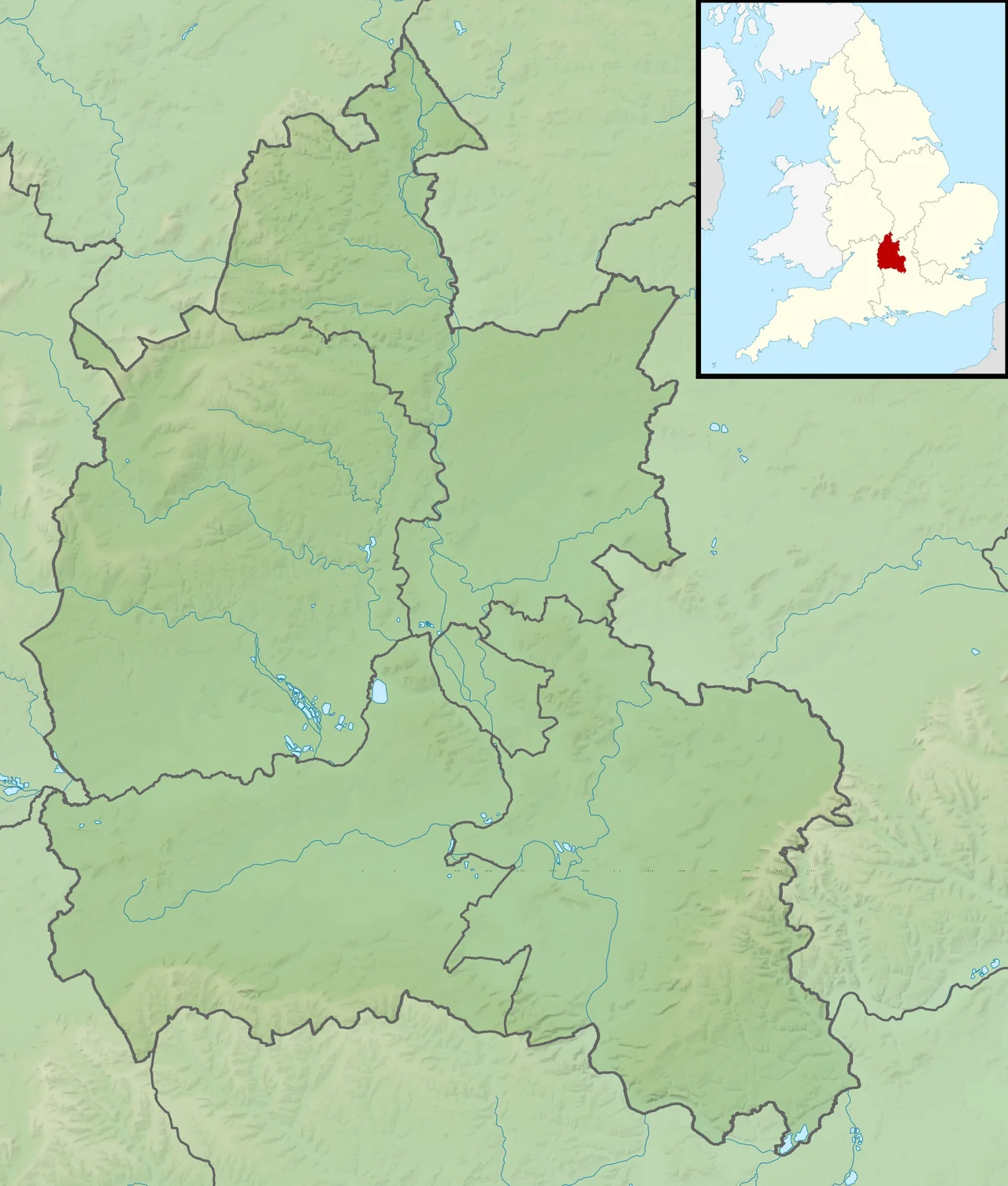
Coordinates 52.115°N, 1.3139°W. Best viewed from 2,000-3,000 feet AGL. The battlefield lies on either side of the River Cherwell around the village of Cropredy, about 4 miles north of Banbury in Oxfordshire. Cropredy Bridge itself still stands, with a plaque commemorating the battle on the parapet. Nearby airports: Coventry (EGBE) 22 nm northwest, Oxford/Kidlington (EGTK) 24 nm south, Birmingham (EGBB) 33 nm northwest. The terrain is gentle rolling farmland; Hay's Bridge near Chipping Warden is about 1.5 miles north. Fairport Convention's annual Cropredy Convention music festival is held on the village outskirts each August, drawing thousands - their song 'Red and Gold' by Ralph McTell tells the story of the battle.
Nearby Stories
- Solihull 3.5 km away
- Boughton House 4.9 km away
- RAF Honeybourne 7.2 km away
- Blenheim Palace 9.1 km away
- Chedworth Roman Villa 12 km away
- Coombe Abbey 13 km away
- Berkhamsted Castle 14 km away
- Ampthill Park 16 km away