
Battle of Edgcote
The Welsh poets remembered it for a century. They wrote elegies for the lords who never came home, for the spearmen of Pembroke's army who marched into Northamptonshire and never marched out. Edgcote was, by the standards of the Wars of the Roses, a small battle - a few thousand men, fought in a single morning, on rolling pasture about six miles northeast of Banbury. Yet it broke the fragile alliance that had put Edward IV on the throne, ended one earl's life and sealed another's. On 24 July 1469, two armies stood on opposite sides of a stream feeding into the River Cherwell, and the kingdom of England changed direction.
A Brotherhood Coming Apart
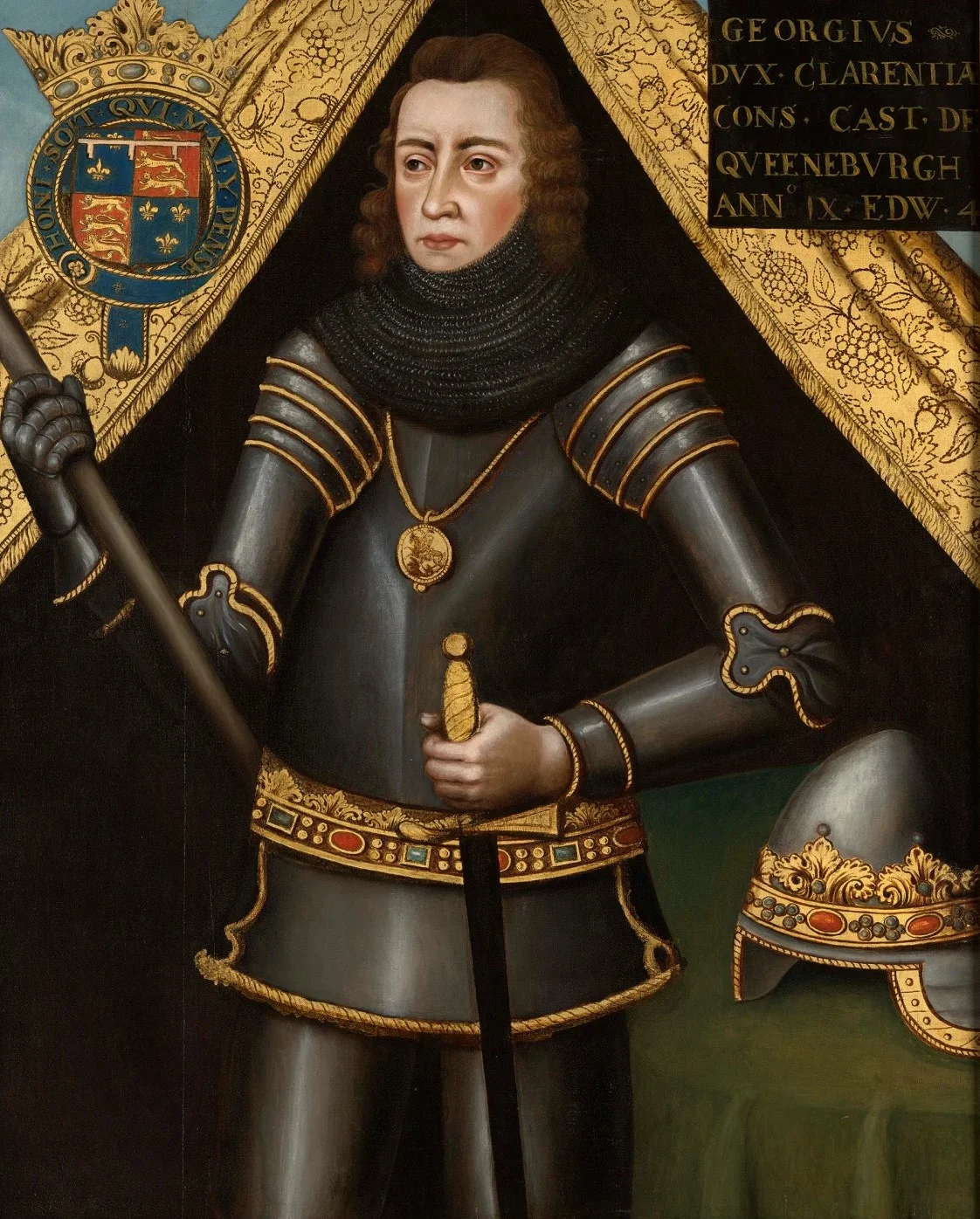
Edward IV and Richard Neville, Earl of Warwick, had taken the crown together in 1461, dragging the House of York from rebellion to triumph. By 1469 they barely spoke. The wedge was Edward's wife, Elizabeth Woodville, and the swarm of Woodville relatives who now collected royal favours that Warwick believed should have come to the Nevilles. The earl who had made a king began to consider unmaking one. When Edward forbade the marriage of Warwick's daughter Isabel to George, Duke of Clarence - Edward's own younger brother - the breach hardened. Warwick took Clarence to Calais, married the pair in defiance of the king, and issued a list of grievances aimed squarely at the Woodvilles and their allies in the royal household.
Robin of Redesdale
Trouble arrived first under a borrowed name. In April 1469 a rebellion broke out in Yorkshire led by a figure calling himself Robin of Redesdale. Nobody knew quite who he was. The chroniclers offered candidates - a Conyers, a Welles, a Neville - and one French writer simply called him a villain, a commoner playing at outlaw. Whoever stood behind the alias, the rebels were larger and better organized than Edward realized. He moved north slowly, expecting to swat at peasants, only to discover an army. He fell back on Nottingham and sent urgent letters south and west: come to me with every man you have. William Herbert, Earl of Pembroke, marched from Raglan Castle with three to five thousand Welsh spearmen and knights. Humphrey Stafford, Earl of Devon, brought eight hundred to fifteen hundred more, including most of the archers.
The Quarrel at the Inn
The story most chroniclers tell is small and infuriating. On the evening of 23 July, Pembroke and Devon both sought lodgings in Banbury. They argued - over rooms, over a woman, depending on which account you trust - and Devon stalked off with his entire division, the archers included. He camped ten or twelve miles away. Tradition places him at Deddington Castle, though no contemporary source confirms it. Whatever the cause, the result was disastrous. The royal army was now split, and its longbowmen, the weapon English commanders had relied on for a century, were beyond recall. That same evening Pembroke's pickets clashed with rebel outriders on Edgcote Lodge Hill. Sir Henry Neville was captured, then killed after he tried to surrender - an act that infuriated the rebels and put them in no mood for mercy come morning.
Danes Moor
The battlefield itself carries an older memory. The ground that became known as Danes Moor was already a site of slaughter, scene of a battle in 914 between Saxons and a Danish raiding force. By the morning of 24 July 1469, Pembroke's Welshmen looked down across a tributary of the Cherwell at the rebel army on the far slope. The rebels had archers; Pembroke did not. He could not let the arrow storm play out. He ordered his men forward, down the slope and across the water, and the fighting closed to spear and sword. By early afternoon the Welsh had pushed the rebels back from the crossing. Then trumpets from the north announced fresh men - the advance guard of Warwick's main force, led by Sir Geoffrey Gates and Sir William Parr. More followed under John Clapham. Pembroke's exhausted men, told their enemies had been reinforced by the kingmaker himself, broke and ran. Welsh casualties were heavy: roughly 168 knights and gentry, two thousand of the rank and file. Pembroke was taken alive and executed at Northampton three days later, his brother Sir Richard Herbert beheaded the day before.
The Field That Almost Wasn't Named
Edgcote should be famous. It killed one earl and ruined another, broke the friendship that had founded the Yorkist regime, and pushed Warwick across the line that would eventually return him to the Lancastrian side he had once defeated. Instead, the battle hides under several names - Banbury, Danes Moor, the misleading 'Edgecote Moor' that the Royal Mail used on a 2021 commemorative stamp, drawing rebuke from local historians. The fighting ground remains largely undeveloped: pasture and hedgerow, much as it must have looked when the Welsh spearmen crossed the brook. Historic England describes a high archaeological potential here, though planning fights over a renewable energy development and the HS2 route running along the northeast edge have kept preservationists busy. The Northamptonshire Battlefields Society organizes an annual walk on the anniversary, retracing the route from Edgcote Lodge Hill down to the stream where the day was decided.
From the Air
The battlefield lies at 52.114°N, 1.247°W in south Northamptonshire, about six miles northeast of Banbury and just west of the modern village of Chipping Warden. From cruising altitude, look for the gentle rise of Edgcote Lodge Hill above the patchwork of pasture and the tributary that drains southeast into the River Cherwell. The nearest airfield is RAF Croughton (EGVN) about ten miles south; Sywell Aerodrome (EGBK) sits twenty miles to the northeast, and London Oxford Airport (EGTK) lies twenty miles to the south. Surface visibility is generally good in summer haze.
Nearby Stories
- Solihull 3.5 km away
- Boughton House 4.9 km away
- RAF Honeybourne 7.2 km away
- Blenheim Palace 9.1 km away
- Chedworth Roman Villa 12 km away
- Coombe Abbey 13 km away
- Berkhamsted Castle 14 km away
- Ampthill Park 16 km away