.jpg)
Battle of Falkirk Muir
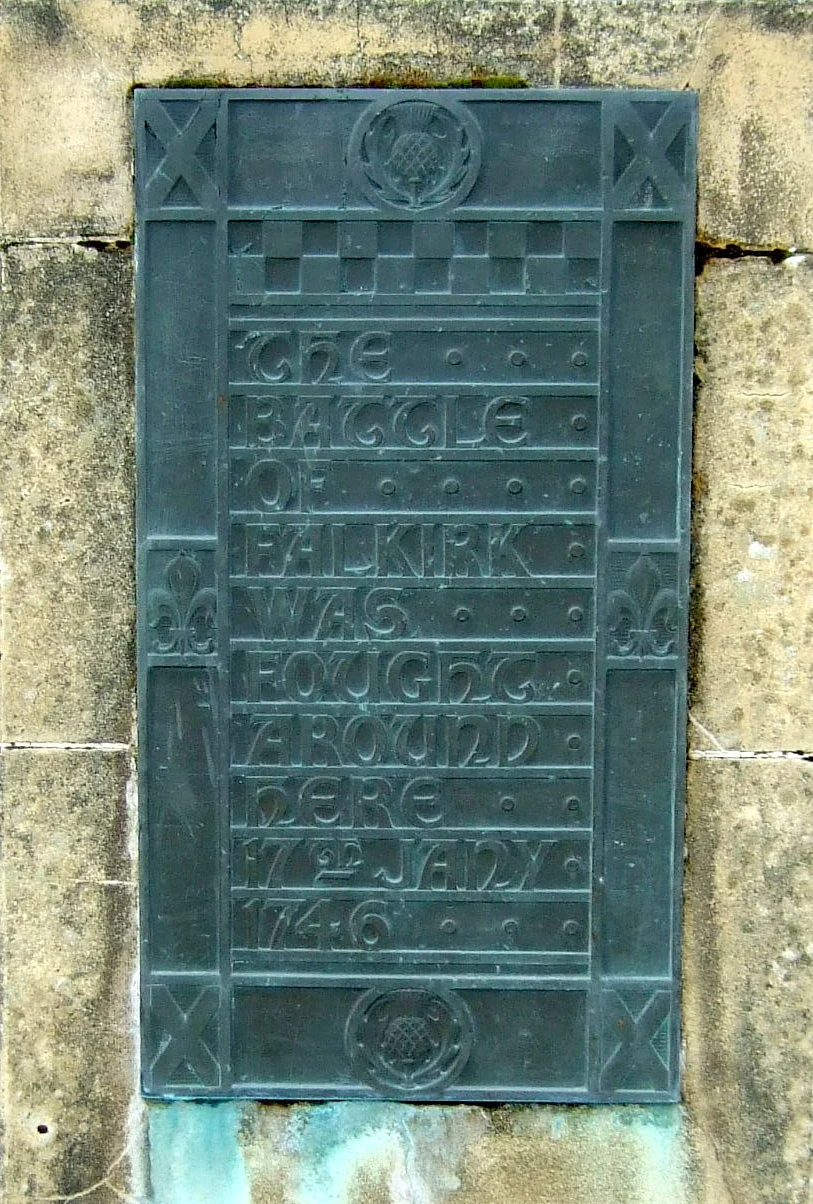
Just after four o'clock on the afternoon of 17 January 1746, three regiments of British government dragoons spurred their horses up a snowy ridge south of Falkirk and into a long line of waiting Highlanders. The MacDonalds, with Lord George Murray dismounted at the extreme right of the line, held their fire until the cavalry was at pistol range. Then they shot. As at Prestonpans four months earlier, the dragoons broke and fled. Within minutes Hawley's left wing was gone. It should have been the decisive battle that ended Cumberland's campaign and put Charles Edward Stuart in command of Scotland. Instead it became a victory so confused that on both sides men spent the next morning telling each other they had lost.
Two Generals, Two Misjudgements
Henry Hawley had fought as a young officer at Sheriffmuir in 1715, where he had watched dragoons ride down the Highlanders. He believed he understood Jacobite armies. He overestimated the vulnerability of Highland infantry to cavalry and seriously underestimated their fighting qualities. On 16 January, the Jacobites took position on a ridge a mile from his camp; Hawley assumed they would not dare attack and rode off to Callendar House to dine with the Countess of Kilmarnock. The Jacobite command was scarcely more focused. Bitter recriminations over the retreat from Derby in December had poisoned the relationship between Lord George Murray, the prince's most capable Scottish general, and the exile advisors around Charles, some of whom were openly accusing Murray of treachery. By 14:30 on 17 January Hawley finally grasped the danger. The weather, already foul, became apocalyptic: heavy snow, raking rain, a wind blowing straight into the faces of the government troops as they tried to climb the ridge.
Up the Slope in a Storm
The government infantry moved south along Maggie Wood's Loan, past Bantaskin House, and onto the slope of the Falkirk ridge. Hawley sent the dragoons up first, an order that Francis Ligonier, their commander, allegedly called *the most extraordinary ever given*. The cavalry's horses churned the muddy track into a morass, slowing the infantry coming up behind. The artillery, vital for any pitched battle, got stuck in the mud entirely and never reached the field. The black powder in the infantry's cartridge boxes was being soaked. Later estimates suggested that one in every four muskets misfired when the soldiers tried to use them. The dragoons reached the top of the ridge first, with a bog on their left, the infantry trying to deploy to their right. Opposite them, the Highland regiments had been waiting on dry ground for hours. The MacDonalds, on the extreme right of the Jacobite line, faced the dragoons across a short open slope.
The Shock and the Sacking
Murray ordered his front rank to hold fire until he gave the word. At pistol range, the MacDonalds fired their single volley. Ligonier's three regiments broke instantly. One went left into the bog and was stopped by the ground itself. The other two wheeled and rode straight back over the infantry forming up behind them. In a few minutes the whole left wing of the government army had been destroyed by its own panic. All Murray needed now was to wheel his line and envelop Hawley's right. It did not happen. The MacDonalds and the entire Jacobite front line charged down the slope and began sacking the government camp. The terrain, the failing light and the storm meant no one above company level had any idea where anyone was. On the government right, three battalions under Major-General Huske and Cholmondeley held firm, shielded by a ravine, and repulsed the disorganised Jacobite left. The Jacobite left ran. According to O'Sullivan, many of them did not stop running until they reached Stirling, where they reported the battle lost.
Both Sides Think They Lost
By 16:30 the storm and the darkness ended the battle. Hawley fell back to Falkirk; most of his army was strung out along the road to Linlithgow, eventually re-forming in Edinburgh. Captain Archibald Cunningham, who commanded the artillery, abandoned his guns and used the transport horses to escape; he later killed himself. Some guns were dragged off; most were left in the mud. Ligonier, who had left a sickbed in Edinburgh to take command, died soon after of the same illness, made worse by the storm. Cholmondeley suffered severe exposure on the field. The Jacobites lost roughly 50 dead and 80 wounded, mostly on their disorderly left wing. The government forces lost about 70 dead and another 200 to 300 wounded or missing. Among the dead was Sir Robert Munro of Foulis and his younger brother Duncan, killed in the pursuit and buried together at St Modan's, Falkirk. Charles and O'Sullivan, watching from the broken Jacobite left, had thought they were losing. Hawley, retreating, knew he was losing. The next day the truth settled in slowly.
Hollow Victory
Modern historians call Falkirk a hollow victory. Murray publicly blamed John Drummond for arriving late to command the Jacobite left; Drummond blamed Murray for failing to control the MacDonalds; Murray accused O'Sullivan of cowardice. Charles fell ill at Bannockburn House and left the army at Falkirk. On 29 January, Cumberland arrived in Edinburgh and took command from the disgraced Hawley. The Jacobites had won the battle and lost the chance to follow it up. Highland clan armies had assumed warfare was short-term and not waged in winter; large numbers of Highlanders quietly went home with their loot from Hawley's camp. When Cumberland resumed his advance on 30 January, Charles asked Murray for a battle plan and was told the army could not fight. The siege of Stirling was abandoned on 1 February 1746. The Jacobites retreated to Inverness. The Battle of Culloden followed on 16 April and lasted less than an hour. The celebrated Gaelic poet Duncan Ban MacIntyre had fought at Falkirk Muir on the government side; he wrote two poems about what he had seen on that black, snowy ridge.
From the Air
The battlefield sits at 56.001N, 3.784W on a ridge southwest of central Falkirk, today partly built over but still recognisable as rising ground. From altitude the urban grid of Falkirk is the main reference; the battlefield lies to the southwest of the town centre. Best viewed at 3,000 to 5,000 feet on a clear day. Nearest airports: Edinburgh (EGPH) 22 nm east, Glasgow (EGPF) 20 nm west-southwest. The Ochil Hills rise to the north and may produce mountain wave in northerly winds. The Inventory of Historic Battlefields in Scotland protects the site.
Nearby Stories
- Union Canal (Scotland) 2.9 km away
- Ochil Hills 5.3 km away
- Mugdock Castle 7 km away
- New Lanark 8.7 km away
- Darvel 13 km away
- Innerleithen 13 km away
- Lochearnhead 16 km away
- Inner Tay Estuary 16 km away