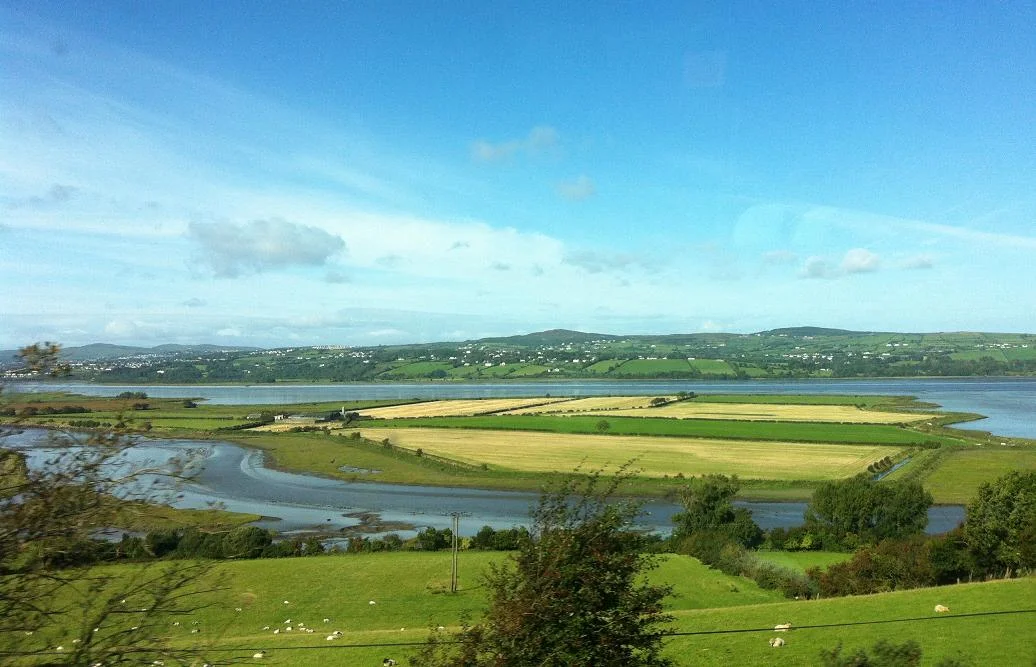

Battle of Scarrifholis
A Catholic bishop with no military experience stood on Doonglebe Hill above the River Swilly on the morning of 21 June 1650 and decided to ignore his officers. They had told him to wait. The Parliamentarian army facing him across the pass at Scariffhollis - smaller, but veteran New Model Army troops with three times his cavalry - would soon run out of food and have to retreat. Just hold the high ground, the officers said, and let hunger decide it. Heber MacMahon, Bishop of Clogher, ordered his army down off the hill anyway. An hour later, between two and three thousand of his soldiers were dead, his officers were being shot after surrender, and the Catholic cause in Ulster was effectively finished.
How Ulster Ran Out of Armies
By 1650, the wars that began with the 1641 Rebellion had ground through nine years of shifting alliances. Ulster had spent much of that decade as a three-sided fight: Royalists loyal to Charles I, the Gaelic Catholic forces under Eoghan Ruadh Ó Néill, and the Scots Presbyterian Laggan Army backed by Covenanter reinforcements. When Charles I was executed in January 1649, the Scots Covenanters - who viewed regicide as sacrilege - threw in with Ormond's Royalist-Catholic alliance against the new English Commonwealth. Cromwell landed at Dublin that August and began the systematic conquest of Ireland by terror. The garrison of Drogheda was massacred in September. Robert Venables took Belfast, Newry, and Carlingford. Charles Coote took Coleraine and massacred its largely Scottish garrison. By spring 1650, Ó Néill was dead and the only Catholic army still in the field in the north was a depleted force searching for a commander.
A Bishop Takes Command
On 18 March 1650, the Catholic clergy and officers met at Belturbet and elected Heber MacMahon, Bishop of Clogher, to lead what remained. The choice was a political compromise between two factions of the Ó Néill family, none of whose preferred candidates was acceptable to both sides. MacMahon was a leading figure in the Confederation, an able administrator, and had personally opposed the alliance with Ormond's Royalists. He had also never commanded an army. By 20 May, he and his more experienced deputy Richard O'Farrell had assembled five thousand infantry and one thousand cavalry near Loughgall. They lacked arms and artillery. They were also running on a promise: Ormond would send weapons and supplies from Connacht.
The Long March North
MacMahon's plan was sound enough on paper. Drive a wedge between Coote's smaller force at Derry and Venables's army at Carrickfergus, establish a line of garrisons running north to Ballycastle, and force the Commonwealth to fight a divided campaign. The Catholic army crossed the River Foyle below Lifford on 2 June, beating off a Commonwealth cavalry attack, and occupied Lifford. Coote, with only 1,400 men, withdrew to Derry and seemed vulnerable. But the supplies Ormond had promised never arrived. The garrisons drained MacMahon's strength. And on 18 June, Colonel Roger Fenwick reinforced Coote with another thousand New Model Army infantry from Belfast. The window had closed.
Down From the Hill
MacMahon moved his army to Doonglebe Hill, also called Tullygay Hill, overlooking the pass at Scariffhollis on the River Swilly west of Letterkenny. It was a strong defensive position - boggy ground below, high ground above, easy to hold and difficult to attack. When Myles MacSweeney peeled off with his regiment to recapture his ancestral home at Doe Castle, the two armies were roughly equal in numbers. But Coote's were New Model Army veterans, well-equipped, well-led, and with three times the cavalry. MacMahon's senior officers begged him not to give battle. Coote was already short of food. He would have to retreat within days. The Catholic army could then withdraw in good order into Connaught. To this day, no one knows for certain why MacMahon refused. Some accounts blame his lack of military experience. Some suggest his clergy advisers, hungry for a decisive victory, overruled the soldiers. Whatever the reason, on the morning of 21 June he ordered the army down off the hill into the boggy ground below.
An Hour, and the Aftermath
Colonel Fenwick led the first attack with 150 men against the Catholic advance guard. He was mortally wounded in the exchange of fire that followed, but his troops held until Coote fed in reinforcements. The Catholic musketeers fell back on their main body, which had been drawn up in a dense mass formation - possibly because of ammunition shortages, possibly because MacMahon did not know better. With no room to manoeuvre, they took close-range volleys for nearly an hour. When their ammunition ran out, Coote's cavalry charged the flank. The Catholic line broke. What followed was the worst of seventeenth-century warfare: a pursuit across rough country with no protective cavalry of their own. Estimates of the Catholic dead range from two thousand to three thousand. Coote lost about a hundred. Many surrendering officers were executed in cold blood. Henry Ó Néill, son of the great Eoghan Ruadh, died on the field. MacMahon himself escaped with two hundred horsemen, was captured a week later, and executed. With Scarriffhollis, the last Catholic field army in Ulster was gone, and Cromwell's conquest had only a few mopping-up sieges left.
From the Air
The battle site lies at approximately 54.93°N, 7.80°W along the River Swilly, about 3 nm west of Letterkenny in County Donegal. The City of Derry Airport (EGAE) is 12 nm north-northeast; Donegal Airport (EIDL) is 24 nm west. The battlefield itself sits in a low pass between Doonglebe and Tullygay hills, in agricultural land along the Swilly's south bank. Best viewed at 1,500-3,000 ft AGL; look for the wooded river valley, the rising ground south of the river, and the town of Letterkenny to the east.
Nearby Stories
- Ireland Cricket Team 0.7 km away
- Inishfree 2.7 km away
- Killybegs 3.6 km away
- Rosguill 4.9 km away
- Inishowen 5.5 km away
- St Patrick's Purgatory 7 km away
- Omagh 9.2 km away
- Battle of Tory Island 12 km away