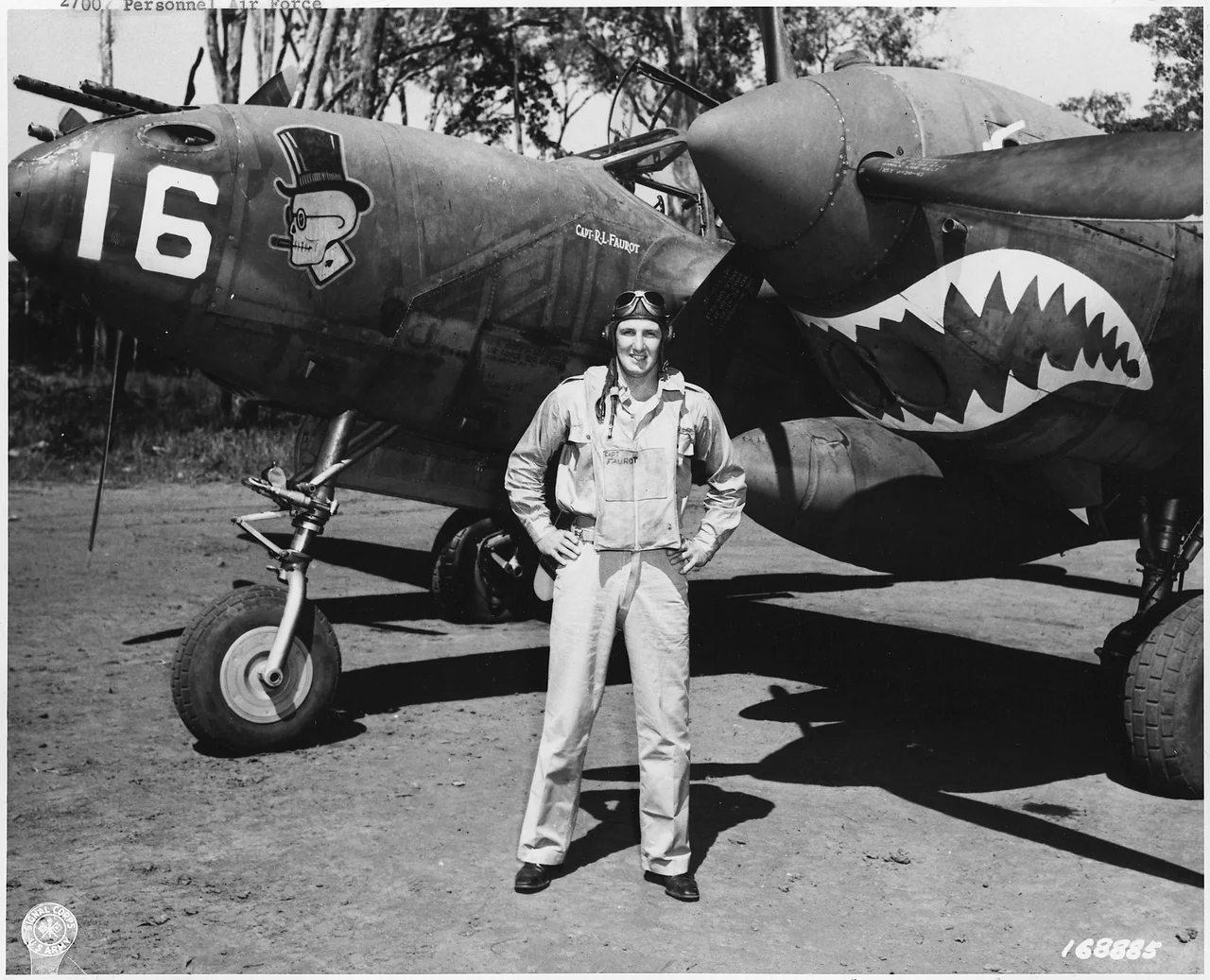
_-_NARA_-_292571.jpg)
Battle of the Bismarck Sea
On the morning of 3 March 1943, a Japanese soldier aboard the destroyer Shirayuki was looking up into a sky full of aircraft. Most of them were flying very low. The Beaufighters came in first, their nose-mounted cannons raking the bridge. One bomb hit a magazine. The stern broke off. The ship was scuttled, and its captain, Rear Admiral Masatomi Kimura, was transferred to another destroyer, wounded. The Shirayuki was the first ship to sink in the Battle of the Bismarck Sea. Over the next three days, all seven remaining transports and three more destroyers would follow her down. Of the 6,900 Japanese soldiers aboard the convoy, only about 1,200 would ever set foot at Lae.
A Convoy with Nowhere to Go
The men packed aboard the transports were soldiers of the Japanese 51st Division, reinforcements urgently needed at Lae to shore up the collapsing line in New Guinea. The convoy had sailed from Rabaul, the great base on New Britain, hoping to slip across the Bismarck Sea under cover of cloud. Lieutenant General George Kenney, commanding Allied air forces in the Southwest Pacific, had spent months drilling his crews for exactly this scenario. The bombers had been fitted with extra forward-firing guns. The pilots had practiced mast-height bombing, dropping their bombs skipping across the sea into the sides of ships. When reconnaissance found the convoy, Kenney sent nearly everything he had. Beaufighters, B-25s, A-20 Havocs, B-17s, P-38s, and Royal Australian Air Force Bostons came in waves, from multiple directions at once, overwhelming the Japanese anti-aircraft fire.
Men in the Water
The destruction of the ships was only the beginning. By the end of 3 March, most of the transports were burning or sinking about 100 kilometers southeast of Finschhafen. The Japanese destroyers Shikinami, Yukikaze, Uranami and Asagumo moved among the wreckage, pulling survivors from the water and heading back toward Rabaul with roughly 2,700 men. The next day, another 1,000 or so Japanese soldiers and sailors were still adrift on rafts and wreckage in the open sea. What happened next is among the hardest parts of the battle to write about. Allied aircraft and PT boats returned and attacked the survivors, strafing rafts and machine-gunning men in the water. Kenney and his commanders cited earlier Japanese attacks on Allied airmen parachuting from shot-down bombers. Whatever the justification offered at the time, these were exhausted men with no way to fight back. Many of them drowned. Many more were killed outright. About 2,890 Japanese soldiers and sailors died in total across the battle.
The Cost on Both Sides
Allied losses were small by comparison. Thirteen aircrew died, ten of them in combat and three in an accident. Eight were wounded. One B-17 and three P-38s were lost in the fighting; a B-25 and a Beaufighter went down in accidents. The propaganda claims that followed the battle were staggering and, in many cases, invented. General Douglas MacArthur's communique of 7 March announced 22 ships sunk and 12,792 enemy troops killed. American newsreels soon inflated that to 102 aircraft shot down, though the Japanese had lost only 15. Army Air Force Headquarters in Washington eventually looked at the records and concluded that only 16 ships had been in the convoy to begin with. The real numbers did not need exaggeration. A convoy carrying nearly 7,000 reinforcements had been effectively annihilated within reach of its destination.
The Turning of the Tide
After the Bismarck Sea, the Japanese stopped sending large convoys to Lae. Reinforcements went instead to Wewak or Hansa Bay, far to the northwest, and from there the men walked. The 20th Division tried to build a road from Madang through the Ramu and Markham Valleys to Lae. The weather defeated them. The mountains of the Finisterre Range defeated them. After the war, Japanese officers at Rabaul would estimate that some 20,000 soldiers died in transit trying to reach the New Guinea front, victims of a war of distance and supply that they had lost before the first contact. Admiral Isoroku Yamamoto launched Operation I-Go in April, an air offensive meant to redress the balance; it achieved little. On 18 April 1943, American P-38s ambushed Yamamoto's transport over Bougainville and killed him. The architect of Pearl Harbor was dead, and Rabaul's great bastion had begun its slow irrelevance.
Game Theory from a Killing Ground
In 1954, an American analyst named O. G. Haywood Jr. wrote an article modeling Kenney's decision as a two-person zero-sum game. The Japanese commander could sail north of New Britain or south; Kenney could search north or south. Four possible outcomes. Game theorists have taught the Battle of the Bismarck Sea ever since, using it as a textbook example of strategic decision under uncertainty. There is something strange about the afterlife of this battle, reduced to a matrix of payoffs. The payoff for the Japanese soldiers of the 51st Division was drowning in the Bismarck Sea or being strafed on a raft. The payoff for the 1,200 who made it to Lae was to be pushed back over the Saruwaged Range months later in a retreat that would kill most of them through starvation and exposure. From the air today, this stretch of sea between New Britain and New Guinea is blue and empty, and gives nothing back.
From the Air
The main action took place about 100 km southeast of Finschhafen, centered roughly at 7.25 S, 148.25 E. Recommended viewing altitude 10,000-15,000 feet for a broad view of the Bismarck Sea and the north coast of New Guinea. Look for the Huon Peninsula curving southeast, with New Britain island visible on the northeast horizon. Nearest airports: Nadzab Airport (AYNZ) near Lae on the New Guinea side, about 150 nm southwest; Hoskins Airport (AYKV) on New Britain, about 200 nm east. Weather over the Bismarck Sea can change rapidly; clear mornings offer the best view of what is now a quiet corner of the Pacific.
Nearby Stories
- Battle of Finschhafen 61 km away
- Battle of Mount Tambu 71 km away
- Voco Point 79 km away
- Invasion of Buna–Gona 123 km away
- Tufi 182 km away
- Battle of Ioribaiwa 195 km away
- Kimbe 229 km away
- Japanese Submarine Ro-103 253 km away