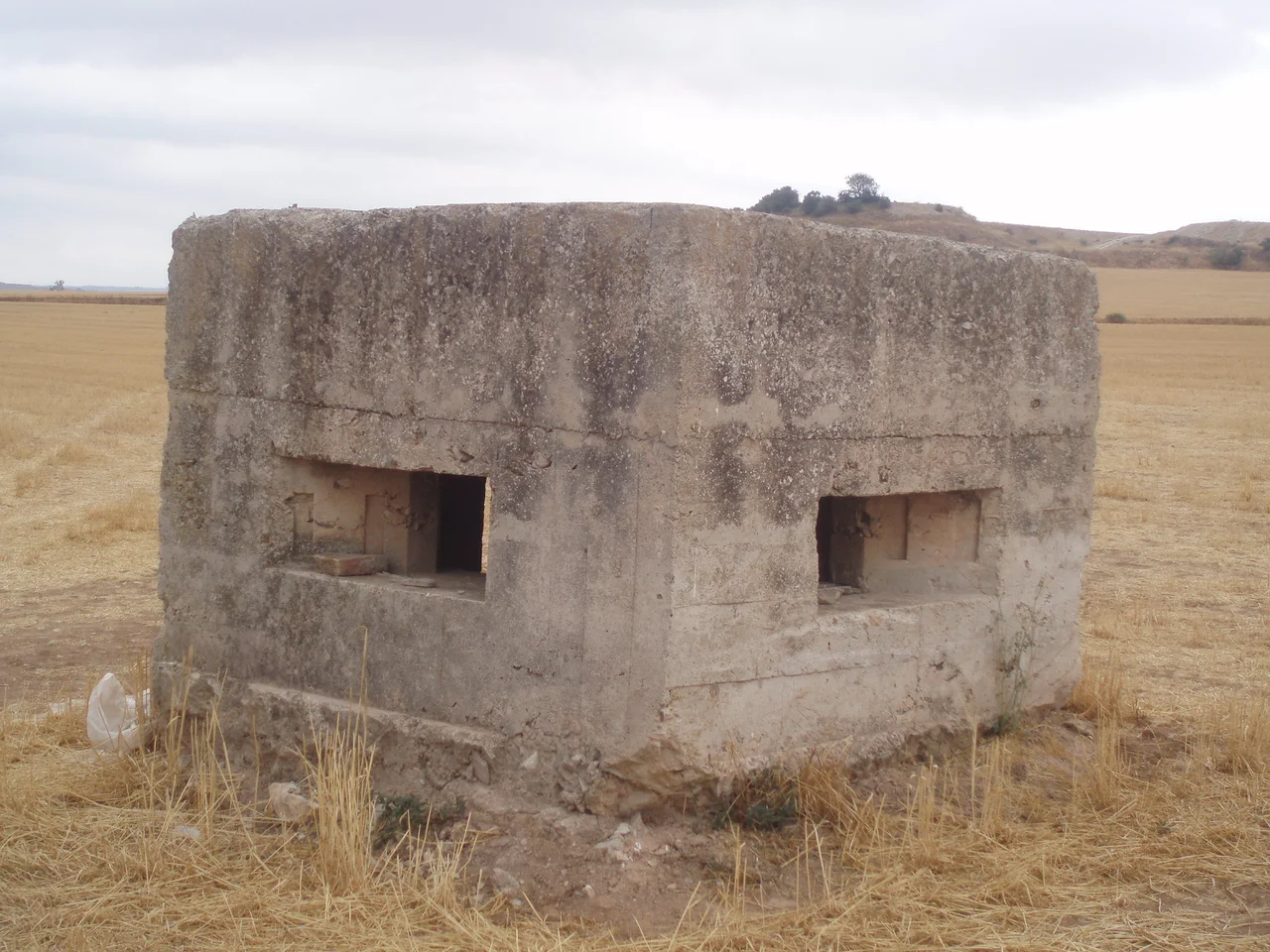

Battle of the Segre
For most of 1938, a river did the work of an army. After the Nationalist offensive shattered the Republican lines across Aragon that spring, the retreating Republic needed somewhere to make a stand, and it found the Segre. From early April until the first days of January 1939, the two sides fought up and down its banks in a grinding series of attacks, counterattacks, and skirmishes that historians rarely name and few remember. Yet the Battle of the Segre was one of the longest of the entire war. What was decided slowly along this water would help decide the fate of Catalonia itself.
The Line That Held
The Segre mattered because everything behind it mattered more. Once the rebel armies had overwhelmed Aragon, only this river stood between them and the Catalan heartland, with Barcelona and the coast beyond. The Republic threw a long defensive line of positions and fortifications along the water and committed the Eastern Army of its newly formed Eastern Region Army Group to holding it. This was not a single dramatic clash but a front, a stretched and stubborn barrier that had to be defended kilometer by kilometer. For the Republican command, giving ground here meant giving up far more than farmland; it meant opening the road into the last densely populated territory the government still controlled. The Aragon Offensive that spring had been a catastrophe, and the Segre was where the retreat finally had to stop. Along its banks the Republic dug positions and fortifications and fed in a great weight of men and materiel, determined that this river, and not the next one, would be the limit of the disaster.
The Dams in the Balance
There was a second reason to bleed for this river, one measured in kilowatts rather than kilometers. The Pre-Pyrenees behind the Segre held vital hydroelectric dams, and the electricity they generated fed the factories and workshops that kept the Republic armed. If those power stations fell into Francoist hands, the loss would ripple through every arms plant and rail line the government still ran. So the fight along the Segre was, in part, a fight for the machinery of modern war itself. The dams sat in the Pre-Pyrenees just behind the front, close enough that a single breakthrough could have handed them over intact. Rivers in the Pyrenean foothills are not only scenery; they are engines. Holding the Segre meant keeping the lights on in a war that could not be waged in the dark.
Nine Months of Attrition
The battle settled into the exhausting rhythm of a stalemate that refuses to resolve. Through the long summer and autumn, both sides poured in men and materiel, launching probing attacks and grinding out counterattacks that shifted the line only a little at a time. It was the kind of warfare that produces no single famous date, only accumulated loss. The photographer Robert Capa came to this front and made images of the men of the 151st Mixed Brigade, ordinary soldiers whose faces survive even where the battle's name has faded from the histories. They were the ones who lived in the trenches above the water, and who held on far longer than anyone watching from outside the country would have guessed. There was no clean breakthrough to report, only a front that consumed lives and equipment month after month while the wider world looked elsewhere. The fighting around Balaguer became part of the same long struggle, one of several local names folded into the single, sprawling battle of the Segre.
The River Gives Way
By the beginning of January 1939, holding was no longer possible. The pressure from the advancing rebel armies had become overwhelming, and the line that had absorbed nine months of assault finally broke. With the Segre gone, the road into Catalonia lay open, and within weeks Barcelona would fall and the war in the region would collapse toward its end. The Battle of the Segre seldom earns more than a sentence in the standard accounts, overshadowed by the great set-piece battles elsewhere. But the men who spent those months on its banks bought time for a retreating government and its people, and the quiet river they defended still runs through a landscape that once decided a war.
From the Air
The Segre front centers near 41.617 N, 1.000 E, tracing the river as it winds southwest through the plains of Lleida and the Pre-Pyrenean foothills of inland Catalonia. From 4,000-6,000 feet AGL the green ribbon of the Segre and the reservoirs of its dammed tributaries are the defining landmarks, with the higher Pyrenees to the north. Nearest airport is Lleida-Alguaire (LEDA) to the west; Reus (LERS) lies to the south and Barcelona-El Prat (LEBL) to the east. Clear inland visibility is common, though afternoon haze can build over the irrigated plain in summer.
Nearby Stories
- Roca dels Bous (archaeological site) 5.1 km away
- Serra de Montsant Natural Park 6.9 km away
- National Day of Catalonia 11 km away
- Mequinenza 22 km away
- Abric Romaní 24 km away
- Barbastro 29 km away
- Autódromo de Sitges-Terramar 32 km away
- Horta de Sant Joan 39 km away