
Bauru
Pele was a boy in Bauru before he was a legend anywhere. He played for the youth teams of Bauru Atletico Clube in the 1950s, on fields of packed red earth, before Santos FC signed him and changed football. Astronaut Marcos Pontes grew up here too. Ozires Silva, the engineer who founded Embraer, was born here. The city's most famous sandwich - the Bauru, a baked cheese and roast beef roll - is served in paulista lanchonetes all over Brazil. What makes a city like this produce that roster? Geography. Bauru sits at the meeting point of three major railroads, two airports, highways running in every direction, a coffee-and-sugarcane hinterland, and waves of immigrants who came through the junction and stayed. It is the definitive crossroads city of the Sao Paulo interior.
Where Rails Meet
The first railway to reach Bauru was the Sorocabana, inaugurated on April 22, 1905. Eighteen months later, on September 27, 1906, the Northwest Railway of Brazil began its long run west toward Mato Grosso, starting from Bauru. Then in 1910, the Companhia Paulista extended its tracks to the city, and Bauru became a three-railroad junction - one of the largest and busiest in the country through the 1940s and 1950s. The consequences of that junction shaped everything. Italian, Spanish, Portuguese, and Japanese immigrants arrived by train to work the coffee plantations. Syrian, Lebanese, German, French, Chinese, and Jewish immigrants came looking for commercial opportunity. The city became one of the most cosmopolitan in the Sao Paulo interior. Coffee was the backbone of the early economy, grown by those immigrant hands. When the 1929 crash wrecked coffee, cotton took over. When cotton declined, sugarcane rose. The landscape kept reinventing itself around the railroad that had built it.
The Cathedral and the Cross
The first sign of the town's religious expression appeared in 1886, when a cross was placed in what was then the Municipal Square - renamed Rui Barbosa Square in 1923. The Divine Holy Spirit Chapel went up in the late 1880s, funded by Faustino Ribeiro da Silva with support from the Municipal Council. It was demolished in 1913, replaced by the Divine Holy Spirit Cathedral, which was inaugurated on July 21, 1897. The cathedral is still the seat of the Diocese of Bauru and the city's main religious monument. But the religious landscape has expanded dramatically since then. Bauru today holds Lutheran, Presbyterian, Methodist, Anglican Episcopal, Baptist, Adventist, and numerous Evangelical congregations. Kardecist Spiritism, Buddhism, Islam, and other traditions have communities here. The city is sister to Tenri, Japan - a connection dating to 1970 that reflects the large Japanese Brazilian population drawn to Bauru in the coffee era - and to Sibiu, Romania, since 1995.
Where Pele Began
Before he was the greatest footballer in history, Edson Arantes do Nascimento was a kid in Bauru. He played in the youth categories of Bauru Atletico Clube before Santos FC signed him in 1956, beginning the professional career that would make him famous. The city has honored that connection, and the story is told in every tourist office. Beyond Pele, Bauru's sporting life is unusually deep for a city its size. Esporte Clube Noroeste, founded on September 1, 1910 - the same year the Paulista tracks arrived - plays at Estadio Alfredo de Castilho, which holds over 17,000 spectators. Bauru Basket has won multiple Brazilian Basketball Championships, including 2002 and 2016-17, and captured the FIBA Americas League in 2015. The Bauru Aeroclub, based at the old municipal airport, is the largest gliding center in Brazil. Motor sports thrive at the Toca da Coruja kart track. The city produced Airton Dare, the racing driver, and judoka Mario Sabino.
The Cosmopolitan Interior
What Bauru feels like today is hard to convey to someone who has not been there. It is one of the twenty largest metros of the Sao Paulo interior, sixty-eighth in Brazil by GDP, home to three public universities - USP, UNESP (which has its largest campus here), and FATEC - plus a sprawl of private institutions. The Centrinho, the Hospital for Rehabilitation of Craniofacial Anomalies at USP, draws patients from across South America. The Lauro de Souza Lima Institute, founded in 1933, remains a world reference for leprosy research and dermatology. The Bauru Municipal Zoo, opened in 1980, pulls 150,000 visitors a year, and the city maintains nine separate conservation areas to protect what remains of its original Atlantic Forest, now being slowly replaced by the cerrado biome as the climate shifts. In the 2018 Violence Atlas, Bauru had the lowest homicide rate among Brazilian cities with over 300,000 inhabitants. A crossroads that became a place where people wanted to stay.
From the Air
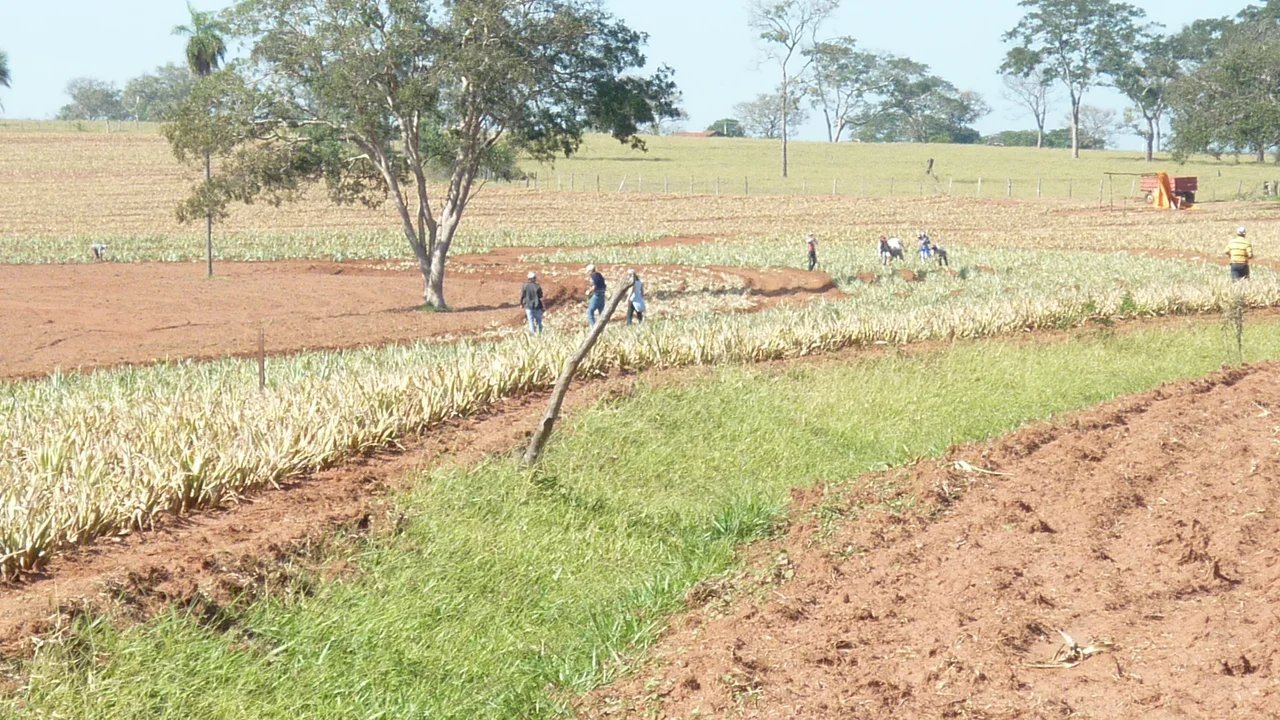
Located at 22.31 S, 49.06 W in western Sao Paulo state, Brazil. Nearest airports are Bauru Airport (SBAU) right next to the city center and Bauru-Arealva Airport (SBAE) about 30 km east, which offers scheduled service to Sao Paulo and Campinas. The terrain is rolling cerrado and agricultural land at around 525 meters elevation on the western Sao Paulo plateau. The Batalha River flows through the area. Three old rail corridors radiate from the city - north toward Companhia Paulista, west toward Mato Grosso via the Noroeste, and east toward Sorocaba. Visibility is excellent in the May-October dry season.
Nearby Stories
- São Paulo (state) 20 km away
- Caetetus Ecological Station 23 km away
- Captaincy of São Paulo 63 km away
- Adamantina Formation 69 km away
- Titanochampsa 94 km away
- Vassununga State Park 99 km away
- Campinas Cathedral Shooting 208 km away
- Vila Velha State Park 308 km away